


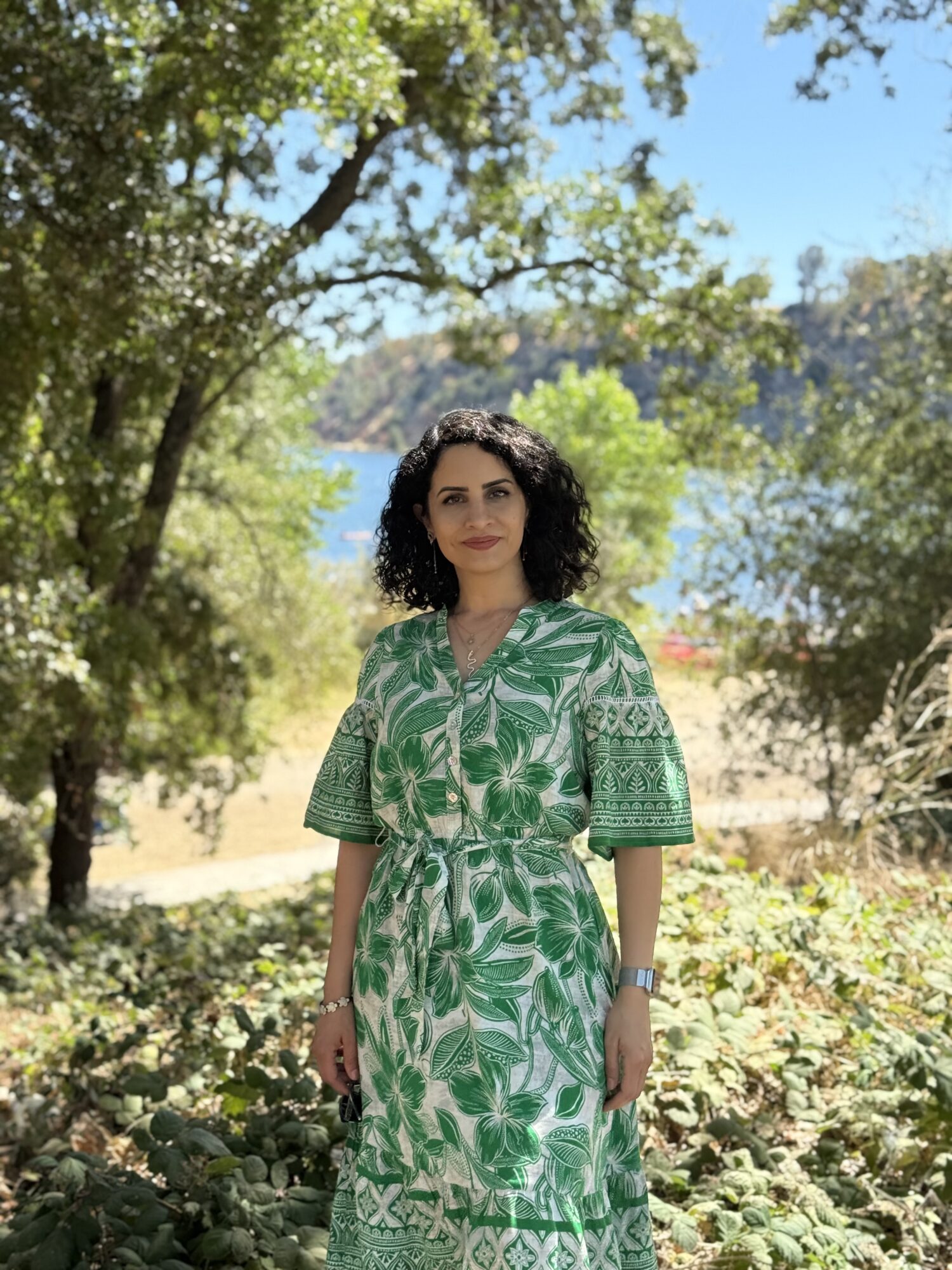
Today we’d like to introduce you to Yasaman Keshavarz.
Hi Yasaman , can you start by introducing yourself? We’d love to learn more about how you got to where you are today?
My path into this work was shaped early on by my experience working in a refugee resettlement foster care program. Supporting children and adolescents who had survived war, displacement, and profound loss exposed me to the depth and complexity of trauma at a very human level. Seeing how deeply these experiences shaped their emotions, behaviors, and sense of safety sparked my long term commitment to trauma-informed care.
I then spent seven years working at the University of Utah Health community clinics, where my understanding of trauma deepened further. In an integrated medical setting, I witnessed firsthand how mental health and physical health are inseparable and how unresolved trauma shows up in chronic illness, pain, and overall wellbeing. That experience shaped me not only as a trauma specialist, but as a more grounded and attuned psychotherapist.
In 2018, I began my private practice part time, initially focusing on Farsi-speaking clients and immigrant communities. As the practice grew, I joined multiple insurance panels, and in 2022 I made the decision to leave the University of Utah Health and transition into private practice full-time. Since then, I’ve worked primarily with complex trauma, PTSD, and CPTSD and dissociation while also focusing on medical traumas and chronic pain and illnesses.
Alongside clinical work, I’ve pursued advanced training in trauma modalities, which naturally led me toward teaching and consultation. The next step in my professional evolution was becoming an EMDR Certified and then an Approved Consultant, allowing me to train and support other therapists in developing trauma competency, ethical, and culturally responsive practice. At this stage of my career, my work has expanded from individual healing to also supporting the growth of clinicians, which feels like a meaningful and aligned continuation of my journey. In addition, I volunteer in community activities, including delivering weekly presentations at a radio station to help individuals who may not have access to mental health services learn about the mind–body connection and how to manage the effects of trauma in their daily lives.
Can you talk to us a bit about the challenges and lessons you’ve learned along the way. Looking back would you say it’s been easy or smooth in retrospect?
No, it hasn’t been a smooth road. Like many clinicians who build their own practices, some of the biggest challenges weren’t clinical, but practical. Navigating insurance panels, delayed or denied payments, and learning the business side of private practice required a steep learning curve. Ensuring a steady flow of referrals while maintaining financial stability was an ongoing stressor, especially in the earlier years.
At the same time, my clinical work has consistently involved highly traumatized populations, which requires a significant amount of nervous system regulation, presence, emotional attunement and tremendous amount of knowledge, which requires constant training and consultation. Holding space for that level of pain while also attending to my own wellbeing has been both challenging and deeply formative.
Layered onto this was my personal reality as an immigrant, a business owner, a wife, and a mother of two young children. Balancing caregiving, professional responsibility, and self-care required me to be very intentional about boundaries, pacing, and sustainability. These challenges ultimately strengthened my clinical judgment, resilience, and commitment to practicing and teaching trauma work in a way that is ethical, humane, and sustainable for therapists.
As you know, we’re big fans of Aria Mental Health Counseling . For our readers who might not be as familiar what can you tell them about the brand?
My practice, Aria Mental Health Counseling, is centered on providing trauma-informed, culturally responsive psychotherapy for individuals who have experienced complex and chronic trauma. I specialize in working with PTSD, CPTSD, structural dissociation, medical trauma, chronic illness and pain, and trauma within collective and immigrant communities. A significant part of my work serves former refugees, and Farsi-speaking clients, though my practice is not limited to any single population. I also work extensively with high-achieving professionals, including medical providers such as nurses and physicians, as well as mental health clinicians, who are navigating burnout, secondary trauma, and the cumulative impact of high-responsibility caregiving roles.
What sets my work apart is the way I integrate advanced trauma modalities with a deep understanding of culture, the body, and the nervous system. I am trained in EMDR, Internal Family Systems (IFS), ego state therapy, and somatic approaches (SP), and I work intentionally at the intersection of psychological healing and physiological regulation. My approach is not just about symptom reduction, but about restoring safety, dignity, and agency especially for clients whose trauma is layered with migration, oppression, or medical experiences.
Brand-wise, I am most proud of creating a practice that is both clinically rigorous and deeply humane. Trauma work can easily become either overly technical or emotionally overwhelming; my goal has always been to hold both expertise and compassion with steadiness. This commitment to ethical, paced, and sustainable trauma treatment is also what led me to expand into teaching and consultation. As an EMDR Approved Consultant, I now support and train other therapists, helping them develop the clinical skill and nervous system capacity required to work effectively with complex trauma.
What I want readers to know about my brand is that it is grounded in integrity, depth, and care both for clients and for clinicians. Whether through individual therapy, consultation, or training, my work is about helping people heal in ways that are culturally attuned, body-based, and sustainable over time. At its core, Aria Mental Health Counseling is built on the belief that trauma healing is possible when safety, relationship, and meaning are honored together.
What makes you happy?
What brings me the greatest joy is witnessing the moment clients reconnect with their inner strength, courage, and confidence—their essential human capacity to lead rather than be overwhelmed by their emotions. When clients are able to hold and guide their polarized parts with clarity and compassion, the shift is profound. Their symptoms often change in ways that feel almost night and day, not because the pain disappears, but because they are no longer controlled by it and can become unburdened from past trauma. Seeing people move from feeling fragmented or powerless to feeling grounded, Self-led (as it is known in IFS), and whole is deeply meaningful to me and continues to inspire my work.
Pricing:
- Individual therapy $150 per session
- Intensive Outpatient Trauma Treatment ($200 per hour)
- Group Therapy/workshops ($ is variant based on the amount of hours)
- Consultation for Clinicians ($150 per hour)
Contact Info: