


Today we’d like to introduce you to Jacob George.
Hi Jacob, it’s an honor to have you on the platform. Thanks for taking the time to share your story with us – to start maybe you can share some of your backstory with our readers?
When people ask me where I grew up, I tell them, “all over the united states”. My father was in the air force, which meant about every year we would pack up all our things, say goodbye to our friends, and move to a new military base in a new state. Doing this time and time again, forged an early appreciation for new cultures and new friends that now presents as a desire for interdisciplinary and collaborative research. Moving so often as a kid meant that my closest friends were really my dad and my brother. Which is why I was so devastated as an 8-year-old when my father was killed on active duty. My brother and I were torn apart. We had just lost our best friend and father. But, as we had done before, my brother and I packed up all our things, said goodbye to our friends, and moved again – this time off the military base for good.
Years later, when I was 14, my brother, was hit by a drunk driver and killed. For the second time in my life, I lost my best friend and my father figure.
Losing my brother and father at such a young age forced me to be resilient, and it inspired me to pursue a career in healthcare where I could directly impact the lives of others.
Having always been an engineer at heart, I decided to pursue biomedical engineering at the University of Texas at Austin. And while I was there, I started getting involved in undergraduate research working on brain imaging and machine learning.
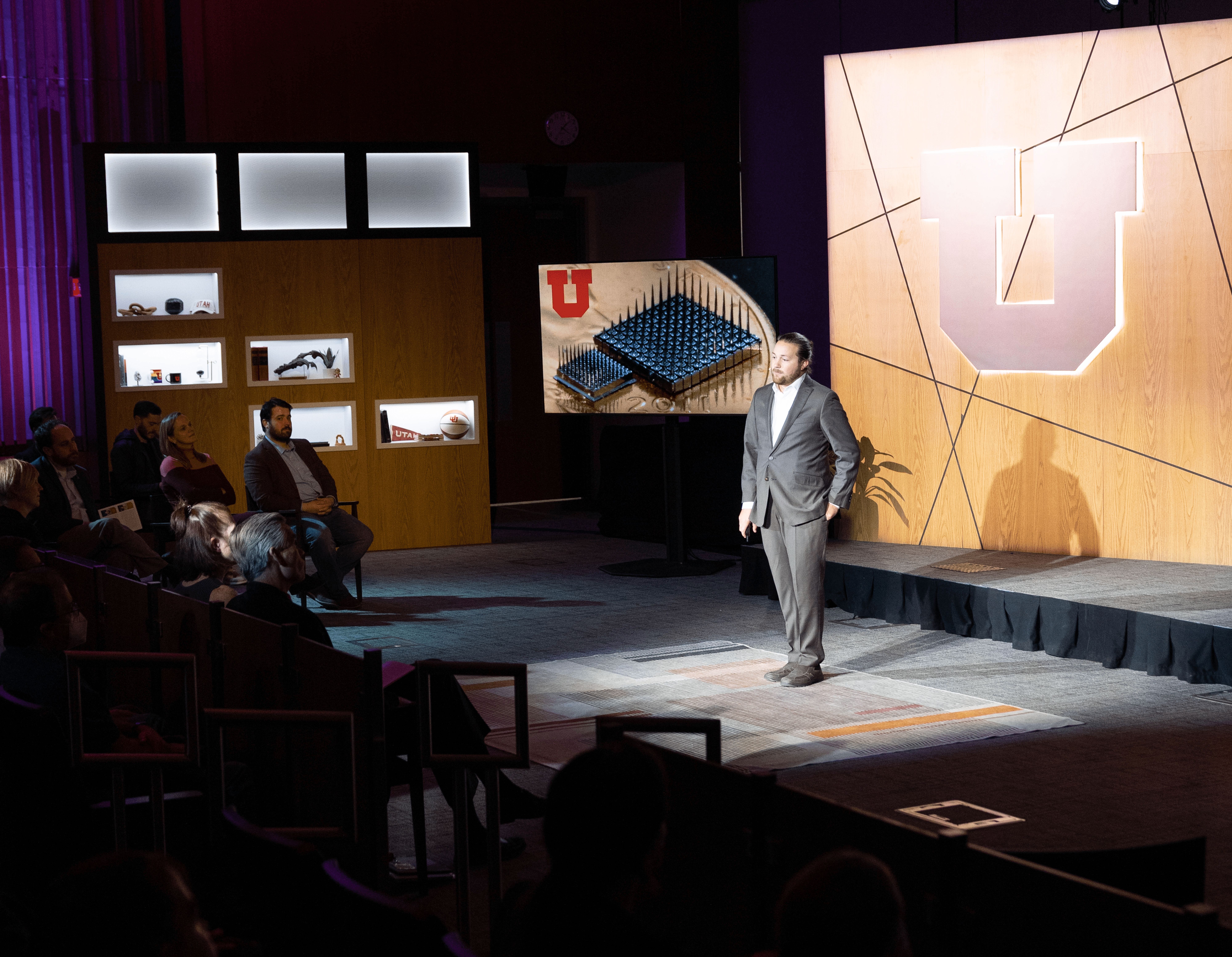
During the summer of 2015, I completed an undergraduate summer research fellowship at the University of Utah. I honestly knew very little about Utah – I couldn’t point it out on a map, but I knew about the Utah Array, which is the most commonly used brain-computer interface in the world. This tiny device, spun out of the University of Utah and commercialized by Blackrock Neurotech, is implanted inside the brain or nerves to provide a direct link to external devices.
During that summer I began working on a brain-computer interface solution for individuals with limb loss. But before I dive into my work, take a minute to think about how your life would change after losing a limb. Imagine you’ve just woken up in the hospital to find out both of your hands have been amputated. How would you go about your daily life? How would hold a fork to feed yourself? How would you tie your shoes in the morning? Or play catch with your kid? But more importantly, how would you feel? Physically, the world that’s around you, and also, emotionally, as a whole individual?
As put by one of the amputee’s we worked with, “losing a limb is like losing a family member, except you are reminded of it every single day.”
Having lost two family members myself, this quote really stuck with me, and inspired me to dedicate my career towards helping individuals with life-altering neuromuscular disabilities, like limb loss.
After that summer, I returned to the University of Utah to complete my PhD in Biomedical Engineering. I fell in love with Utah, and after graduate school I was fortunate enough to land a long-term position at the University of Utah as a tenure-track faculty member joint between the Departments of Electrical & Computer Engineering and Physical Medicine & Rehabilitation.
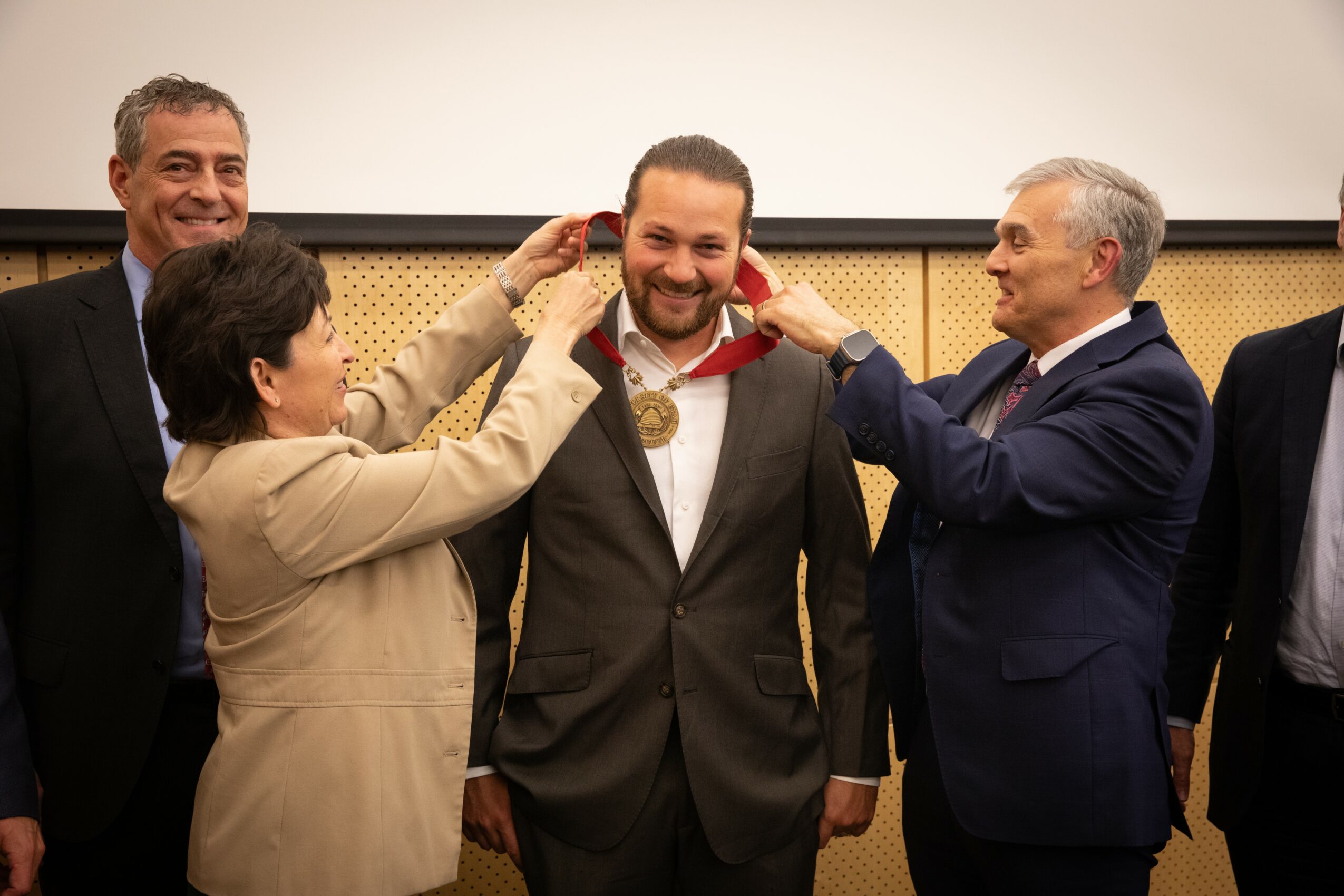
As faculty, I’ve received numerous accolades over the years, including high profile awards like the Utah Innovator of the Year, the NIH Director’s Early Independence Award, and Forbes 30 under 30.
Utah is an incredible place to launch a career. I love the people in Utah – who work hard, play hard, and are always open to a new challenge and new collaboration. I also love the environment in Utah – working in a rapidly emerging tech scene surrounded by gorgeous mountains. These two things make the perfect ecosystem for innovation that I’m glad to call home.
Can you talk to us a bit about the challenges and lessons you’ve learned along the way. Looking back would you say it’s been easy or smooth in retrospect?
Neuromuscular impairments, like stroke, spinal cord injury, and limb loss, are the leading causes of disability worldwide. The inability to control or feel from your limbs, due to paralysis or amputation, is particularly devastating. Loss of autonomy and function are often compounded by chronic pain, social isolation, and anxiety that lead to substantial socioeconomic costs to society. This societal challenge is what drives our research and innovation. To solve this problem, we developed a new brain-computer interface that allows individuals to control assistive robotic devices, like exoskeletons and prosthetic arms, simply with their thoughts. The system has now been demonstrated with dozens of amputees, stroke survivors, and spinal cord injury patients.
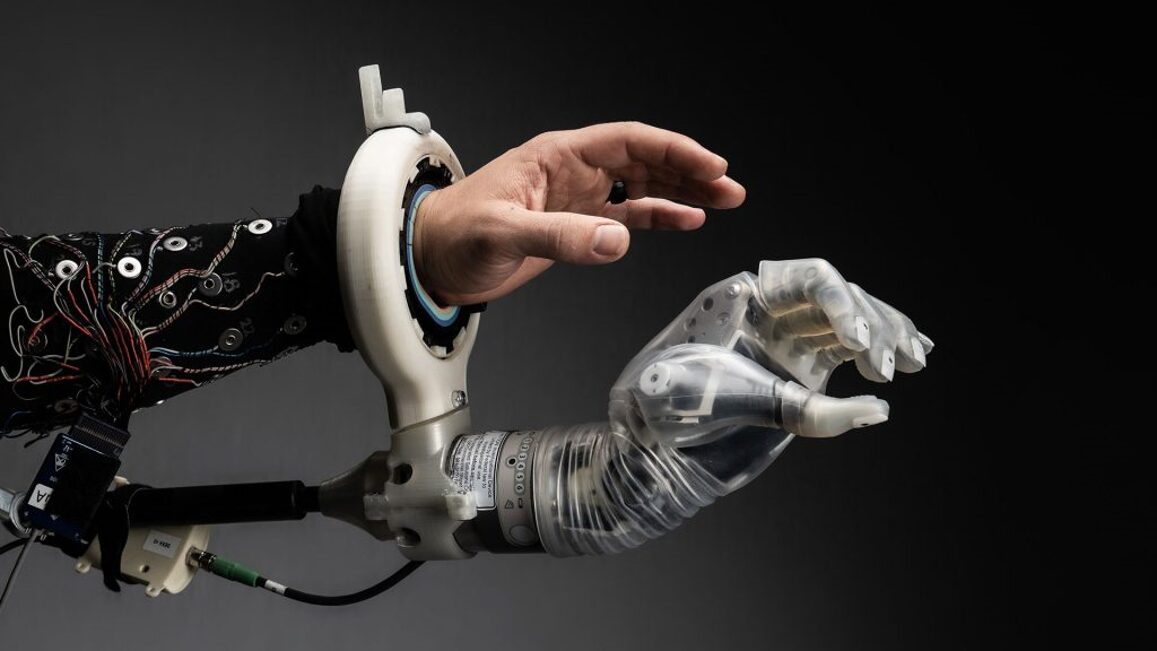
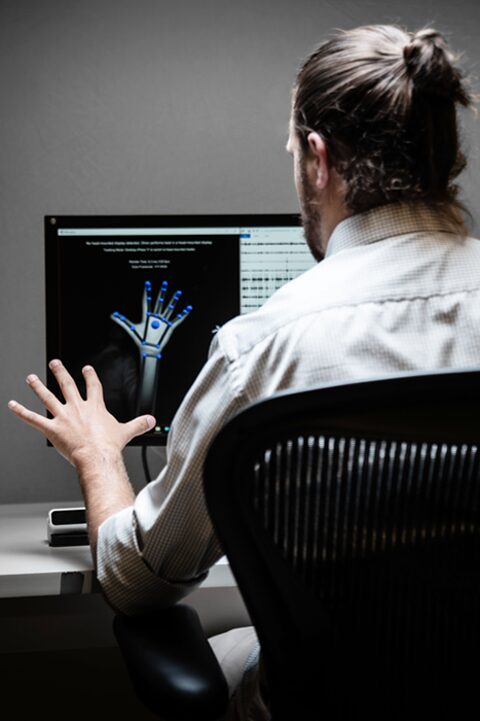
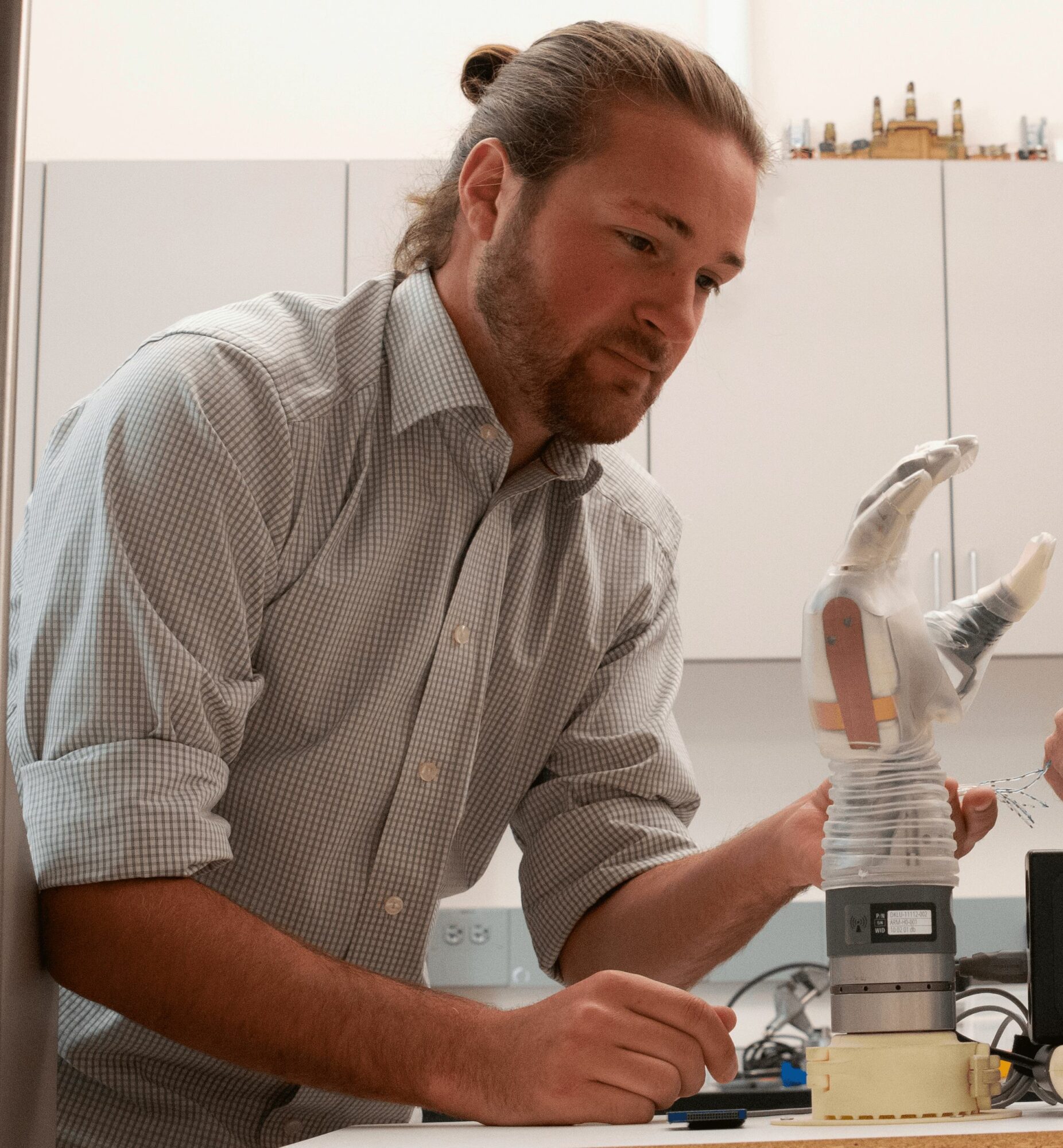
When we think about moving our limb, we generate electrical signals in our brain that travel down our nerves to our muscles to move our limb. After limb loss or paralysis, those electrical signals in our nerves and muscles still exist; they are just too weak to move the limb, or the limb is missing entirely. We listen to these electrical signals, amplify them on a computer, and use artificial intelligence to translate them into an individual’s intent. The result is a bionic device that is controlled simply with your thoughts!
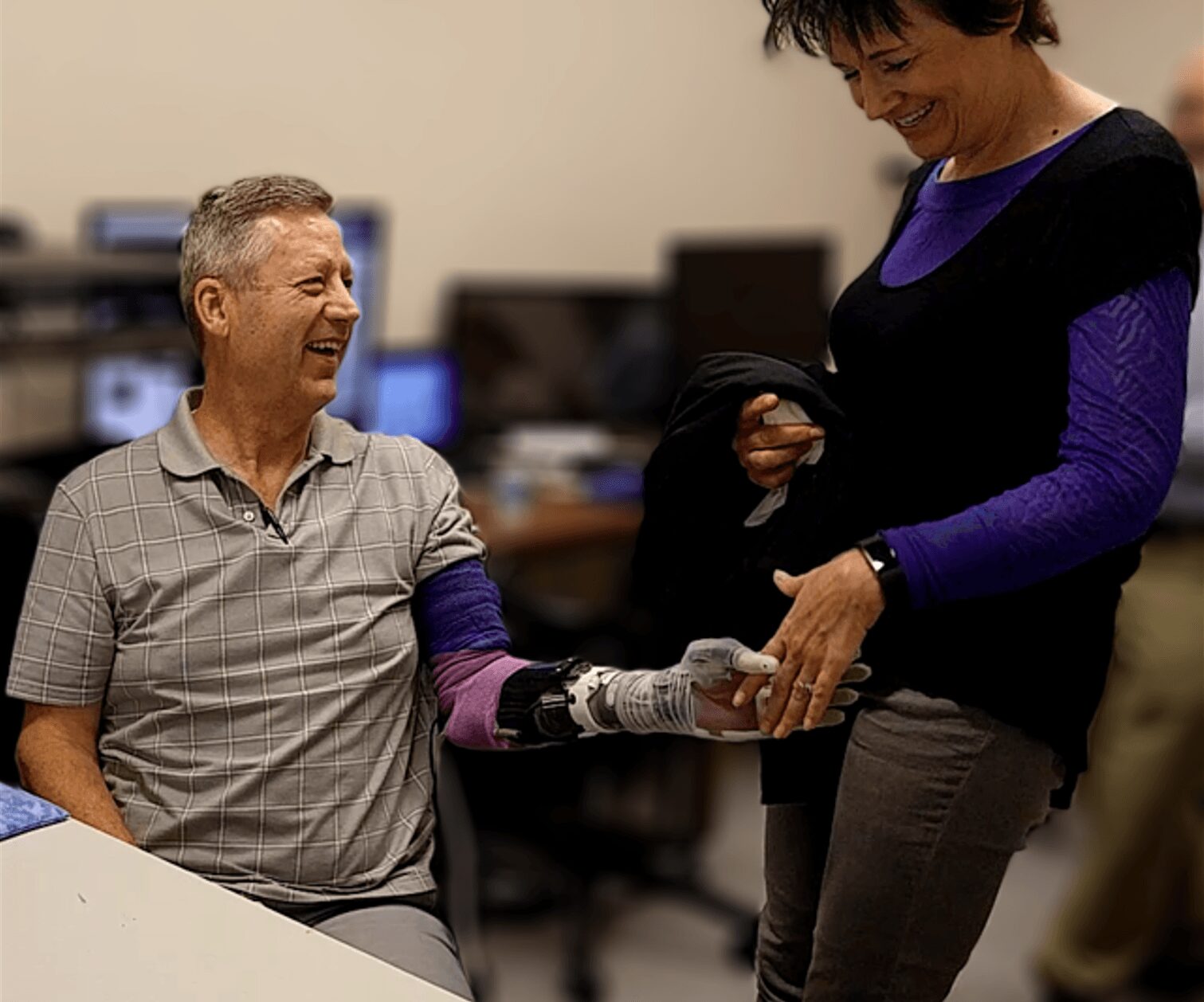
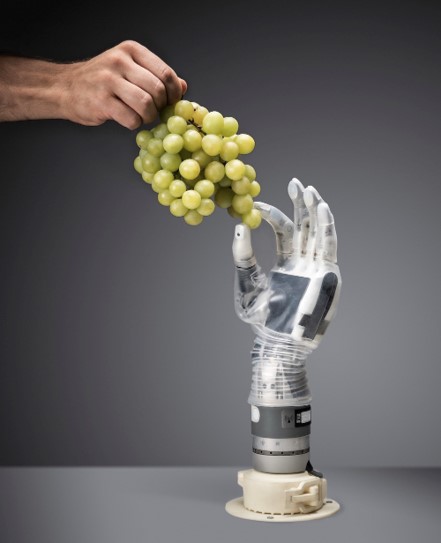
What’s better than assistive devices controlled telepathically by thought? Well, our same brain-computer interface can also allow individuals to get a realistic sense of touch coming back from the assistive device. When we touch objects, mechanical forces on our skin are converted into electrical signals in our nerves that travel up to the brain to convey our sense of touch. After limb loss or paralysis, this electrical pathway for touch still exists; the signals are just scrambled or missing. We electrically excite the nerves to recreate our sense of touch. The result is a bionic device that allows users to feel the world around them!
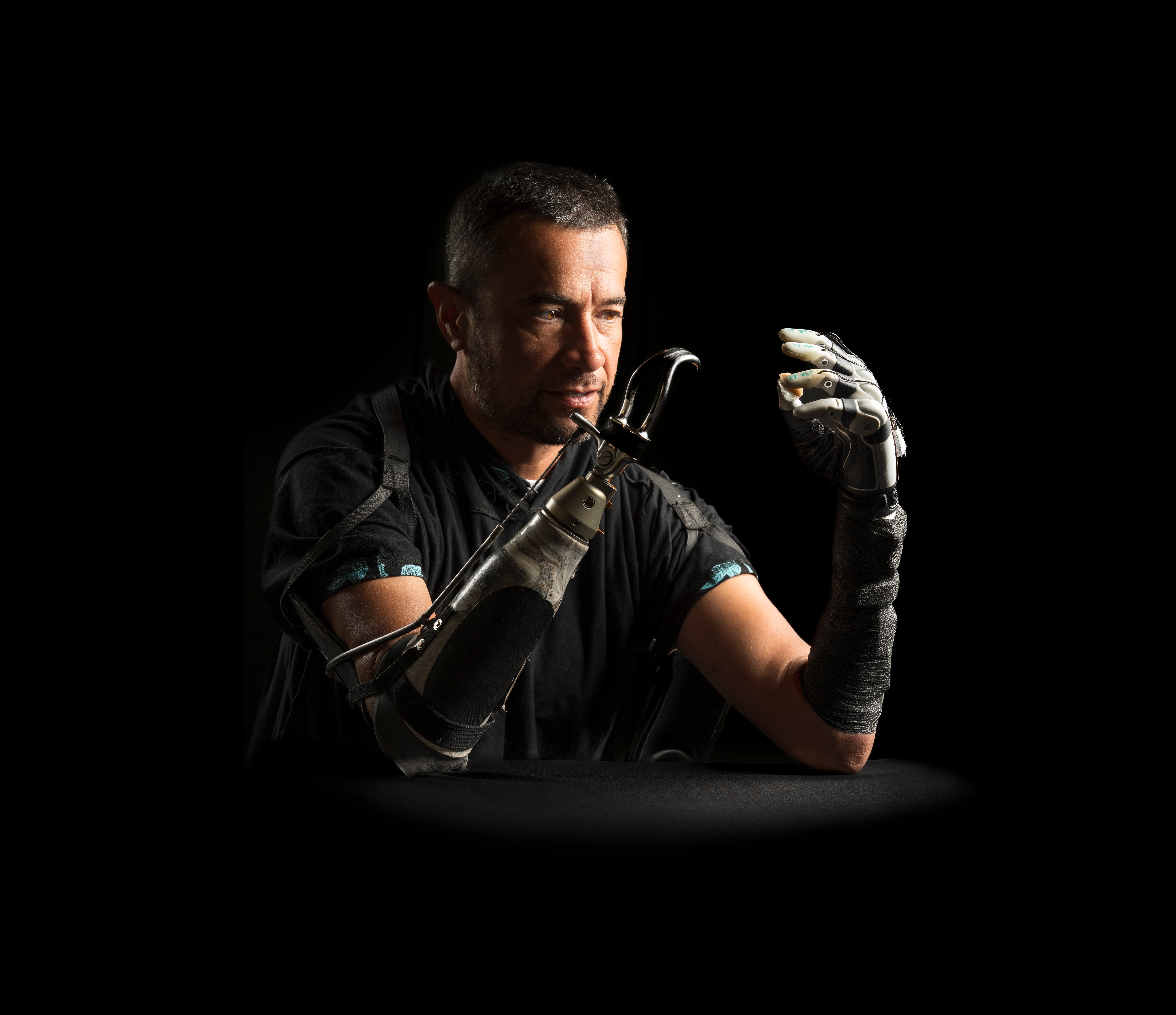
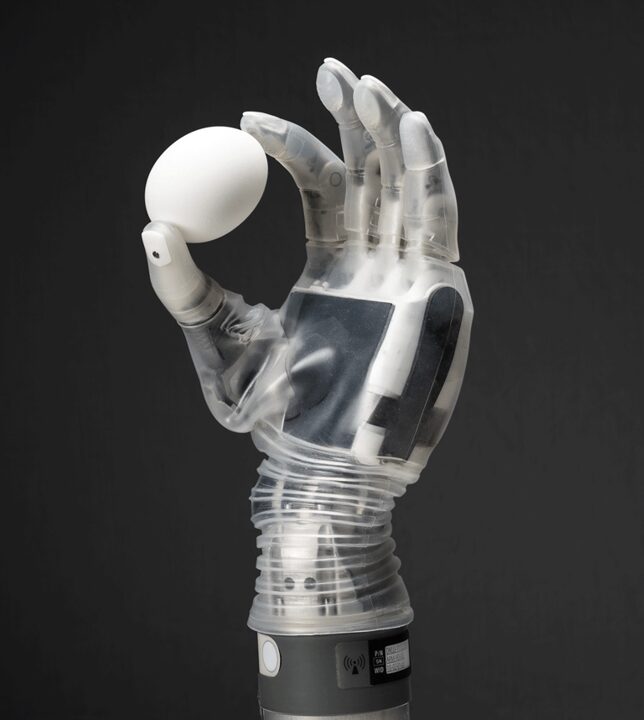
Restoring both movement and touch gives rise to unique phenomena that fundamentally transform quality of life. When an artificial limb moves and feels like our own, individuals start to embody the limb, believing it is truly a part of them and no longer just a tool. By restoring both movement and touch, we create an artificial limb that is convincing real – just like the advanced bionic limb that Luke Skywalker receives in the Star Wars. Although inspired by science fiction, this technology is real and has been tested with dozens of amputees, stroke survivors, and spinal cord injury patients. The core technology has been spun out into several companies, many of which have received notable recognitions like the FDA’s Breakthrough Device Designation, which provides a fast-track to get this technology on the market.
Thanks – so what else should our readers know about your work and what you’re currently focused on?
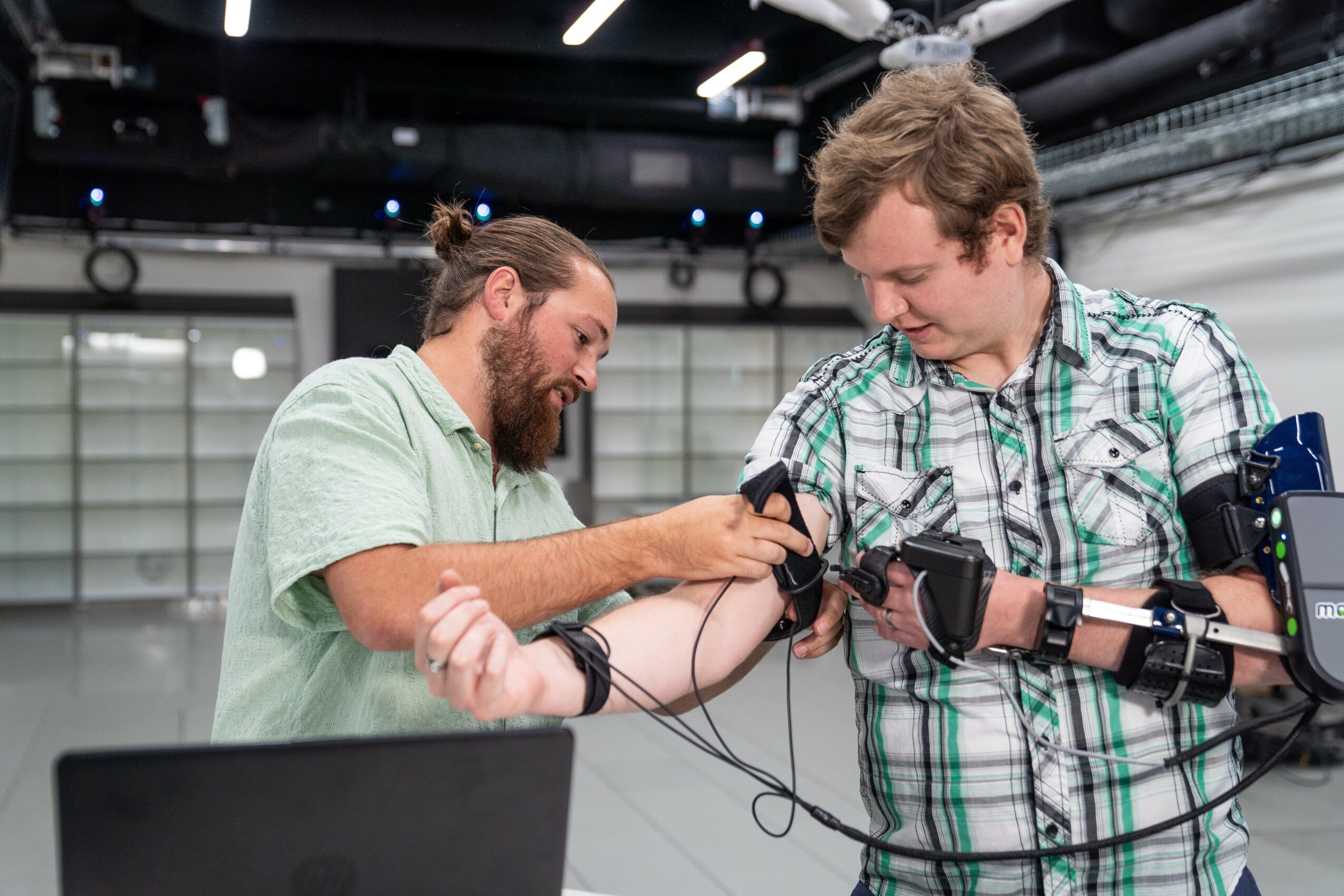
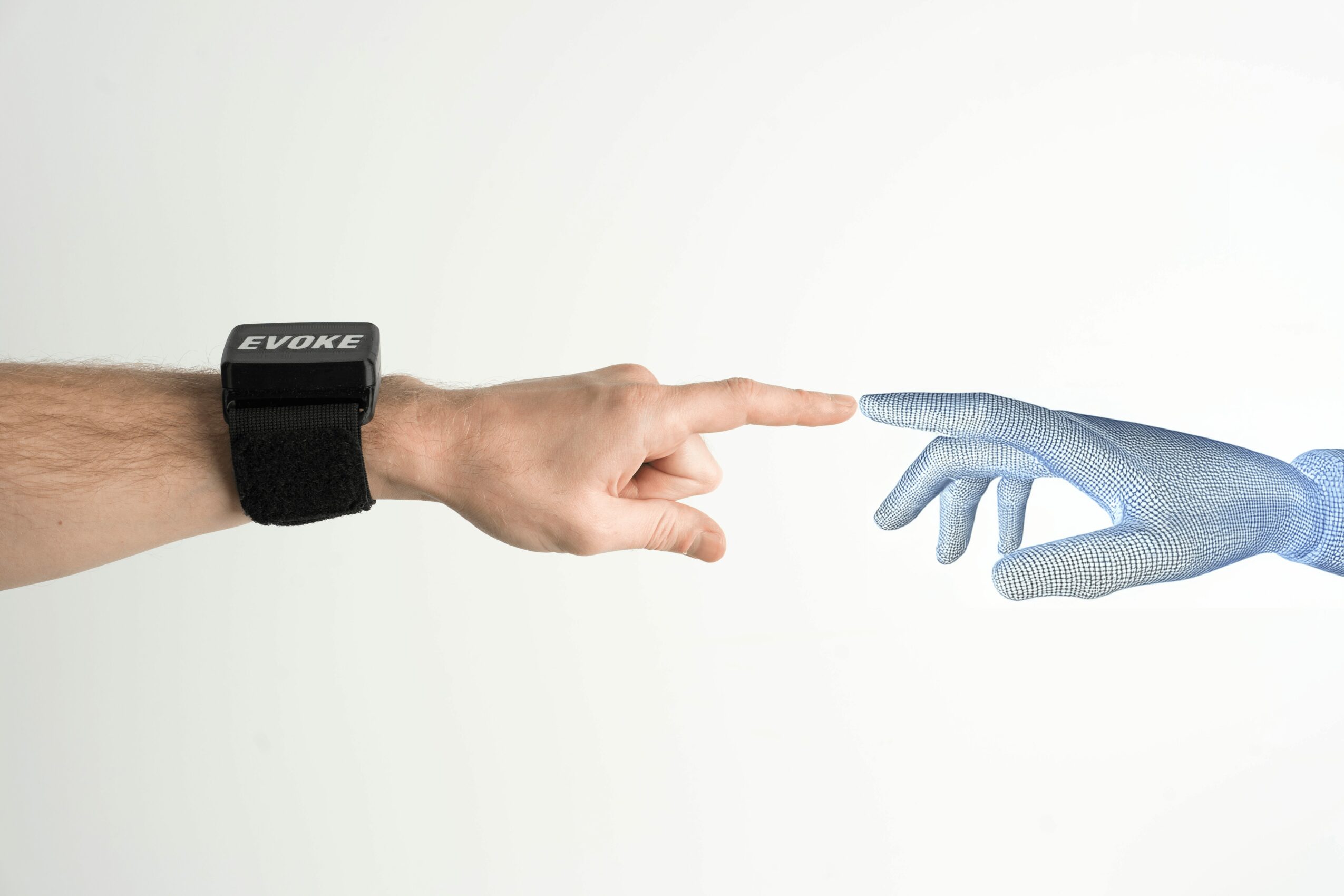
I am the Solzbacher-Chen Endowed Professor in the Departments of Electrical & Computer Engineering and Physical Medicine & Rehabilitation at the University of Utah. I am also a foundational researcher for the Craig H. Neilsen Rehabilitation Hospital, Director of the Utah NeuroRobotics Lab, and Director of the Utah Neurotechnology Training Program. In 2019, my group made waves with the “LUKE Arm”, a prosthetic arm integrated with the user’s nervous system to allow them to control it simply with their thoughts. Named after the robotic hand given to Luke Skywalker in The Empire Strikes Back, the prosthetic arm also allows users to feel objects by transmitting the appropriate signals back to the brain. We have since translated this technology to bionic exoskeletons to aid individuals with paralysis and into smartwatches to enable seamless interactions with smart devices and virtual/augmented reality. I’ve been fortunate to receive many awards along the way, including the Utah “Innovator of the Year” Award, Forbes 30 Under 30, and the NIH Director’s Early Independence Award. I am also a passionate entrepreneur with a record of translating my lab’s scientific discoveries into viable commercial products. We maintain active collaborations with dozens of industry partners in the fields of neurotechnology, prosthetics and orthotics, adaptive technology, smart-home systems, and virtual/augmented reality. We have several patents, some of which we have licensed to our industry partners and others we have founded companies around. Outside of my academic job, I also serve as a consultant, advisor, and scientific officer for various companies in the fields of health tech, wearables, robotics, and data science and machine learning broadly.
What was your favorite childhood memory?
Although my brother and I loved Legos when we were growing up, our favorite game was one in which we limited the number of pieces we could use. With only a handful of Legos, we challenged each other to create an object in a specific category. Despite the apparent antagonism of the pieces I had, I improvised, innovated, and eventually created something that fit the limitations and exceeded the expectations. This seemingly simple childhood game has become a testament to my character. I’ve always been an engineer at heart; I enjoy a challenge and I am defined by my creativity and my resilience.
Contact Info:
- Website: https://profiles.faculty.utah.edu/u1043304
- Linkedin: https://www.linkedin.com/in/jacobageorge/
- Other: https://neurorobotics.ece.utah.edu/