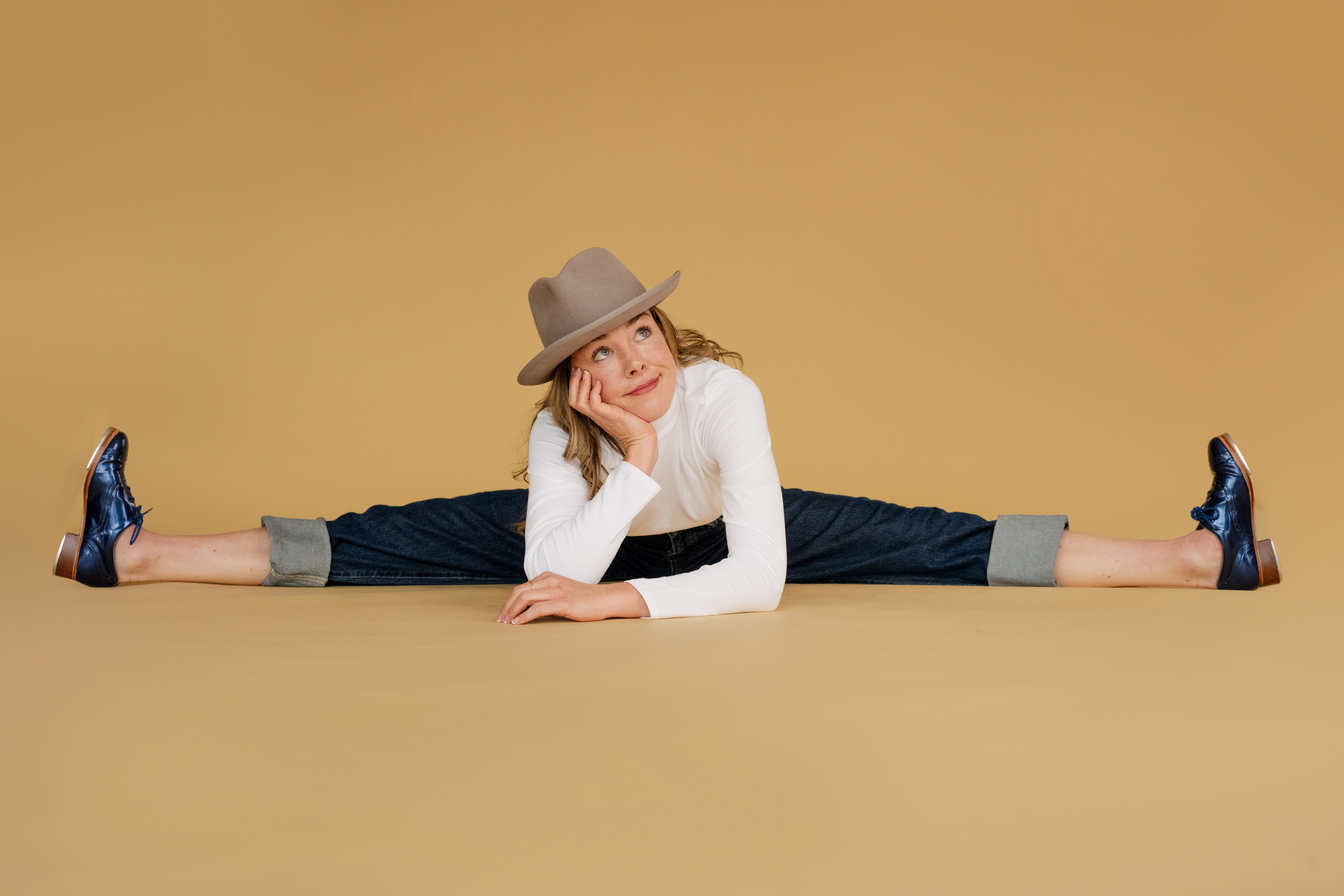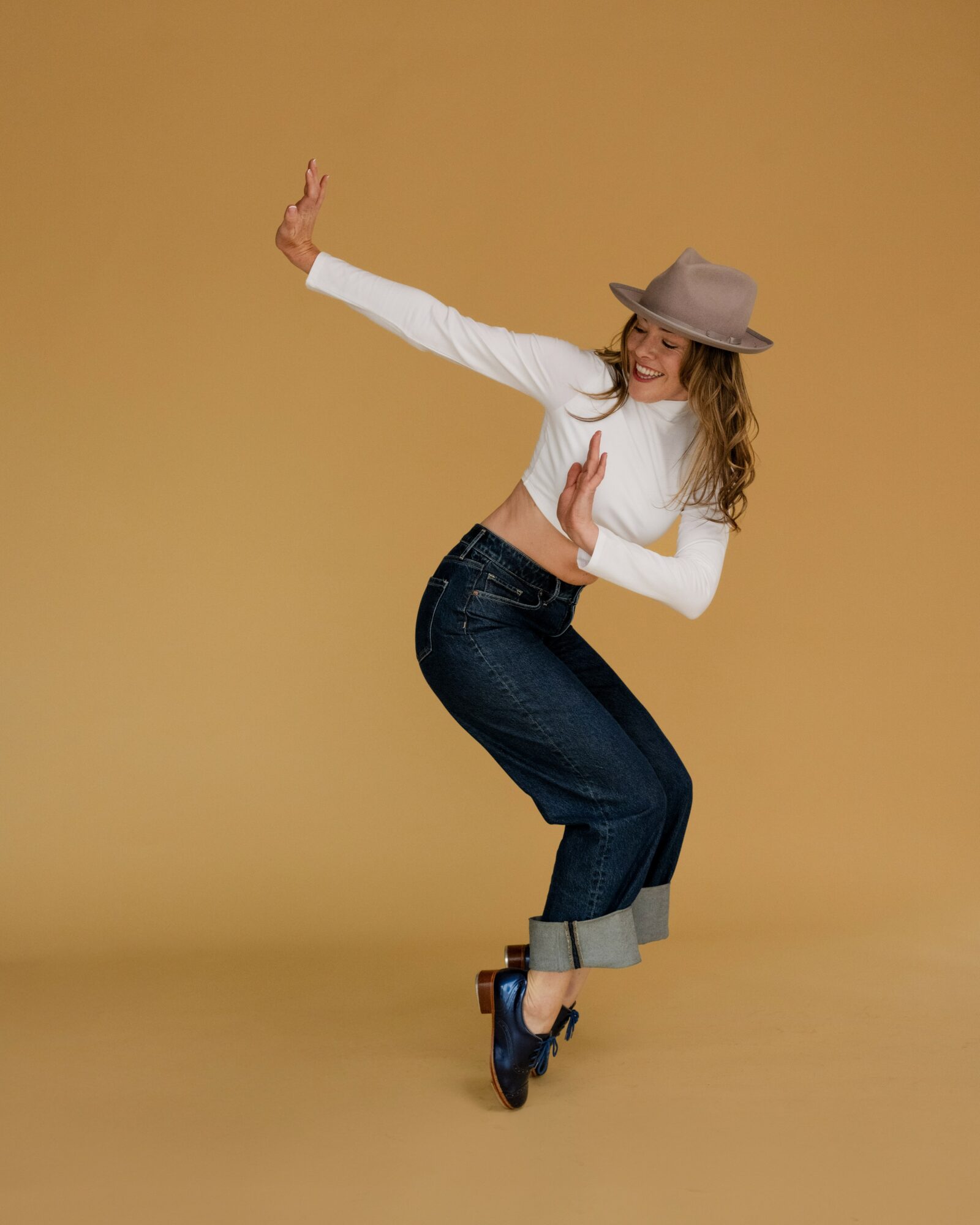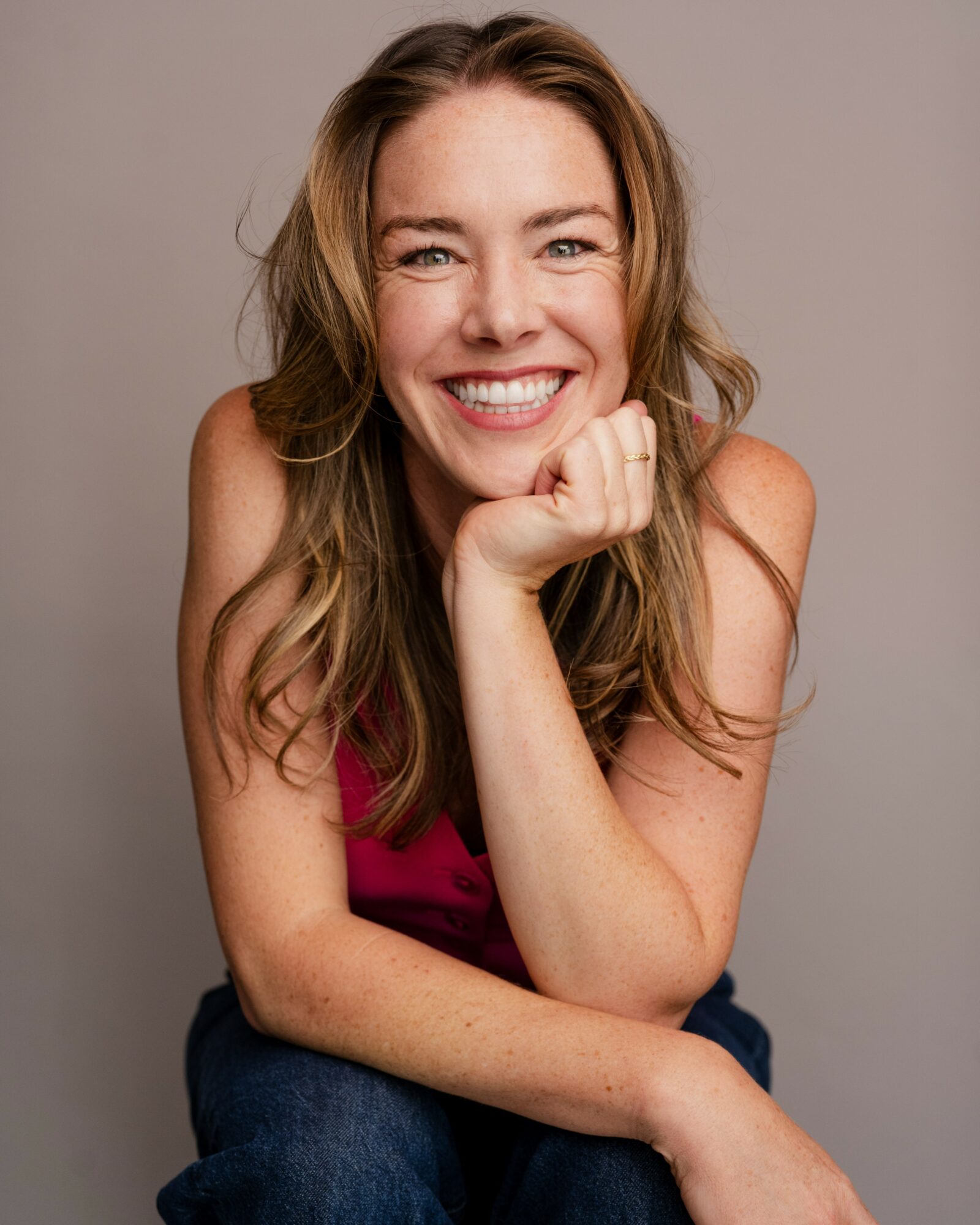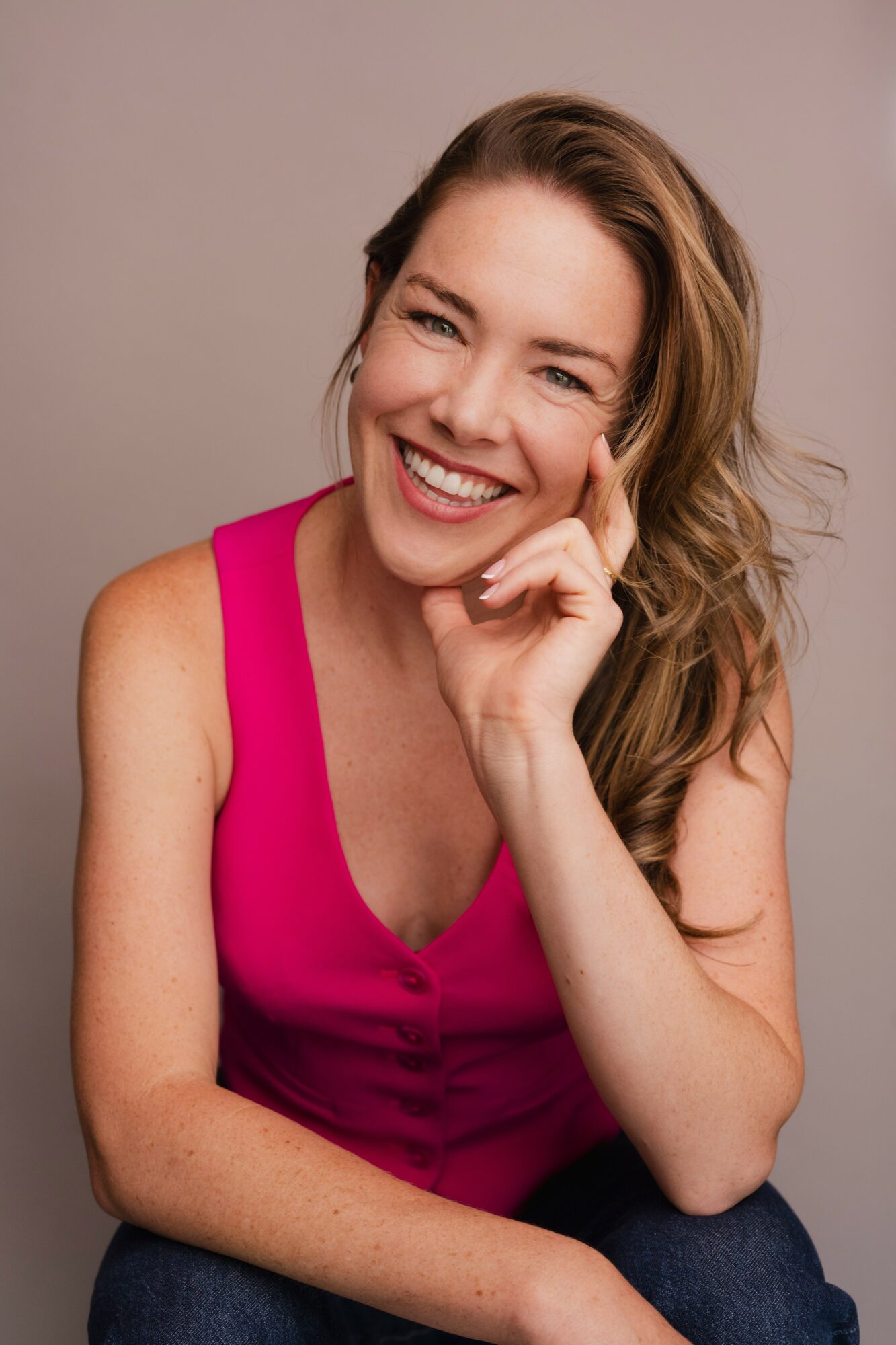



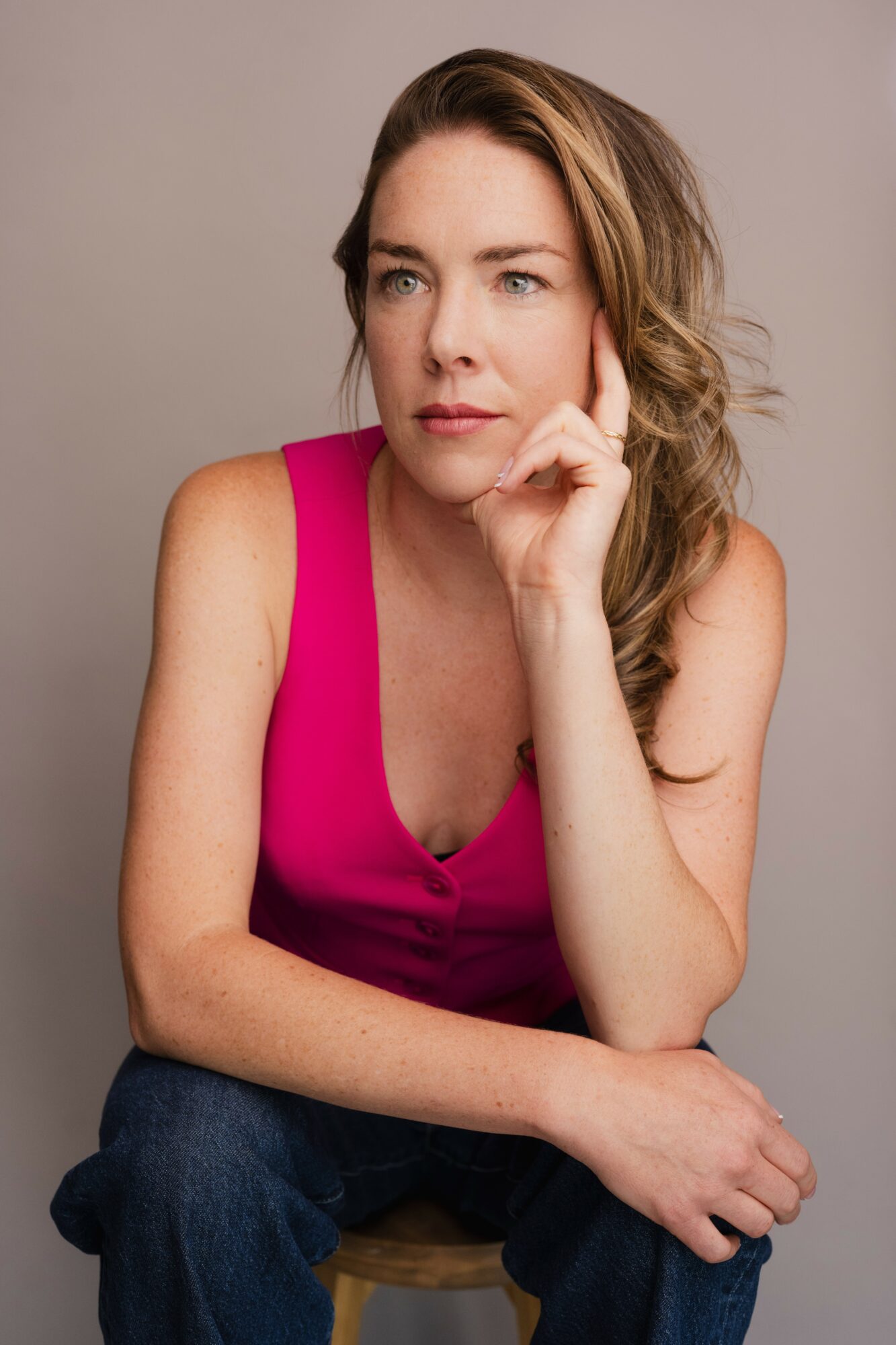
Today we’d like to introduce you to Francesca Mintowt-Czyz.
Hi Francesca, thanks for sharing your story with us. To start, maybe you can tell our readers some of your backstory.
I grew up in Sandy, Utah, a first-generation American. Home was a place where creativity showed up quietly and consistently. I loved and still love cooking alongside my dad, recipes evolving through instinct rather than instruction, and playing fiercely competitive Scrabble matches with my mum, where words mattered and winning mattered just a little more. I was also a competitive swimmer, which meant early mornings, endless laps, and learning discipline in the body long before I understood it as an artistic tool.
I stepped onstage for the first time at five years old alongside my sister and “caught the bug” as they say. I studied dance, singing, and acting, and became a “triple threat” of sorts. I had every intention of staying in Utah for my undergraduate degree, but I wasn’t accepted to the program I had applied for, and when I auditioned for local schools, I was honored with a full-ride scholarship to study Musical Theatre out of state.
The day after earning my BFA in Theatre with a minor in Dance from the University of Wyoming, I moved to London. I spent three years working professionally as an actor, including touring Europe as Juliet in Romeo and Juliet. Those early years were about entertainment in its purest sense: learning how to hold an audience, how to sustain a performance, how to do the work eight shows a week. Working internationally was exhilarating, but it also revealed the instability of the profession, particularly for female-identifying artists. I met some amazing people there. Beth Crane and Hedley Knights (now married!) invited me to be on their podcast We Fix Space Junk, where I earned several awards for my voiceover work as Marilyn (and others).
Three years into my time abroad, I applied for graduate schools. I got halfway through my applications to multiple schools when my mum nudge me to look at the Royal Academy of Dramatic Art (RADA). It is still one of the top ten drama training programs, so I thought my mum was a bit silly for suggesting it…I mean, how could this young woman from Utah get into this prestigious program? The school just offered a curriculum that introduced training that didn’t exist anywhere else, and I thought… THAT is the place where I will be challenged most. THAT is the place I will be most uncomfortable. I need to go there. I stopped all my applications elsewhere and ONLY applied to RADA, which was kind of ridiculous, now that I think about it. I got in, though… which is still wild to me. I earned my MA in Physical Theatre and Devising and loved every second of it. RADA shaped me into the most versatile, imaginative, and rigorous artist I could be.
During my time there my perspective shifted from the inner to the outer. I became fascinated with how instructors would offer just the right provocation the students, and I thought… I want to do that too. I want to ignite others so they can dive deeper into this craft the way I have been able to. I then had a deep fear instilled in me… I want to be a teacher. But “those who can’t do, teach”, right? That old adage! One of my favorite professors (John O’Hagan) said to me, “Ah, but those who do were taught well once”. And that became my mission. To teach well ONCE. ‘
Teaching clarified my beliefs about craft. I often start the semester or the class by saying, “I believe there is no such thing as good or bad acting, only clear or unclear storytelling.” Techniques developed by practitioners like Stanislavski, Chekhov, Hagen, Adler, Bogart, and Grotowski exist to sharpen clarity. When paired with writers who give us everything we need on the page (William Shakespeare, August Wilson, Tennessee Williams, Susan-Lori Parks, Caryl Churchill, and contemporary voices like Elizabeth Ostler and Rachel Bublitz), the actor’s task is simple and profound: to listen. The text is the roadmap.
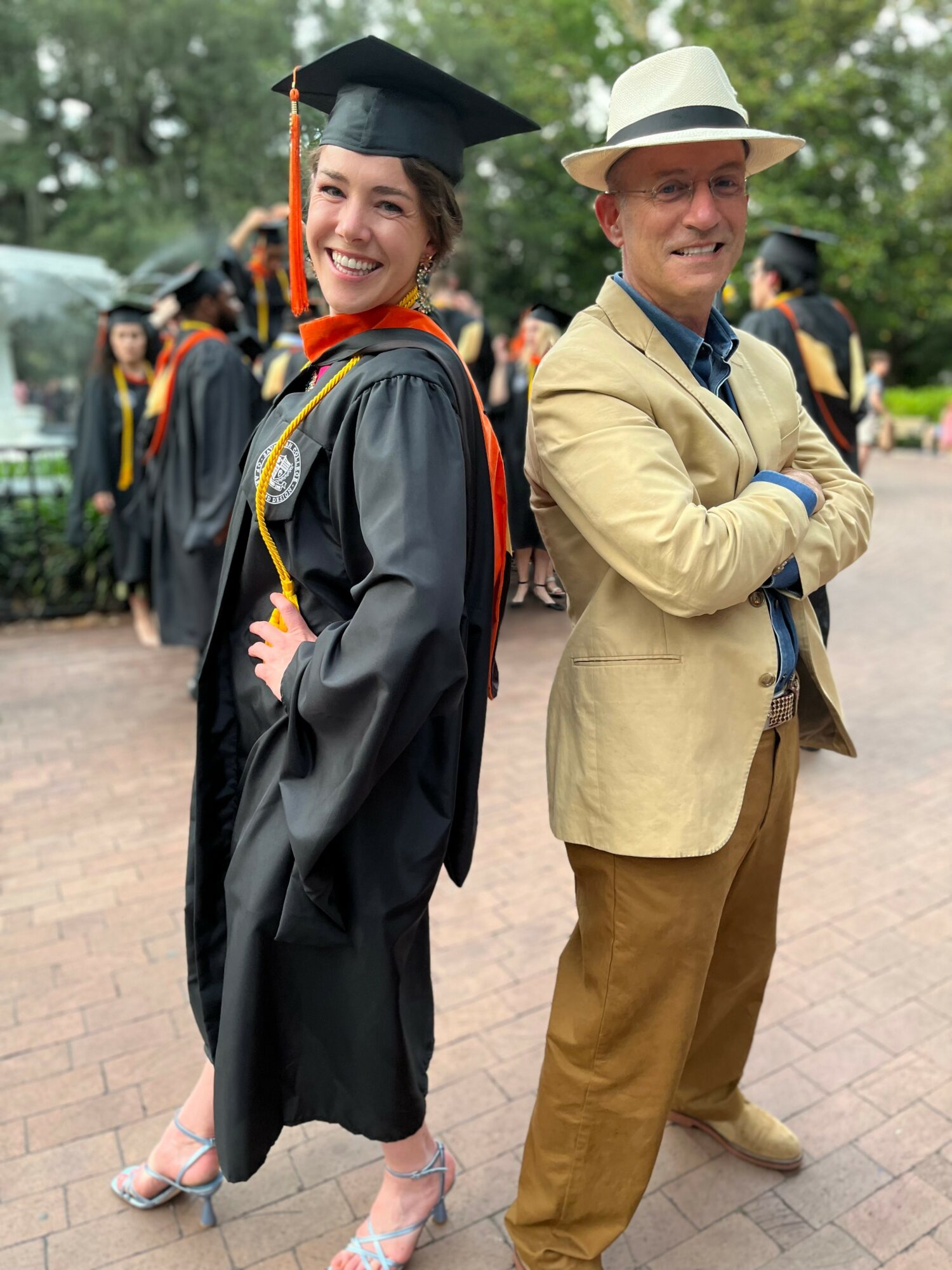
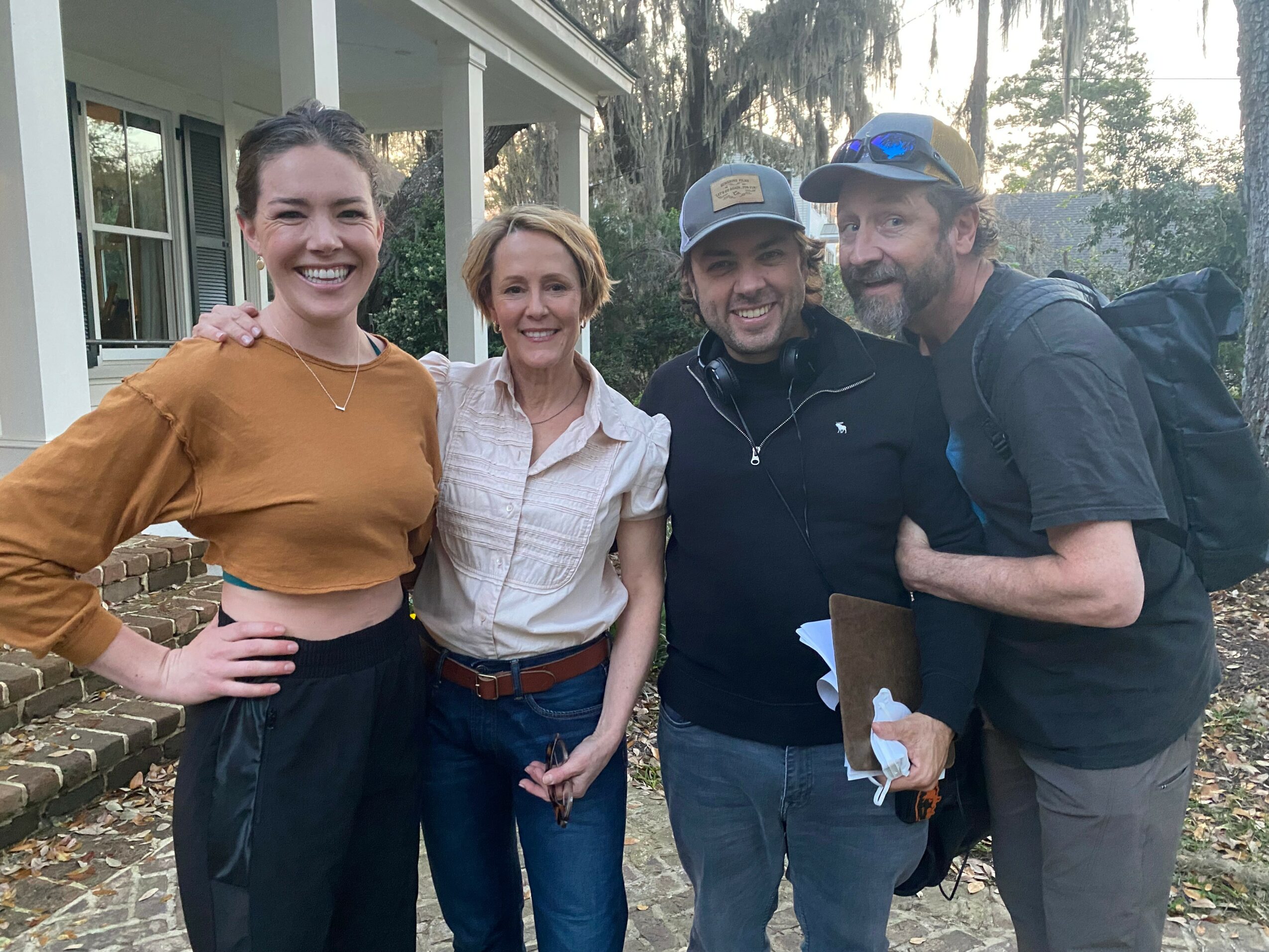
I earned my first post as an Instructor at Western Nebraska Community College, where I was the department. I could not design a set I couldn’t build myself. My first term I custom built 34 costumes, directed, choreographed, and built the set for the first production of the season. It’s amazing to think what one can achieve when someone believes in them. And an entire community believed in me. But Covid happened my second year and we began making films. Re-examine my history…I did not study film and was all of a sudden a filmmaker. It felt like a disservice to my students, so I decided to pursue an MFA, and again ended up going to the place that would challenge me the most; the Savannah College of Art and Design. I was awarded the Dean’s Fellowship to attend, and thanks to the casting office that exists on campus, I booked gigs and appeared in a feature film opposite Mary Stuart Masterson, and worked on the television series Panhandle.
I am a member of the Actors Equity Association and have worked with many brilliant companies. In fact, the first Equity production I directed, dialect coached, and choreographed was the musical Once at the Savannah Rep Theatre, where I got to direct Grammy-nominee Stacie Orrico as Girl. She was wonderful. Such a gift!
I frequently act as a guest artist. I was awarded the KCACTF Meritorious Award for my direction of The Lightning Thief at Idaho State University last year, and have worked as a guest choreographer and lecturer for Westminster College, Salt Lake Community College, and Utah State University.
This past year, I’ve entered what I think of as a more enlightened phase of my career; not because I have answers, but because I feel a deeper obligation to the work itself. I often return to a belief I’ve carried for years (and this is my quote): “Good art should strive to do one of three things: to educate, to enlighten, or to entertain. Great art does all three.” At this point in my life, I feel a responsibility to commit to the work more fervently than ever. I do this not for visibility, but for clarity, longevity, and impact.
Can you talk to us a bit about the challenges and lessons you’ve learned along the way. Looking back would you say it’s been easy or smooth in retrospect?
Harsh feedback has been a constant in my life. It has been far more present than praise, and certainly more abundant than the kind of affirmation many current students (and humans) now expect or hope for. But I still believe, deeply, that criticism is what makes you better. Someone calling you out on poor behavior, on failing to show up prepared, on gaps in technique (go take lessons, I still do) is often the greatest gift you can receive in your career. And honestly? In your relationships, too. Friendships and romantic partnerships grow stronger when honest feedback (good, bad, and uncomfortable) is allowed to exist.
I have been criticized at every juncture of my professional life. One of the most formative moments came during my training at the Royal Academy of Dramatic Art. At the time I attended, RADA accepted only sixteen students per cohort. Ten of those slots were reserved for male-identifying artists, and just six for female-identifying artists, despite the fact that roughly 80% of those auditioning were female-identifying. In simple terms, that meant the majority of applicants were competing for barely over a third of the available places. The odds were never neutral. Getting in required excellence and endurance.
Later in my career, another moment of sharp resistance came from a professor who openly disliked that I referred to myself as an arts educator. “I would love to see your degree in education,” he said. At the time, I had already earned one master’s degree and was one term shy of my second, and had spent over a decade working professionally in the industry. Still, I was asked (once again) to prove myself.
In recent years, I encountered a new and different kind of resistance: teaching itself. I could blame Covid, and it certainly played a role, but I also know how relentlessly I tried to adapt. Every semester, my syllabi changed. Every term, I asked myself, What else can I do to be better? Eventually, that question became exhausting. An exhausted teacher, an exhausted artist, an exhausted human, can hardly be expected to be brilliant at every moment. And yet, that expectation persists.
I found myself consistently burnt out, desperate for an experience that gave me even half of what I was pouring out, and with far less resistance. Education is difficult right now. That truth doesn’t negate its value, but it does demand honesty. And honesty, like criticism, is rarely comfortable. It is, however, essential.
Ultimately, this industry still hinges on one unavoidable truth: it’s about who you know. I often walk into auditions completely unknown (no shorthand, no shared history) because I’ve spent my life moving from country to country, state to state, building work rather than staying in one place long enough to become familiar. That means every audition has to be exceptional. Consistency and dependability aren’t luxuries in this art form; they are requirements.
Directors aren’t only asking, Can this person perform? They’re asking: Are they on time? Do they take direction well? Do they show up prepared and generous? How do they uplift the ensemble? What happens to the room when they walk in? Taking a chance on an artist who might make the process miserable (for the cast, the creative team, or the room itself) is a risk few directors are willing to take. That is why the same names appear on cast lists again and again.
And as a director, I understand this completely. I cast people I trust. I also leave space to be surprised, and I am, every single audition. The talent in the world is vast and staggering. But if I recognize your name on a resumé, I will make the call. Not to ask how talented you are, but how you were to work with.
In the end, craft opens the door, but character decides whether it stays open.
Appreciate you sharing that. What else should we know about what you do?
I work at the intersection of performance, physical storytelling, and collaboration. I’m a performer, director, choreographer, award-winning voiceover artist, and motion-capture specialist, though at this point in my career, those roles are less separate disciplines and more a single, integrated practice. I specialize in work that is embodied, text-driven, and ensemble-centered, whether I’m onstage, on film, in the rehearsal room, or guiding others through process.
I’m best known for my ability to translate story through the body. My background in physical theatre and devising, combined with classical and contemporary text work, allows me to bridge rigor with play. I’m particularly drawn to original work, interdisciplinary collaboration, and rehearsal rooms that value generosity as much as excellence.
What I’m most proud of is my consistency. I’ve built a career not by chasing visibility, but by earning trust: showing up prepared, adaptable, and deeply committed to the work and the people in the room. I’m proud of the artists I’ve helped shape, the ensembles I’ve helped build, and the environments I’ve contributed to where performers feel both challenged and supported. I’m also proud of my willingness to evolve: to question my own methods, to listen, and to keep learning.
What sets me apart is my specificity. I ask how movement, voice, text, rhythm, and human dynamics intersect to tell a story clearly. I bring both a performer’s empathy and a director’s discernment into every collaboration. I care deeply not just about what is being made, but how it’s made. My goal is to create and support work that is rigorous, humane, and alive, and to keep contributing to an industry where clarity, integrity, and collaboration are valued as highly as talent.
What are your plans for the future?
My future plans are less about climbing a ladder and more about deepening the work. I’m committed to building a sustainable, long-term career that allows me to keep performing, directing, and collaborating across disciplines, while staying rooted in rigor, curiosity, and integrity. I want to continue working in rehearsal rooms that value ensemble, generosity, and clarity and to keep telling stories that trust the intelligence of the audience.
I’m especially interested in developing original work and projects that blend physical storytelling, text, and movement, as well as collaborations that stretch beyond traditional theatre spaces. I want to keep saying yes to projects that ask something of me artistically, intellectually, and ethically. Perhaps I will be lucky enough to reach a point where I can afford to say no to those that don’t. But we can’t all be so lucky!
I also plan to remain deeply invested in mentorship and teaching, even outside formal academia. Supporting emerging artists, shaping brave rehearsal environments, and passing on practical tools for longevity in this industry feels like an essential part of my responsibility now.
Contact Info:
- Website: https://www.francescamintowt.com/