



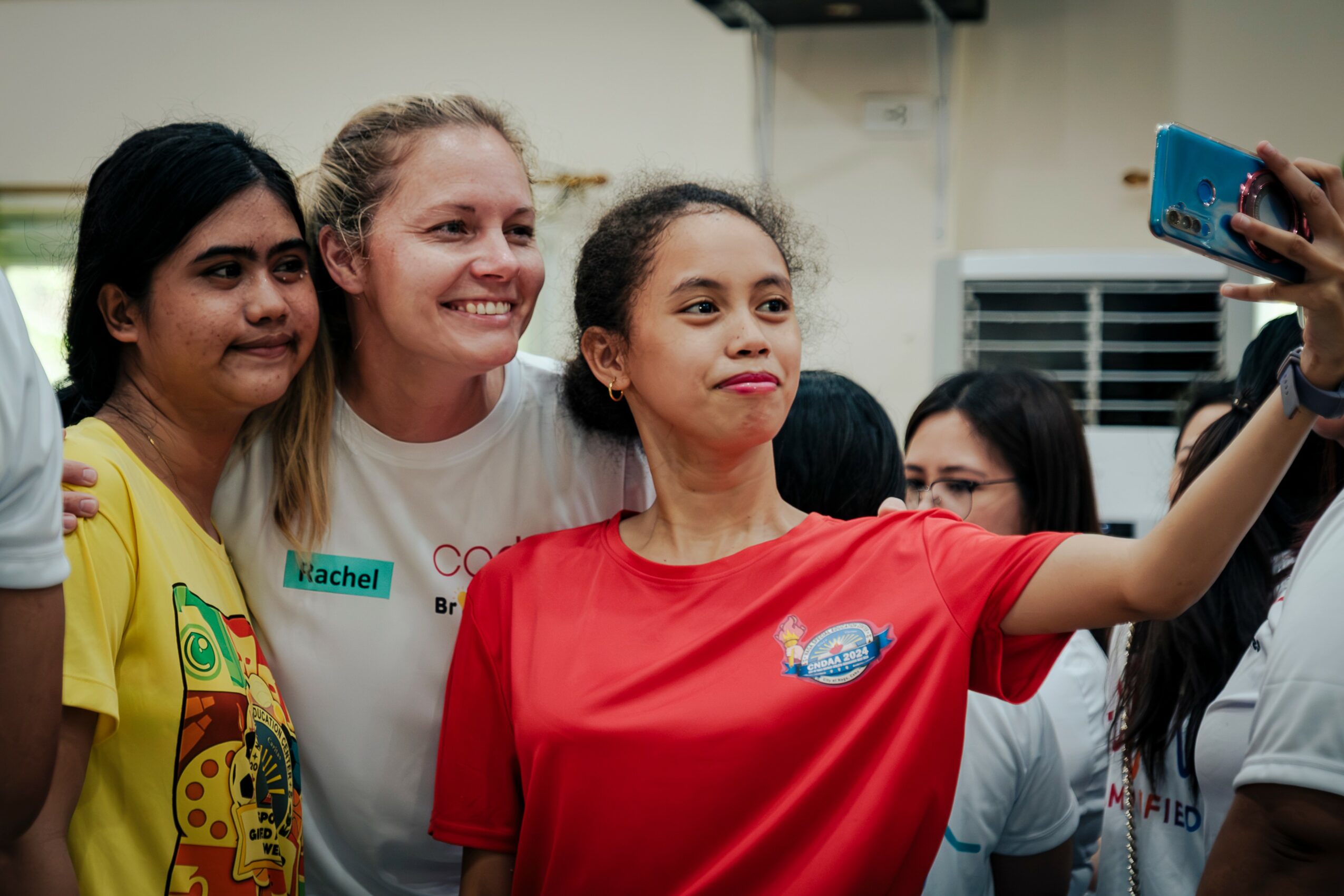
Today we’d like to introduce you to Rachel Libby.
Hi Rachel, thanks for joining us today. We’d love for you to start by introducing yourself.
I’ve always been drawn to the power of storytelling and people.
I moved around a lot growing up and attended three different high schools, which exposed me early to a wide range of personalities, perspectives, and lived experiences. I became fascinated by how people tick — what motivates them, what makes them feel seen, and what inspires them to change. That curiosity followed me to BYU, where I studied broadcast journalism with an emphasis in sociology. I wanted to understand what creates real impact on a human level — what actually moves people to evolve, take action, or see themselves differently. Why do we do what we do and what would it take to change?
That foundation naturally led me into marketing and growth, where storytelling, strategy, and execution come together. I was drawn to work that solves real problems on a human level rather than treating people or customers transactionally. Across several fast-moving companies, often in lean environments, I learned how to create momentum — launching new initiatives, shaping narratives from scratch, and finding ways to drive impact without burning people out. Those experiences shaped how I approach my work today: people-first, grounded, and focused on substance over surface-level optics.
I’m also extremely competitive and have enjoyed pushing myself throughout my career to take on bigger roles and responsibilities that allow me the biggest impact and ability to create change and influence a brand’s story and how we solve problems for customers.
Most recently, my path brought me to CoDev as VP of Marketing, where my understanding of how great teams work has evolved. Working closely with global talent — particularly in the Philippines — has given me a front-row seat to what’s possible when companies invest in people as partners rather than viewing staffing purely through a cost lens. Seeing how trust, consistency, and thoughtful collaboration can unlock growth without exhausting teams deeply influenced how I think about leadership and long-term impact.
Today, I see my role less as a traditional marketer and more as someone who helps organizations grow through clarity, connection, and honest storytelling. I’m still learning, but everything I’ve done so far has reinforced the same belief: stories have the power to move people, and the teams you surround yourself with — at work and in life — can help you become even better.
Alright, so let’s dig a little deeper into the story – has it been an easy path overall and if not, what were the challenges you’ve had to overcome?
I’ve been fortunate to work with leaders who believed in me early and trusted me with responsibility that pushed me to grow quickly. Those experiences built confidence and momentum, and I’m deeply grateful for the people who created space for me to stretch and learn.
I’ve also encountered moments that required a different kind of growth — learning how to advocate for myself, read complex dynamics, and develop emotional intelligence in environments where expectations weren’t always clearly defined. Those experiences taught me the importance of communicating with clarity, staying grounded under pressure, and leading with both empathy and conviction. They also taught me how to believe in myself and the teams I’ve built, and that the best results often come when you have a true champion in your corner.
Looking back, those moments shaped how I show up today. They helped me better understand myself, sharpen my instincts, and reinforce the importance of creating environments where people feel respected, heard, and supported. That balance between accountability and care is something I value deeply and strive to bring into my work.
Thanks – so what else should our readers know about your work and what you’re currently focused on?
I do growth and marketing work, but what really defines me is execution. I’m known for getting things done especially in lean environments where there isn’t a big team, a big budget, or a perfectly defined roadmap.
I specialize in taking ideas from concept to reality. That might look like building a marketing function from the ground up, launching new initiatives with limited resources, or turning a loose vision into something tangible that actually drives results. I’m comfortable operating in ambiguity and moving quickly without sacrificing quality.
What I’m most proud of is how much I’ve been able to accomplish with small, scrappy teams. I’ve consistently delivered outsized impact by staying focused, prioritizing what actually matters, and rolling up my sleeves alongside the people I work with.
What sets me apart is the balance I bring between vision and follow-through. As you move up in leadership, it’s common to find people who are strong thinkers but disconnected from execution, or strong operators without a long-term point of view. I’ve worked hard to stay close to both. I care deeply about where we’re going, but I’m equally invested in doing the work it takes to get there.
In terms of your work and the industry, what are some of the changes you are expecting to see over the next five to ten years?
I believe the future of marketing will demand even more creative, curious thinkers who can see around corners and challenge conventional approaches. AI is an incredibly powerful tool, but it can also create a kind of “sandbox effect” if marketers rely on it too heavily. The real advantage will belong to people who use AI to accelerate execution while reserving their own energy for strategic thinking, original ideas, and human insight — areas where technology still can’t compete.
I expect we’ll see a surge of automation tools that remove manual workload from marketers’ plates, which will free up time for higher-level problem solving, experimentation, and creativity. In that sense, the best marketers won’t be replaced by AI; they’ll be amplified by it.
As for offshore staffing, I see that space continuing to grow rapidly as technology makes global collaboration more seamless. The industry is projected to surpass $2 trillion by 2034, and that growth reflects something bigger than cost efficiency — it reflects a shift toward globally integrated teams. At its best, offshore work isn’t just about scale; it’s about connection. Working with talented people across cultures expands perspective, accelerates learning, and ultimately produces better outcomes for everyone involved.
Contact Info:
- Website: https://codev.com
- LinkedIn: https://www.linkedin.com/company/codevusa
Image Credits
CoDev