



Today we’d like to introduce you to Pat Brehl.
Pat, we appreciate you taking the time to share your story with us today. Where does your story begin?
My path into social work wasn’t a straight line. Looking back, there have been many junctures in my life where I benefited from the right guide at the right time. Sometimes those guides were teachers/professional/fellow travelers and sometimes they were obstacles that blocked a path I thought I needed to take. Entering the field of social work was the latter.
My formal education was in music and English education. I spent several years using that degree while living in Canada and Europe, and there were many aspects of teaching that I enjoyed. But if I’m honest, I often noticed how deeply passionate my colleagues were about their subject matter and wondered what was wrong with me that I didn’t feel the same spark. I liked teaching Shakespeare, and conducting band was fun, but something felt missing.
Then I took a position teaching English as a Second Language, and everything began to shift. I found myself especially drawn to helping students navigate the transition to a new country and culture. At the time, I was living as an expat in the Netherlands, so I understood what it felt like to be a bit of a fish out of water. I didn’t know it then, but that experience—supporting people as they adapted, found belonging, and built confidence—was my first step into social work.
When I eventually moved to the United States, my Canadian teaching credentials weren’t fully recognized. I would have needed to complete additional coursework to become licensed. Trying to save money, I attempted to test out of the required credits. That seemed manageable—until I reached the math proficiency tests. After multiple failed attempts, I finally accepted that continuing down the teaching path in the U.S. might not be the right fit for me. In a strange way, I can credit my launch into social work to those stubborn math exams.
From there, I began looking for work that aligned with my growing interest in human services. I volunteered teaching English to newly arrived refugees and eventually found an intake position at a community mental health agency. In that role, I was often the very first person someone spoke to when they reached out for therapy. I asked initial screening questions and helped match them with the clinician who might best support them. Being that first safe point of contact for people during vulnerable moments was an incredible privilege, and it made me realize I wanted to be part of what happened next in their healing process.
I went on to earn my Master of Social Work, and nearly twenty years later I haven’t regretted that decision for a moment. My first position as a therapist was at that same community mental health agency, Family and Children’s Services of Ithaca, New York, where I worked in the 0–5 program serving young children and their caregivers. Later, I moved to Utah and became the Children’s Services Coordinator at House of Hope, a residential substance use disorder treatment program for women. There, I had the opportunity to participate in a two-year trauma-informed care learning initiative with The Children’s Center. I applied that training while providing family therapy and reunification services for mothers in the program and their young children. My music background even found its way into the work, as I directed a choir for the women in the program to help build community, confidence, and empowerment.
In 2016, I opened my private practice, Dragonfly Family Therapy. Interestingly, I now find myself circling back toward teaching again, this time in the form of mentoring associate therapists as they work toward licensure. After all these years, I finally feel the same spark I once saw in my colleagues who were so passionate about their work. It turns out there was never anything wrong with me—I was simply on the wrong path for a while. I’m grateful that life rerouted me, even if it took my poor math skills to get there.
Would you say it’s been a smooth road, and if not what are some of the biggest challenges you’ve faced along the way?
My path into social work, as I mentioned, actually began with obstacles. It was the challenge of teaching licensure in a new country that first pushed me to consider a different direction. One trait I’ve noticed about myself over the years is that when I set my mind to something, I tend to persevere until it’s done. While many of the obstacles in my life have been painful, they have also forced me to slow down, reflect, and move forward with more intention.
One of the most difficult periods of my life came while I was completing my MSW program. At the time, my marriage was struggling, and I kept trying to push through and make things work. Then my sister was diagnosed with Stage 4 metastatic breast cancer. She was a young professional herself—an adjunct professor of psychology at the University of Utah—and the mother of a three-month-old baby when she received a prognosis of about three years to live.
For the first couple of years after her diagnosis, I traveled frequently between upstate New York and Salt Lake City to support her through treatments, while still trying to hold my own life together. When her cancer eventually progressed and it became clear that treatment options were running out, I realized I needed to focus my energy where it mattered most. I made the difficult but amicable decision to end my marriage and move to Utah to be with my sister and help care for my young nephew.
We were able to spend nine meaningful months together before she passed away. After her death, I chose to remain in Utah so I could continue to play a parenting role in my nephew’s life.
Losing my sister was a profound loss for our family and for the many people who loved her. At the same time, that experience deepened my commitment to the work I do. It strengthened my dedication to clinical social work, particularly in the areas of trauma, attachment, and family relationships. My work with families navigating grief, loss, and attachment ruptures has shaped me as a parent, just as my personal experiences have deepened my empathy and understanding as a therapist.
Thanks for sharing that. So, maybe next you can tell us a bit more about your business?
Dragonfly Family Therapy began as a solo private practice in 2016 and has gradually grown a reputation for working with individuals and families through a trauma-informed, attachment-based lens.
The dragonfly is a symbol of wisdom and transformation. I chose that name intentionally because my own life has been shaped by learning to tap into inner wisdom—often with the help of the right guides at the right time—to navigate challenges and create meaningful change. That same process of growth and transformation is something I aim to support in the people I work with.
Much of my work focuses on children, parents, and families, although I also work with adults. One of the unique aspects of my practice is that my work with young children continually informs my work with adults who are healing from early attachment wounds, and vice versa. Understanding how relationships shape us across the lifespan allows me to help families see patterns with more compassion and clarity.
Over time, I’ve come to think of one of my specialties as “speaking the language of children.” Young children often communicate their needs through behavior, play, or big emotions rather than words. Part of my role is helping explain complex feelings in ways children can understand, while also helping parents interpret what their child may be trying to communicate through their behavior.
One of the areas I’m most proud of in my practice is the work I do in parent consultation. Once parents begin to better understand their child’s emotional world, I enjoy helping them reconnect with their own instincts and wisdom as caregivers. My goal is not to position myself as the expert on their child, but to support parents in feeling more confident and capable in guiding their family forward.
If we knew you growing up, how would we have described you?
Growing up, I was an observer. I’ve always been fascinated by human behavior and spent countless hours reading, watching TV, and people-watching, noticing patterns in how people relate to one another.
I often surrounded myself with very smart and talented people, but I was rarely the smartest, fastest, or most creative person in the room. In the movie Beaches, I definitely would have been the Barbara Hershey character—I’ve had many Bette Midlers in my life. At the end of each school year, I would watch my friends walk across the stage to receive awards for academics, sports, music, or art. Year after year, the award I received was for citizenship. Essentially, I kept getting recognized for being “nice.”
As a child, I saw that as a shortcoming. I admired the incredible talents of the people around me and sometimes wondered why I felt so ordinary. Now, as a parent, I feel completely differently. When my first grader comes home with awards recognizing patience, kindness, and being supportive of his community, I couldn’t be prouder. It turns out those qualities matter quite a bit.
I’ve also always loved music, art, and dogs. I pursued a music degree and played the French horn for many years. While music didn’t end up being my career path, it still plays an important role in my life. Recently I’ve been learning piano alongside my children, which has been a lot of fun.
As a child, I also loved drawing and took a few art classes at our local recreation center. I wasn’t the best in the class, but I found painting incredibly calming. Eventually, financial strain in my family meant I had to stop taking lessons, and for a long time I didn’t pursue art. As an adult, though, I’ve returned to it by joining local studios, and creative expression has once again become a regular part of my life. I now incorporate expressive arts into my therapy work with clients as another way for people to process and communicate their experiences.
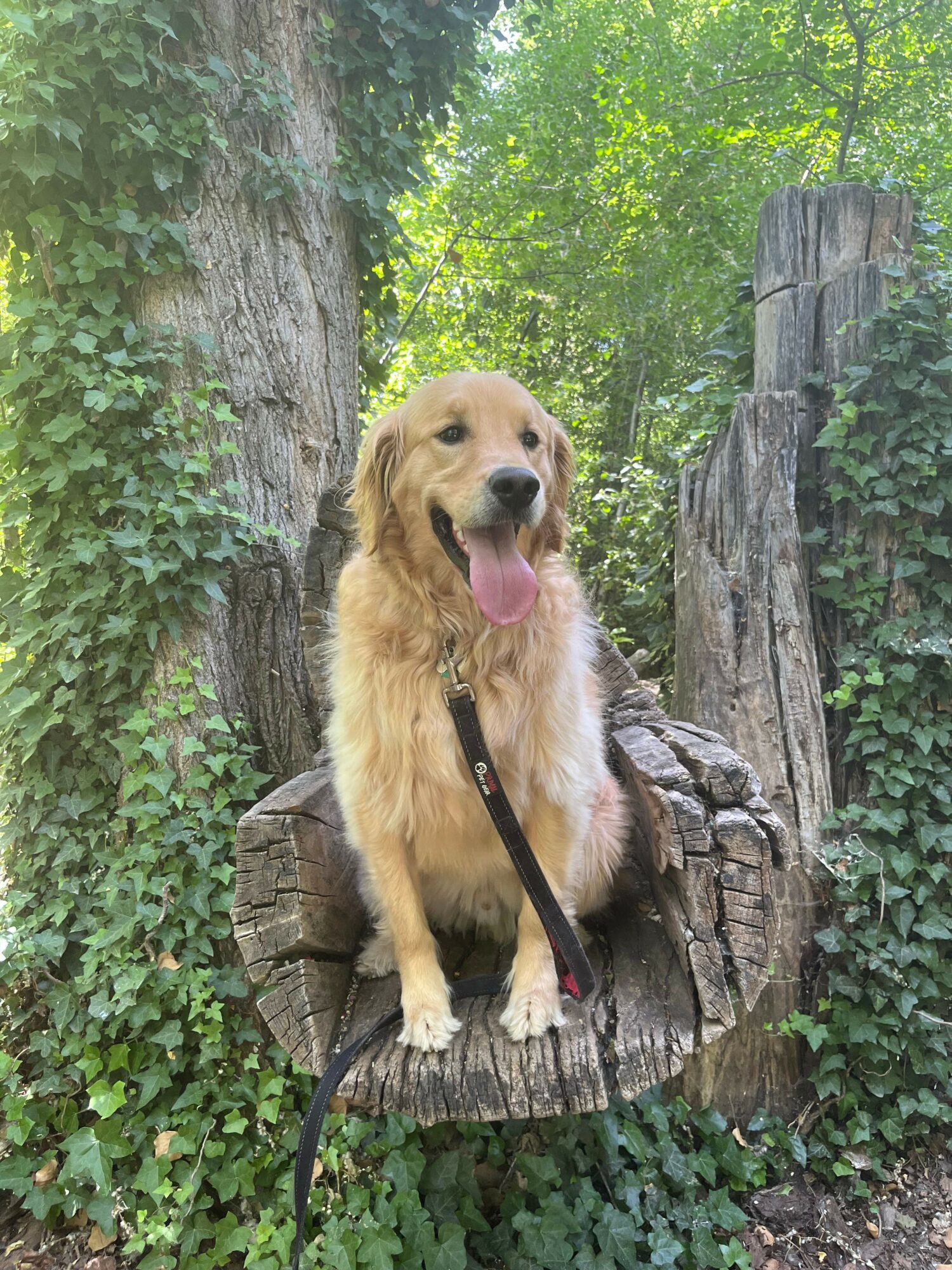
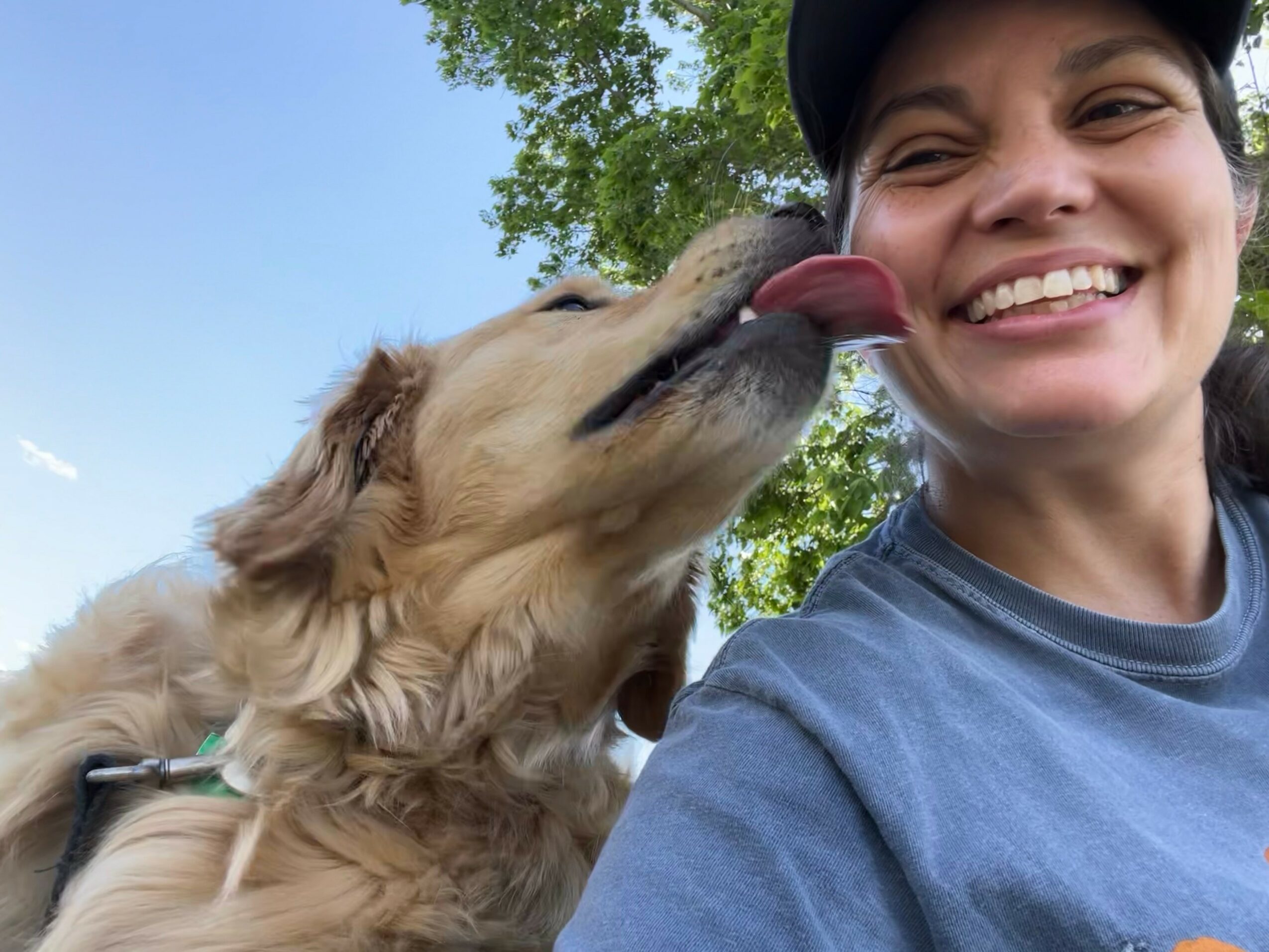
And finally, there have always been dogs in my life. My canine companions have provided comfort, companionship, and plenty of motivation to get outside and walk. I currently have a Golden Retriever named Riley who, at the time of this writing, is training to become a certified therapy dog so he can eventually join me in my practice.
Looking back, I realize that being the observant, “nice” kid who was curious about people may have been quietly preparing me for the work I do now.
Pricing:
- Accept HMHI-BHN, BCBS, PEHP, and Select Health Insurance
Contact Info: