


Today we’d like to introduce you to Chloe Chinchilla.
Hi Chloe, so excited to have you on the platform. So before we get into questions about your work-life, maybe you can bring our readers up to speed on your story and how you got to where you are today?
CWAC’s roots date back fifteen years, when it emerged as an animal-assisted therapy program under Friends of Animals Utah.
Post-OEF (Operation Enduring Freedom)/OIF (Operation Iraqi Freedom), many veterans were returning home with not only physical disabilities, but mental health concerns as well. In 2010 when Canines With a Cause was established, 22 veterans per day were taking their own lives, over 55% higher than the national average.
During the same time, over 2.6 million animals were euthanized in shelters, which is over 700 animals per day across the United States.
Our founder, Cathy King, coming from the rescue world took these two major issues and found a solution. Canines With a Cause emerged to pair rescued dogs with veterans, successfully saving the lives of both veterans and dogs by healing emotional and psychological wounds through canine companionship.
As demand grew for programs supporting veterans with Post Traumatic Stress (PTS(D), Traumatic Brain Injury (TBI), and Military Sexual Trauma (MST), CWAC established itself as a 501(c)(3) not-for-profit organization in 2011.
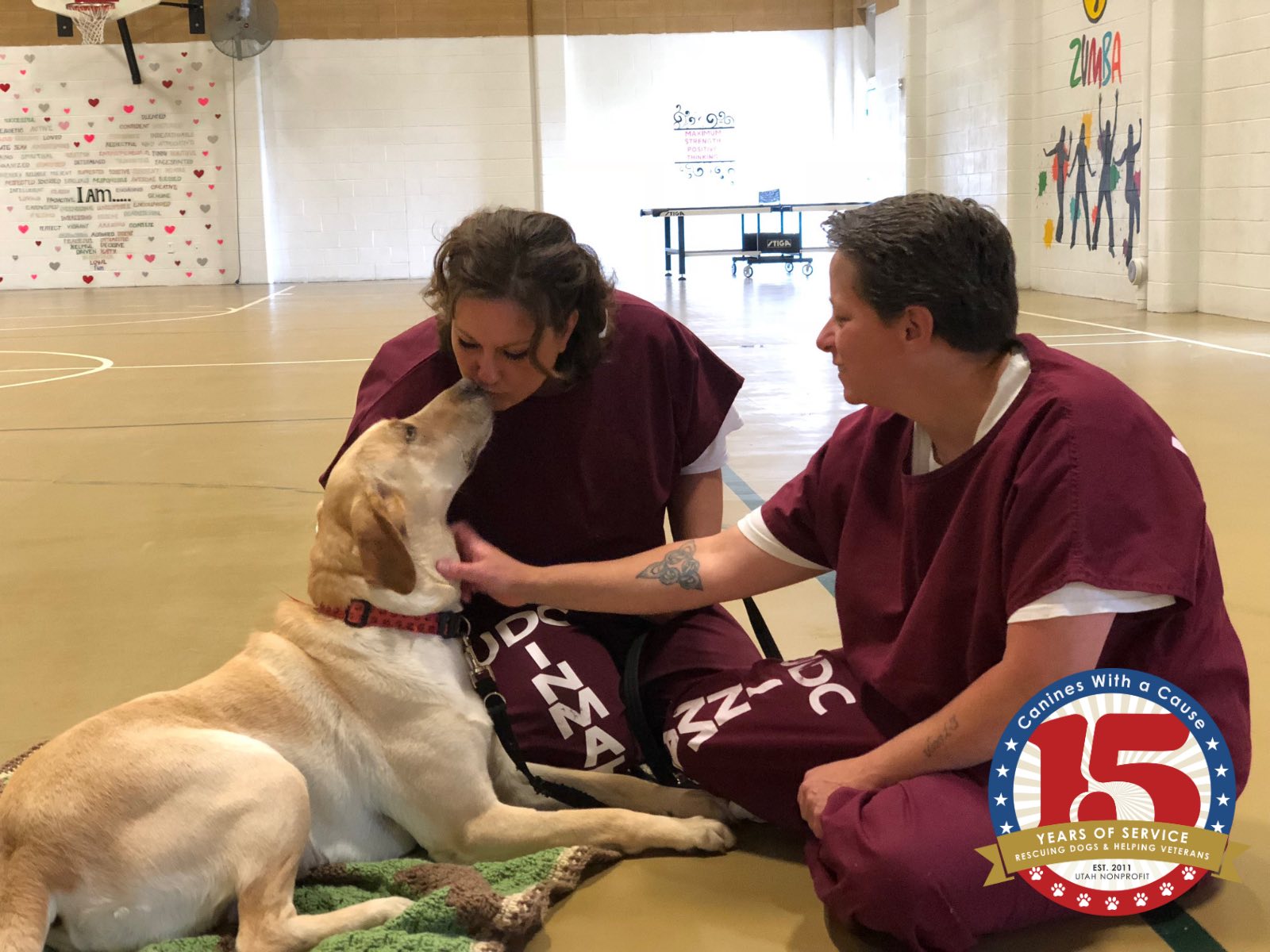
Just a few short years later, we expanded this idea into the Women’s wing in the Utah State Prison. At the time, dog training prison programs were a very new idea. It took a while to navigate, but ultimately led to a wonderful program.
We chose the women’s side of the prison because there were only a few re-entry or rehabilitation programs available to women and far more for men.
Due to Covid closures and the relocation of the Utah State Prison, we have since lost the prison program, but have re-structured. We now pre-train dogs with the help of our community at large, placing shelter dogs with local fosters to be pre-trained before being paired with a veteran.
PROGRAM OVERVIEW
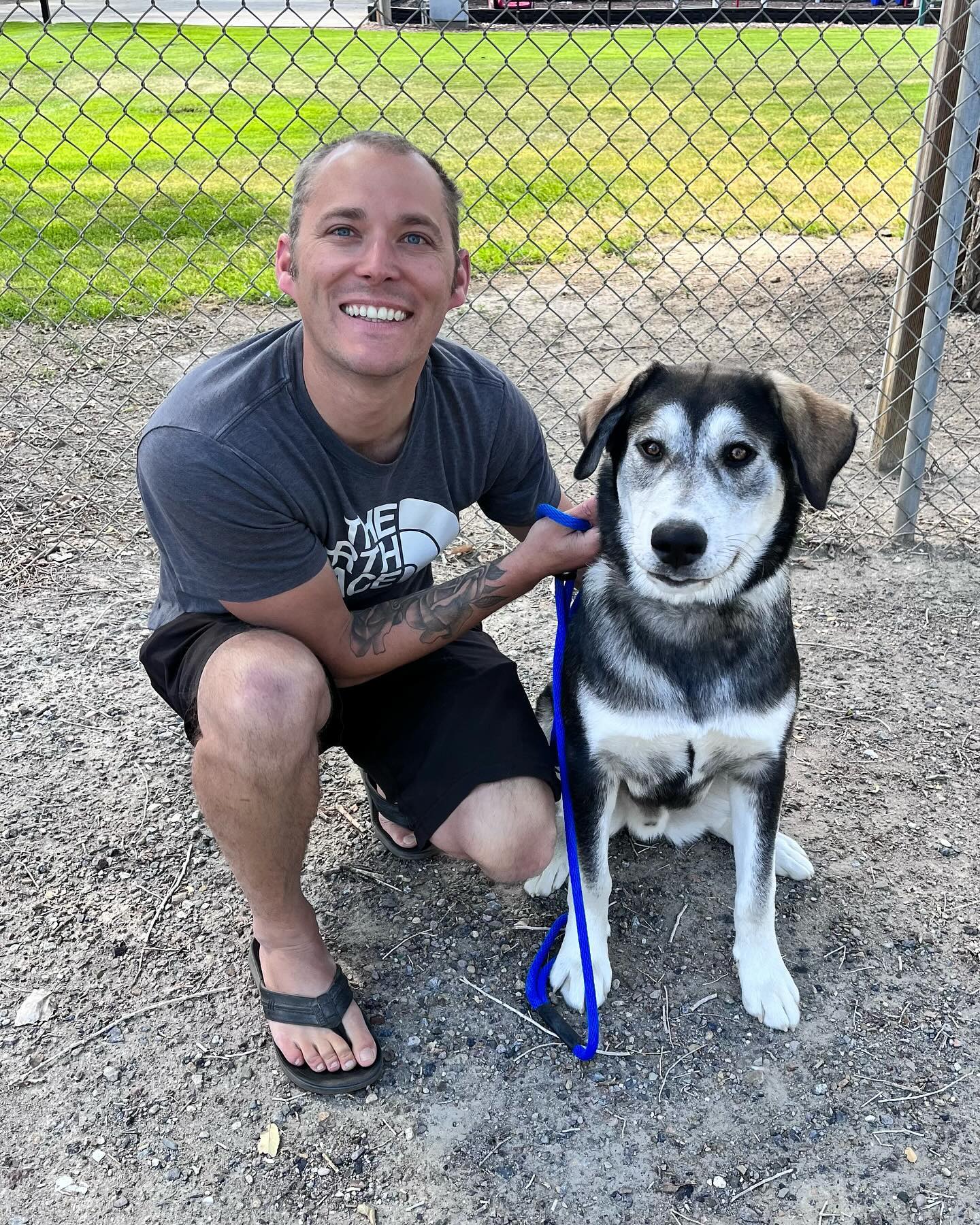
First step– we find the dogs. Trainers search for dogs at local shelters
over 90% of our dogs come from local shelters, and the rest are donated dogs from breeders or brought in by a veteran who already has their own dog.
After the dog passes a rigorous evaluation to ensure they have the correct temperament for service dog work, we place them with one of our Paw Squad members.
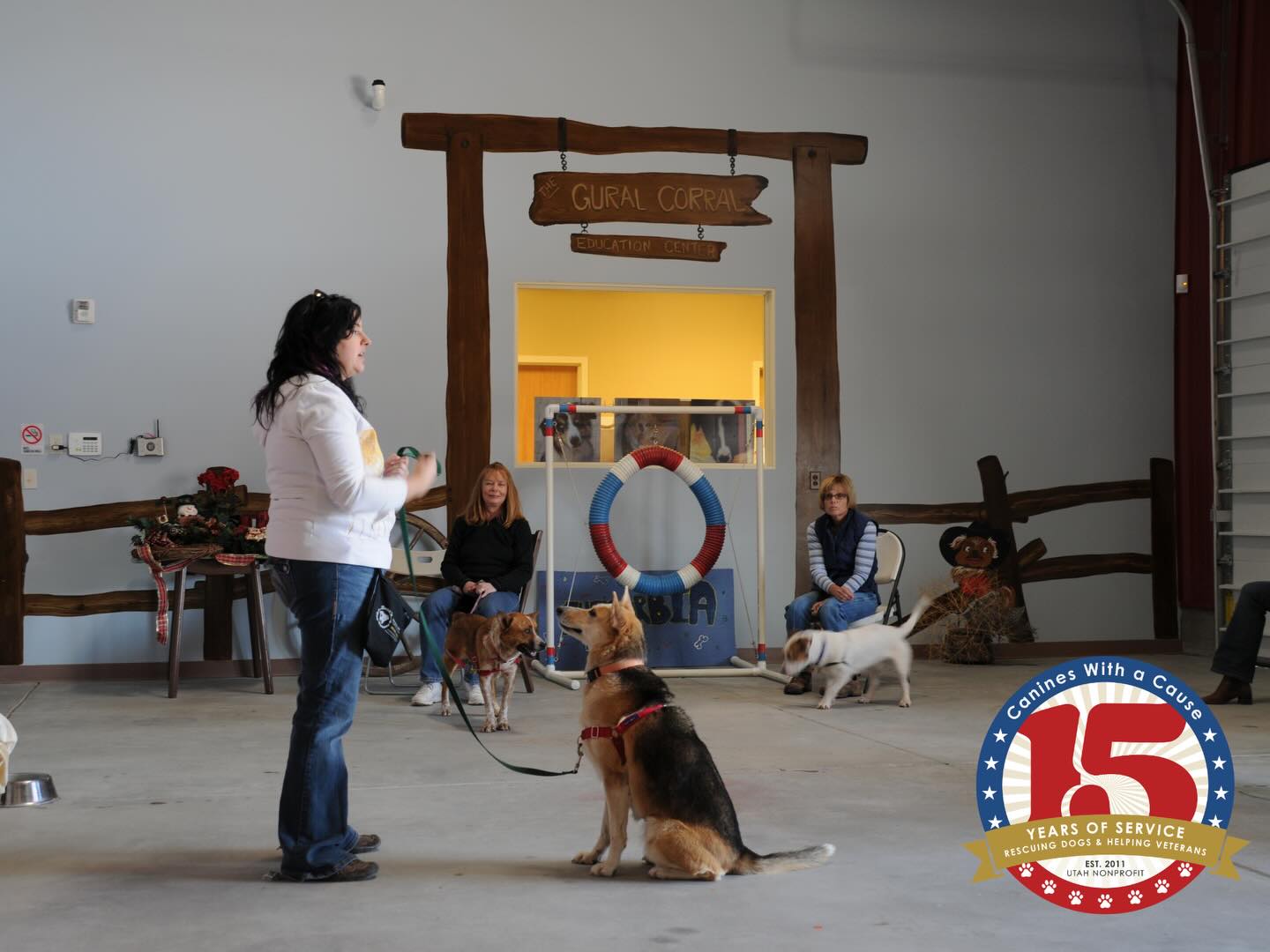
The paw squad functions in quite the same way as the prison program, but is a community-based foster program, where fosters are coming to weekly classes and training the dog outside of class, giving them basic obedience skills.
Once the dog has those skills, it is paired with a veteran and they begin the training program. Each training program, though the same curriculum, is individualized to the client, in that we train to skill, not to time, and we train the dog on whatever psychiatric task our client needs.
Our Model- train the trainer,
Clients join group classes where they are instructed by a certified professional dog trainer and learn how to train their own dogs.
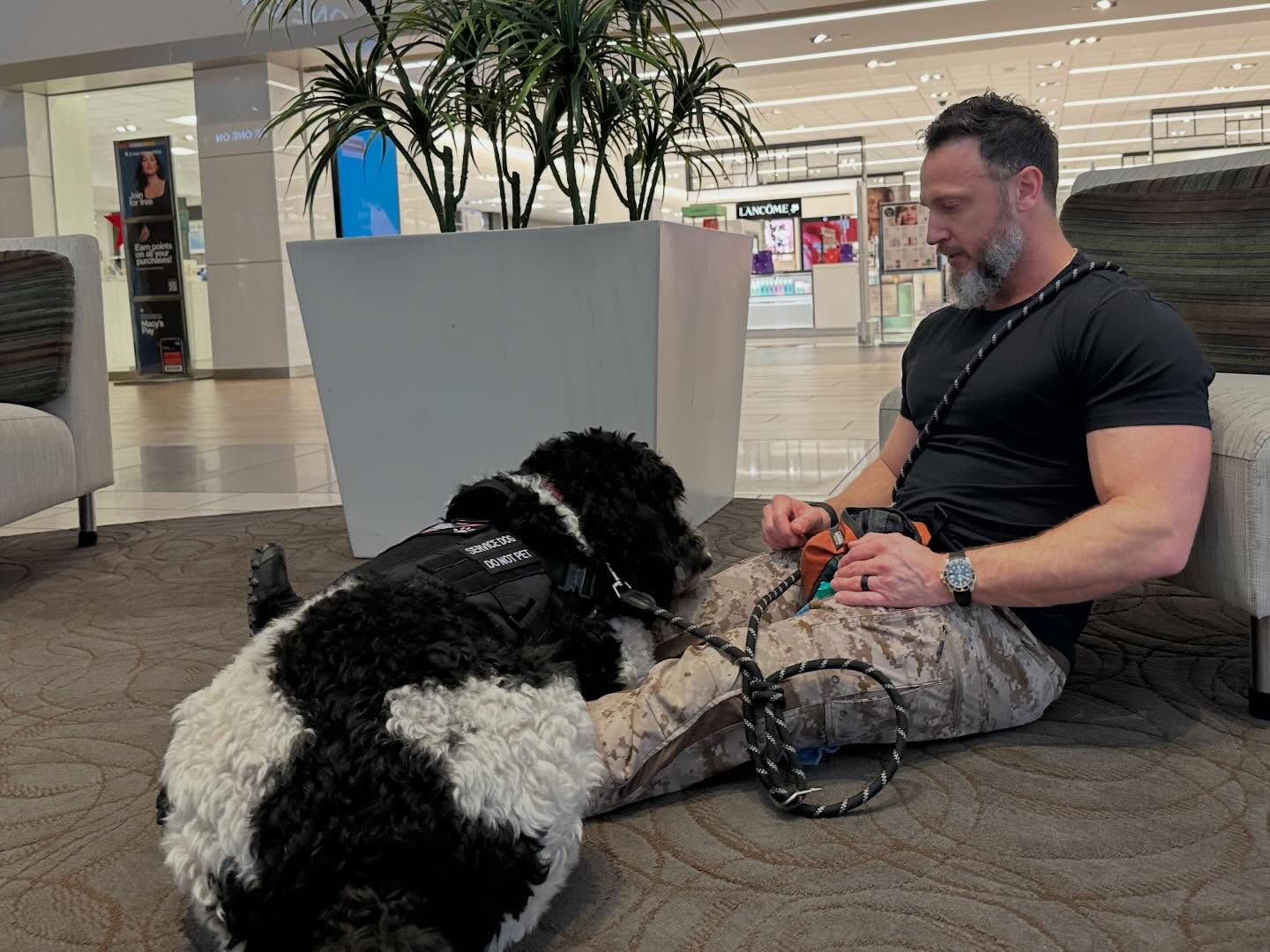
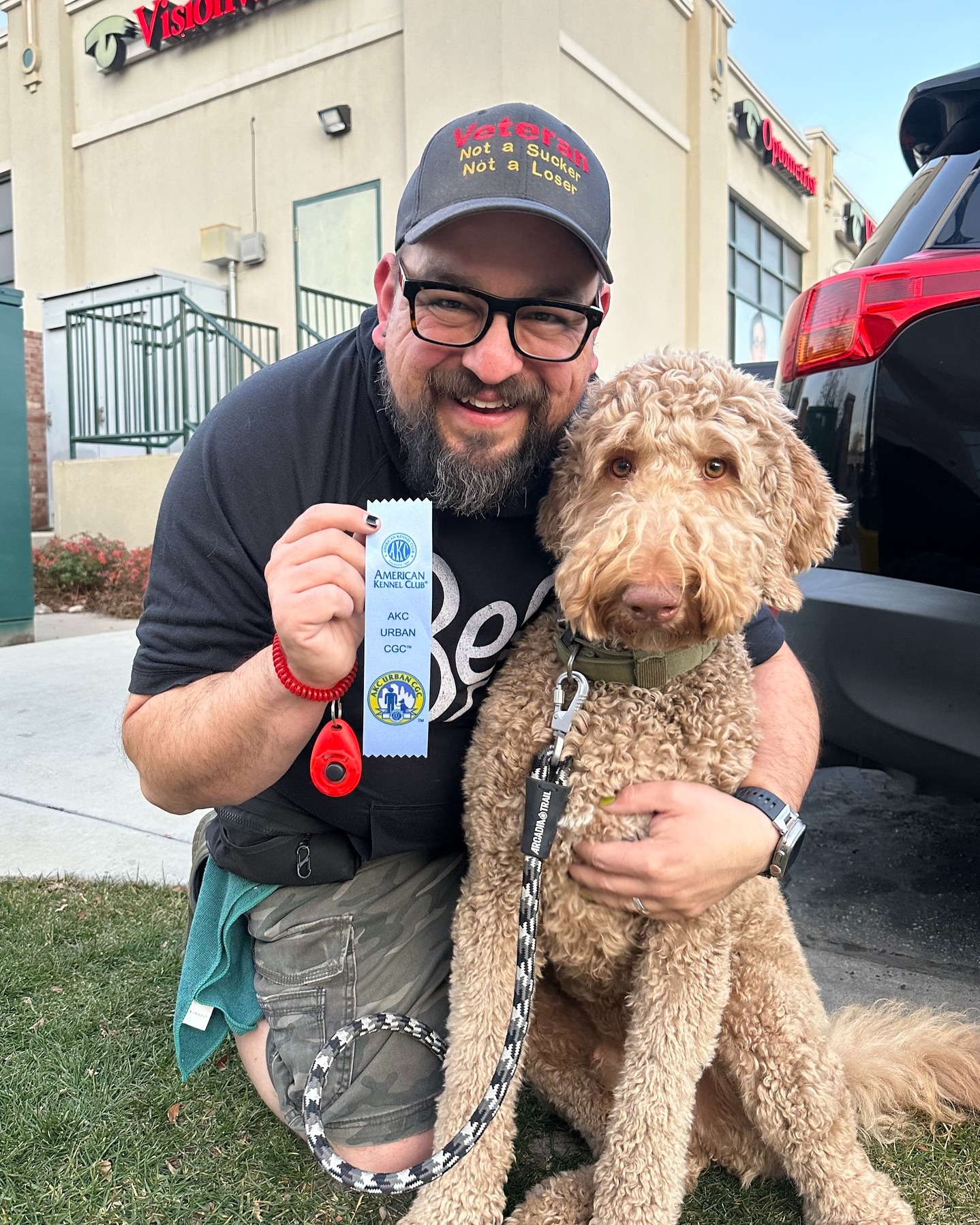
We will first guide the veteran through a foundation class, where we teach basic dog care, ADA law, and handler skills. We then introduce our basic dog training course, creating foundational skills that the veteran-dog team will slowly build upon. In intermediate training, we slowly begin going into dog-friendly buildings to practice basic skills, until we are ready for non-dog friendly buildings in Advanced training. In Service dog in Training class, we hone these public skills and teach the tasks that set service dogs apart from companion dogs, and are meant to mitigate the symptoms of the handler’s disability.
2 years, and in that time, our clients learn how to train their own dog.
The reason for this is three-fold:
One, this method enables us to serve more veterans in our community– because we are not pre-training a service dog fully, which costs a lot of time and money, we are able to allocate those funds to other program needs while bringing more people into the program.
2. We have found it to be crucial to the veteran in re-entering civilian life.
Plenty of service dog organizations will give a client with PTSD a fully trained service dog, walk them through a 3-week course on how to handle the dog, and send them home. The problem with this is that the veteran doesn’t always feel confident with that dog. The bond might not be there or they might feel uncomfortable going into a public place with their service dog on their own. It never gives them slow, safe exposure to the places that trigger them.
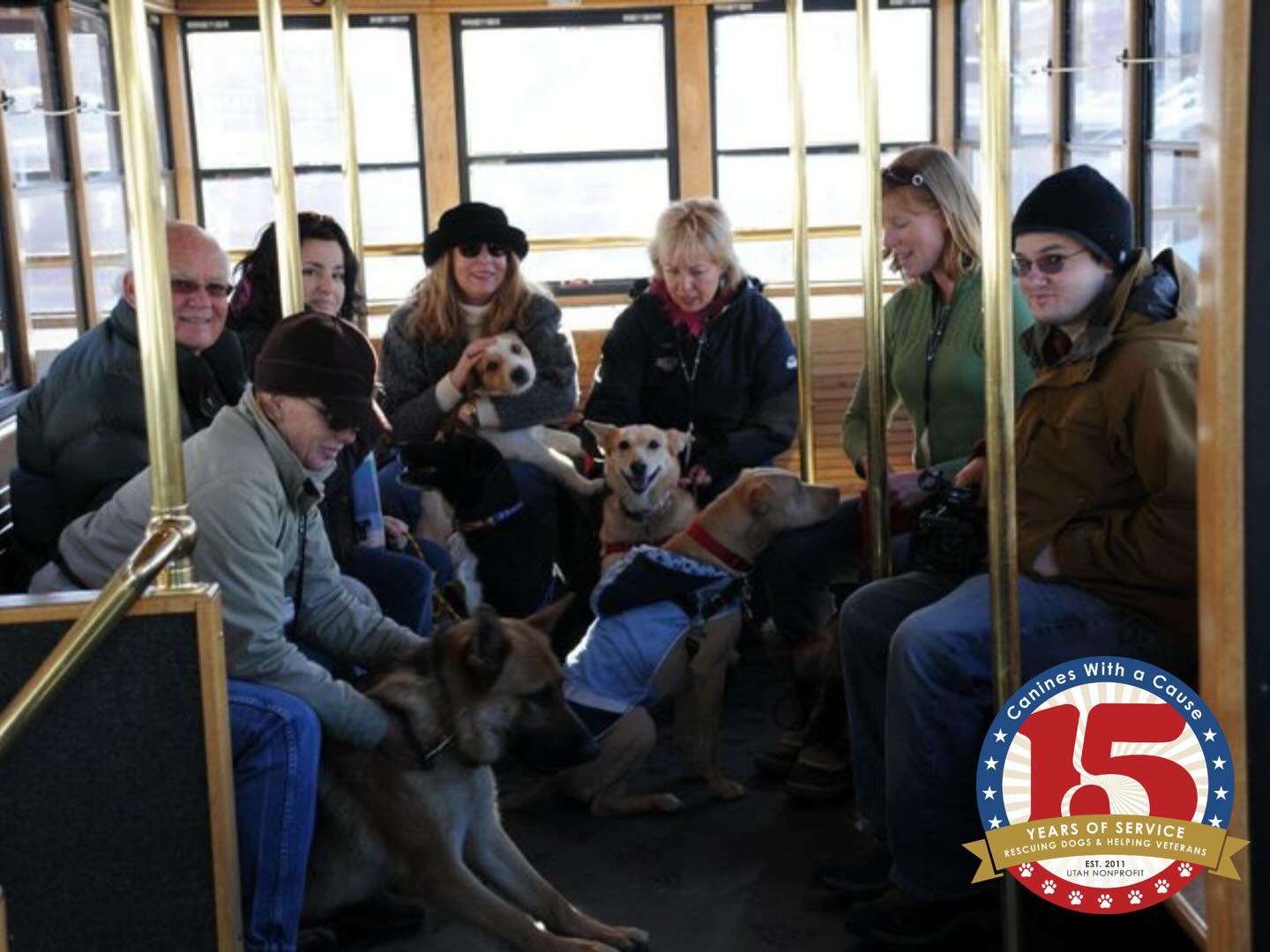
When we focus on group classes and slow re-integration, our clients become more and more comfortable in the public in a setting that is comfortable for them, with their comrades, and with the dogs who give them support.
3. It builds confidence, trust, and bond.
The bond is what we believe creates what we like to call the “service dog gold.”
If you are a dog person, you will know what I’m talking about. Where the dog can sense what you’re feeling and you, in turn, know your dog just as well. This bond helps dogs learn quickly ways to engage with their person and learn their triggers more easily. It’s the bread and butter of what we do.
Training this way builds confidence for the clients in that they are learning a new skill and succeeding in training their own dog. Teaching dogs skills and passing those tests in stride with their canine companion gives clients a sense of purpose and pride. In turn, it strengthens the trust between the team by helping each other navigate challenges.
And though we do train tasks, a lot of clients note they feel better just having their dog there with them to concentrate on.
Canines With a Cause uses only positive reinforcement, which is the only science-based approach to dog training. It is proven to be more effective than aversive methods at teaching skills more efficiently and dogs retaining those skills. This type of training is fun for the dog and healthy for the veteran, as many veterans experience anger as part of their ptsd. This is helping re-wire their brains and lead with patience. It build impulse control and resiliency.
Our program takes about 1-2 years to complete, and after graduation, clients are always invited back to help new veterans in the program, join monthly get togethers and community events, and attend classes to keep up with skills.
We all face challenges, but looking back would you describe it as a relatively smooth road?
Of course, this sort of grassroots program has come with its own set of challenges. From prison closures, to dogs needing new homes, to funding cuts, we have soldiered on.
One large challenge CWAC faced was restructuring after the closure of the prison. Finding fosters for dogs has not always been easy. Due to limited funding, we do not have a facility, so we rely on fosters within our community.
When Covid hit and the prison program was shut down, we had to immediately find new shelter for around eight dogs who were enrolled in the prison training program. Thankfully, our fosters came through for us and we were able to get all dogs into safe, loving homes. Trainers and staff members also took dogs home temporarily.
Another large part of our work is fundraising. Because we’re a nonprofit, we rely on donations and grants. Due to government budget cuts, we lost a large portion of our operational budget this past year. We have had to get back to grassroots fundraising efforts, host more events, and find new, successful ways to engage donors and raise money to keep this important program going.
Contact Info:
- Website: https://canineswithacause.org
- Instagram: @canineswithacause
- Facebook: https://Facebook.com/canineswithacause