


Today we’d like to introduce you to Riley Ridd.
Hi Riley, so excited to have you with us today. What can you tell us about your story?
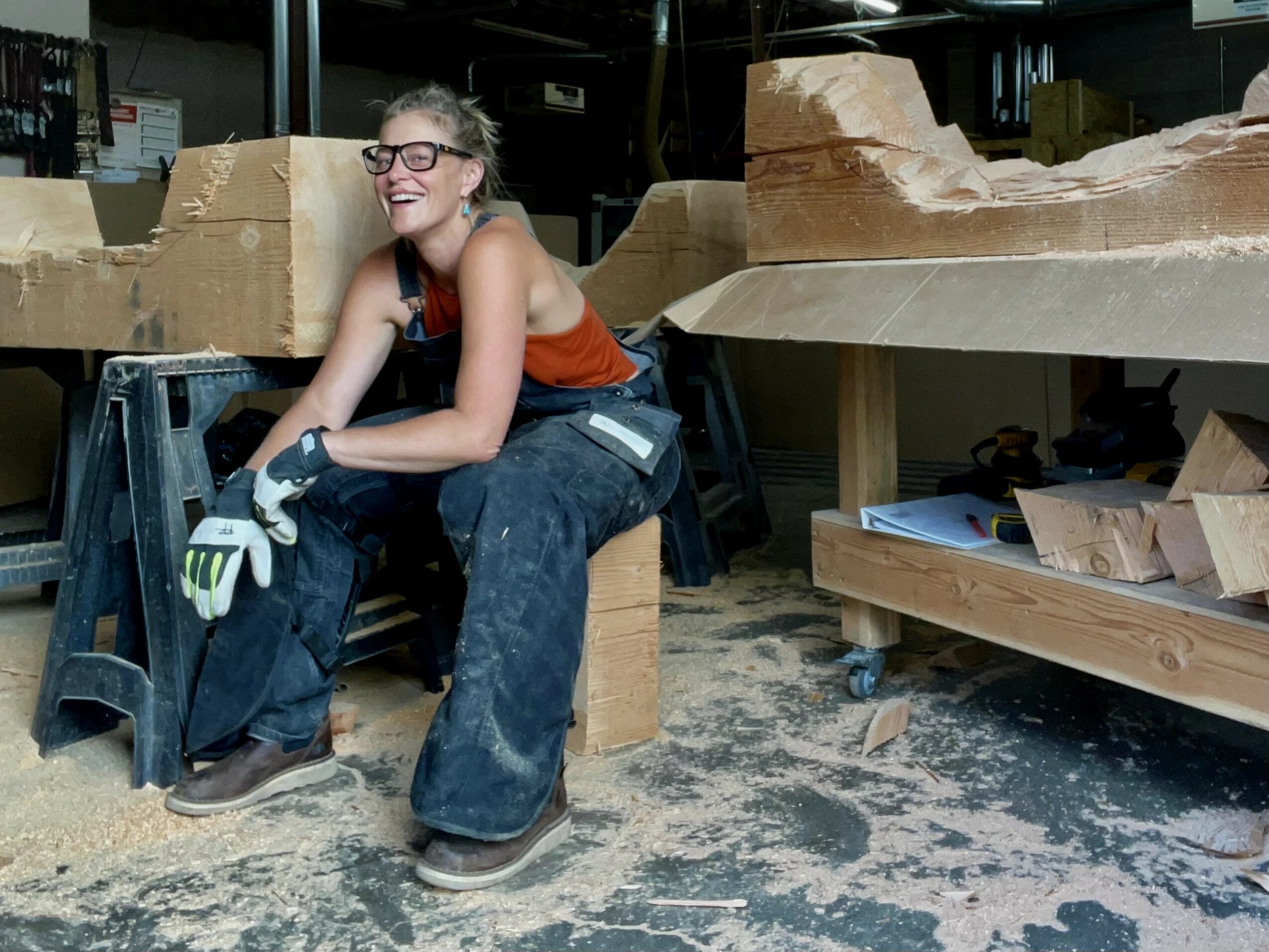
I learned to appreciate the construction of human environments while wandering through my father’s job sites. He was a fourth generation finish carpenter that, even at the end of his fifty year career as a GC for high end custom homes, still framed his own projects. The scent and sound of sawdust became a place of comfort for me (and I still seem to find myself covered in it on a regular basis)! I spent much of my childhood rearranging any space I could access, which led me to determine that “interior designer” was the answer to the “what should I be when I grow up” question.
At twenty-one, I landed a position at a prestigious Salt Lake City design firm, only to discover that the work looked quite different from what I had imagined. After a year, I left to work outdoors in the therapeutic healing space as well as the ski industry, but design of environments continued to find me. Whether building an apartment inside an old macadamia nut factory in Hawaii born from the necessity of affordable housing, or designing my husband’s first alternative health clinics, I kept being given the opportunity to shape spaces that support the people who inhabit them.
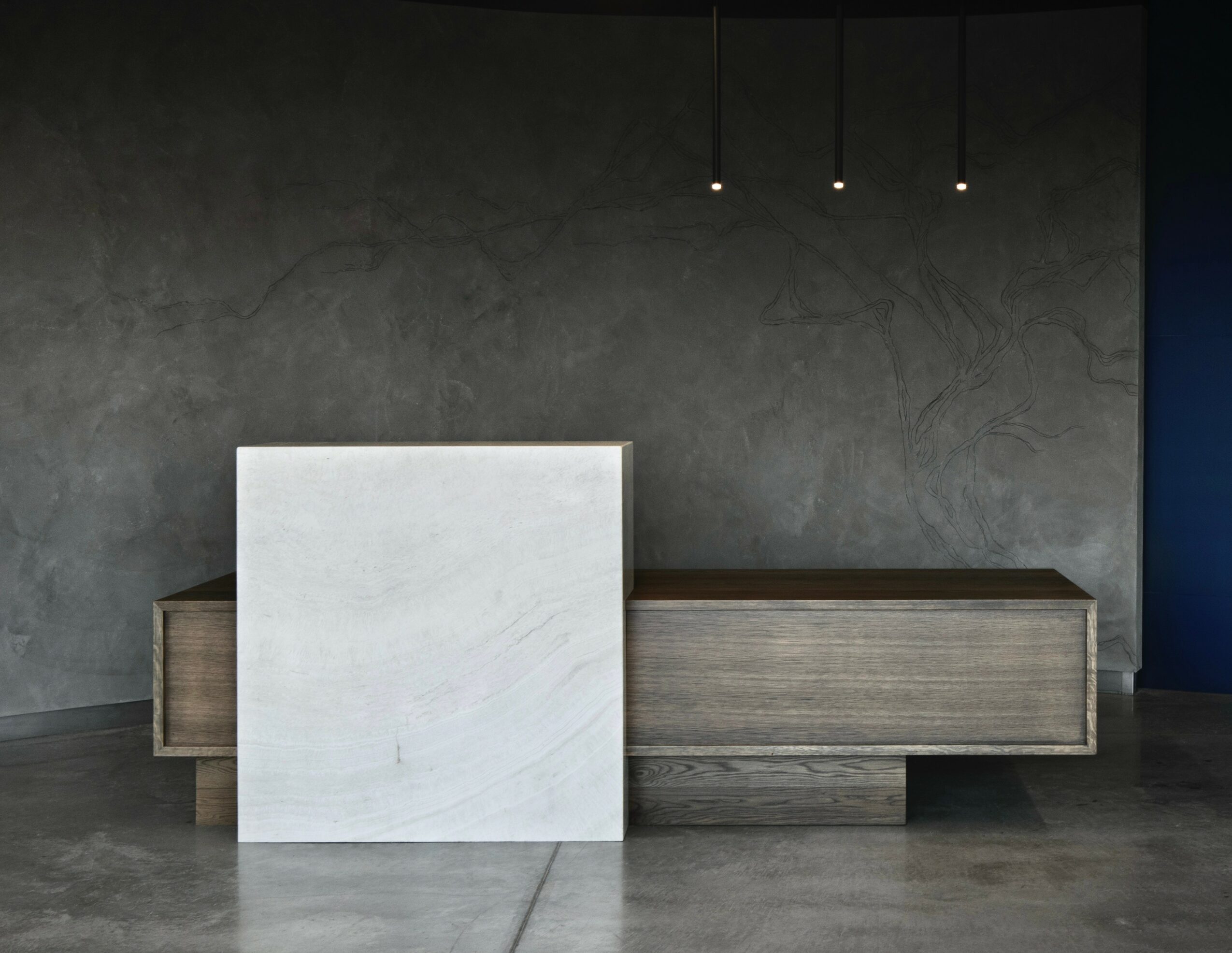
Collaboration has been central to everything I have created. My first major project, the renovation of Riverhorse in Park City, taught me that the strength of my design practice was in utilizing as many local makers and materials as possible. It was in that project that I hired the college student who would later found Project Sunday (where I have been the in house designer for 12 years) to build the furniture that existed only in my imagination. That project is where I learned to weld in order to create a life-sized horse sculpture for the dining room, incorporated aspen trees harvested from local ski runs into a primary part of the design and helped plaster a feature wall to with mica to echo the effect of the weeping walls of southern Utah. The success of the final product solidified my belief that handmade, locally rooted work carries a presence that people feel, even if they cannot articulate why. That way of designing followed me through more restaurant projects and the privilege to design spaces for clients like Snowbird, Sotheby’s and many fulfilling relationships with my residential clients.
Work in the outdoors continued to be a mainstay and my clients were accustomed to me meeting from a wrangler cabin after moving cattle in Wyoming or holding strong to one of my Death Valley “spring thaw” pilgrimages were I’d be unreachable for a week. I’ve also continued on with that other vein of interest that first pulled me away from my “design career”- I’ve been a birth doula, trained in conflict resolution and mediation and am currently finishing my certification in Jungian coaching. It hasn’t always been easy to maintain my commitment to that other work and I’ve definitely had time periods of questioning myself for “being all over the place” with my career. After 25 years in this work, though, I now believe that a commitment and intention towards “designing a life” only makes my design and art work more successful.
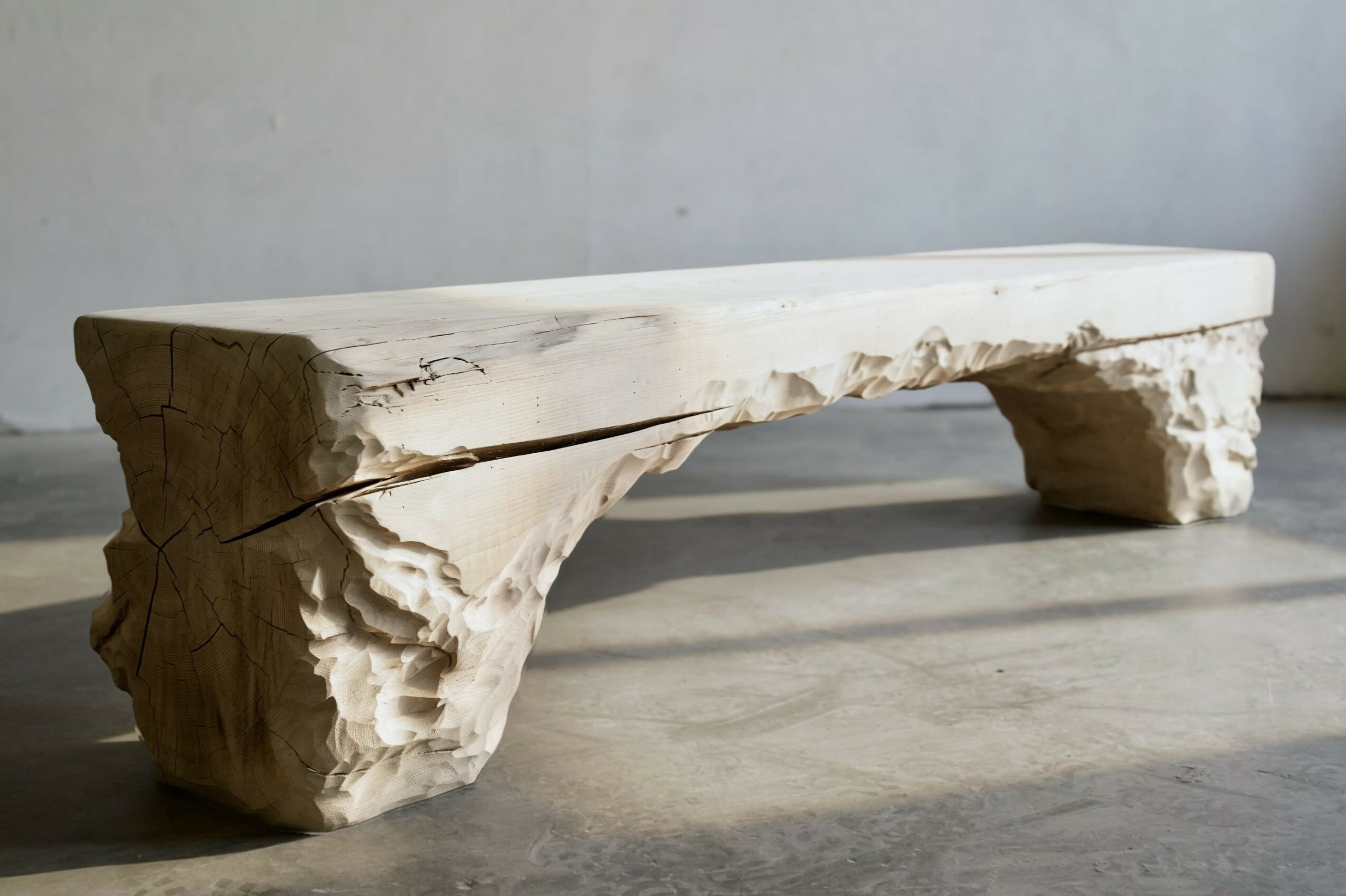
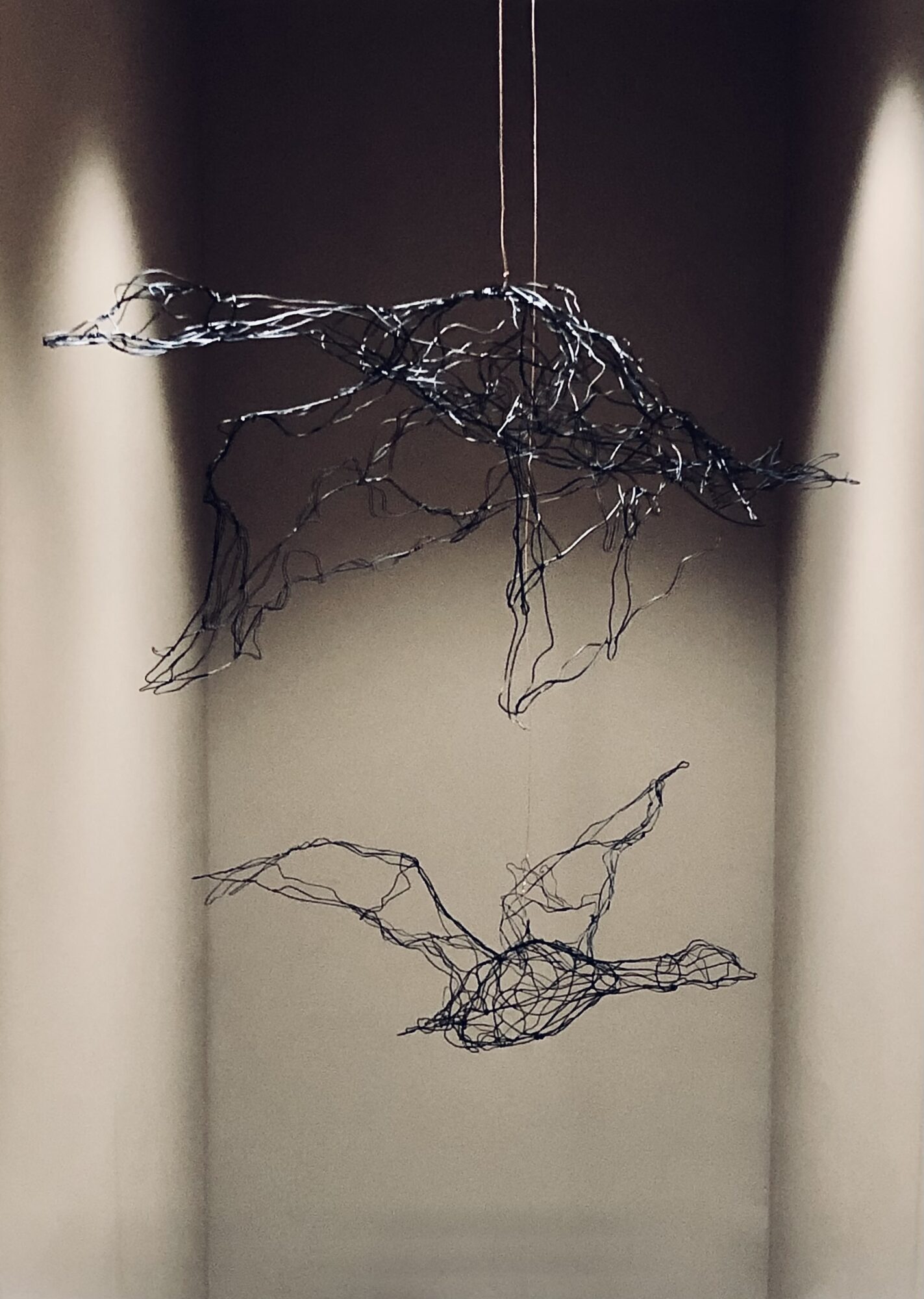
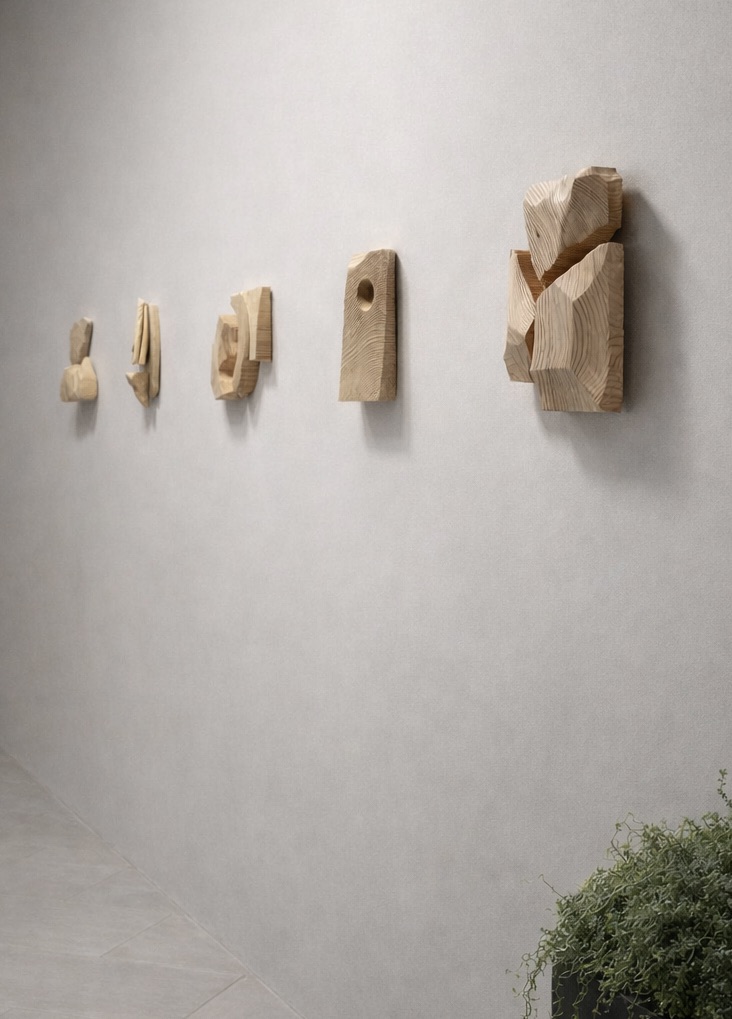
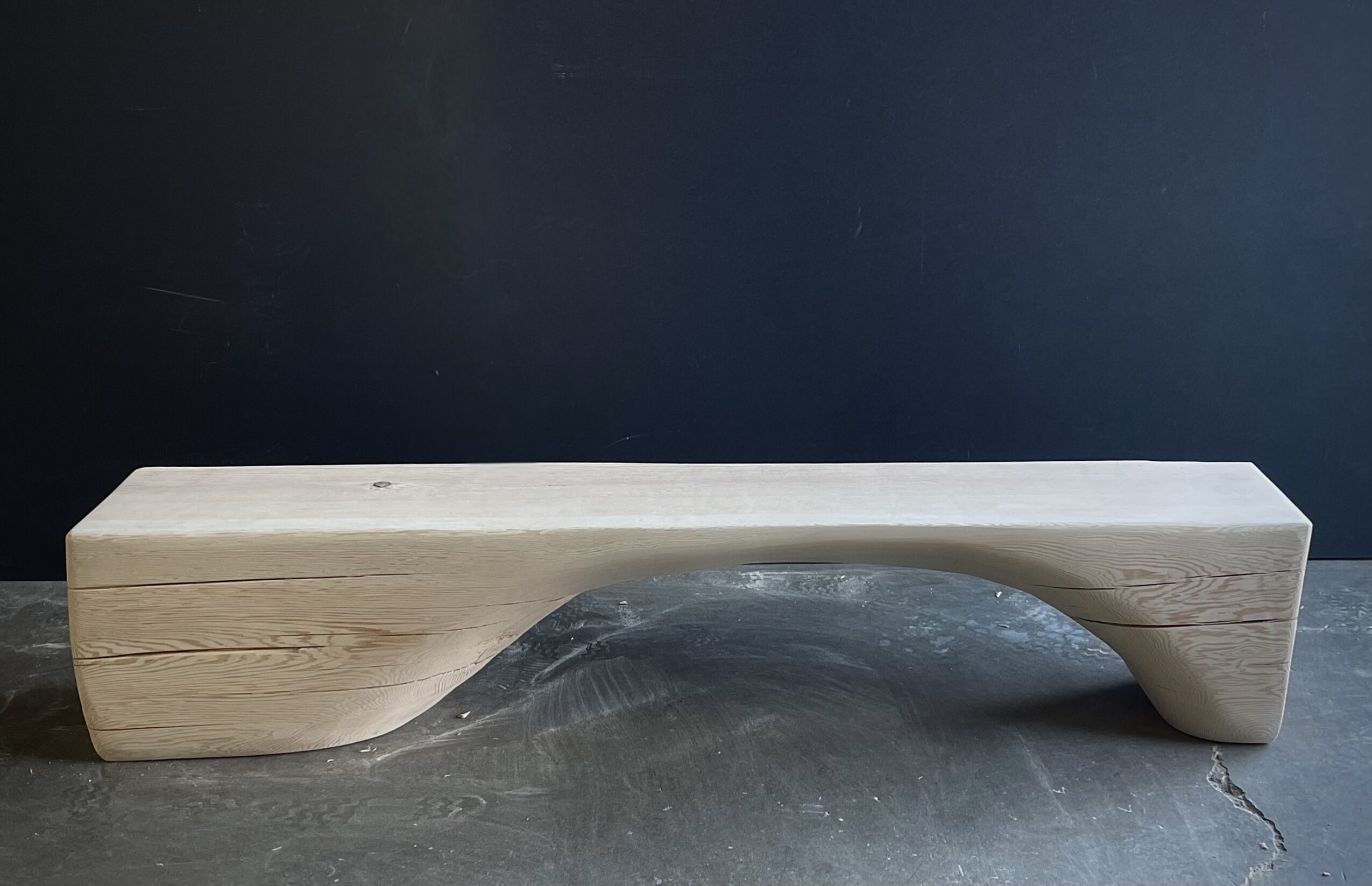
Being selected as a Fellow by the Utah Division of Arts & Museums in 2024 gave me renewed confidence to place greater emphasis on my own artistic practice. My work explores the space between the built environment and the landscapes that raised and still influence me: drawing inspiration from erosion patterns, native wildlife, weathered wood, and useful objects shaped by time and touch. Whether designing an interior, carving a wall piece, playing with light and atmosphere in decorative finishes or sculpting a bench, I remain interested in the ways art, utility, and a sense of place can coexist, and in creating work that feels deeply connected to both landscape and community.
Alright, so let’s dig a little deeper into the story – has it been an easy path overall and if not, what were the challenges you’ve had to overcome?
Please see last entry- I think I detailed some of that there. Specifically to this question, though, I would say that one of the struggles I’ve seen in myself as well as other artists and designers is that a successful management of the “business” side of this work is extremely important to continue the privilege of doing this work, and takes a lot of time and energy. A major challenge of being a professional artist is to hold the tension of time spent in the world of practicality- particularly if you don’t have outside financial support to allow you to really “sink in” to your craft.
Even in the world of design- I understand that a far more practical path to commercial success is to rely on using similar vendors (efficiency), to have wide profit margins (often only possible with imported goods from “cheaper” labor markets) and that custom, American manufactured items are a difficult thing to include in many project’s budgets. In my experience, that has to be a firm commitment to continue to use local talent and resources. And it’s a commitment that isn’t always the most lucrative if you’re the designer/ designator of where the FFE budget is going.
Can you tell our readers more about what you do and what you think sets you apart from others?
See first answer/ paragraphs. Most proud of my commitment to local artists and artisans in the projects where I have control over budgets. Most proud of continuing on with the commitment in the artistic side of my work though the usual problem of “time spent vs. income” ratio— a particularly firm commitment as a single mother for the last 15 years. I am known for creating environments with “soul” and that respond to the human livin, dining, working within them (vs. designing to photography — a totally understandable temptation in today’s world of marketing through media!) I am proud of/ known for long lasting relationships with my clients and subcontractors being a very important part of my work.
As far as specific projects or pieces that I am most proud of: Some of my favorite design projects are not necessarily ones where I’d publish the images as some sort of “portfolio pride”. There are projects where I delivered what resonated most with the client, their history, their tastes. The sum of all those parts may not necessarily be what is the most “current”, “cutting edge” nor appeal to our collective taste of what’s “fresh and new”. I take a lot of pride in responding to individual needs.
In my art pieces— one of my favorite pieces was comissioned by a composer who lost his home and many of personal musical instruments in the Malibu fire. He commissioned a carved wooden bench from me that would be one of the few symbolic pieces of wood in his newly built home. I listened to his work as well as some of his other pieces of music as I was sculpting that bench. His excitement over that piece and the process of creating it (and subsequent photos of it on special occasions) has been a delight for me.
Another sculpture was commissioned by a man who was finally marrying his sweetheart after many years together. They were building a new home and he wanted a sculpture for their entryway that would symbolize this new commitment that they were stepping into. As I was creating “Shadow woman” , my knowledge of jungian depth work added a depth to that piece that made the process , and the resulting piece, particularly resonant for its new home.
Networking and finding a mentor can have such a positive impact on one’s life and career. Any advice?
Networking: I am a FIRM believer in the adage, “A rising tide lifts all boats” and well aware that my relationships have given me many opportunities as well being a central factor to my professional success. I sometimes get “teased” by my coworkers for all the time and energy I put into my collaborative relationships and questioned if I’m REALLY getting a “payoff” for “payback” for that time. I firmly believe that I do- even if not an immediately visible quid pro quo.
In finding mentors and mentorship: I’ve had several people approach me with “I want to learn how to do what you do.” I’VE learned a lot from the people I’ve mentored — those that have learned newer technologies or had the opportunity for more formal education than I did. It’s been a delight to learn from them as well as introduce them to parts of this work that I really don’t think you can learn in a formal education from folks who may not be working in the field.
Mentorship does definitely take extra time and energy outside of the effort of making a living- and so its increased my gratitude for those that mentored me.
I’ve also been surprised at some of the younger generation not understanding the concept of how valuable knowledge is, that it’s not always an instant “payout”— and that you may have to work for less than you think you’re worth to learn a new skill that you may not quite have a handle on.
In my learning and growth in this career, most of my leaps into new areas have required labor and investment on my end with the payback simply being new relationships built and, sometimes a gamble for that next opportunity.
Contact Info:
- Website: https://www.rileyridd.com/
- Instagram: @riley.ridd