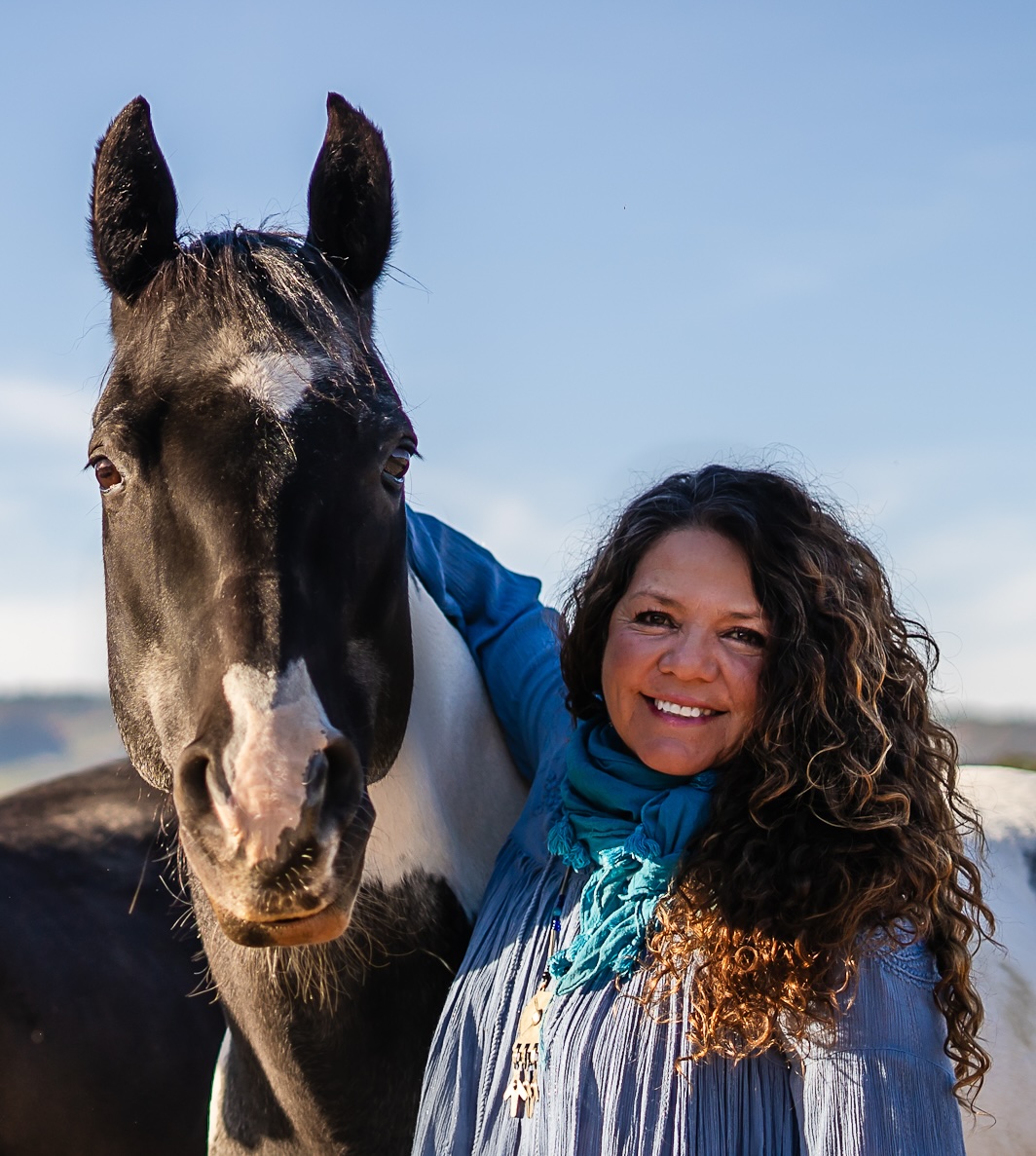



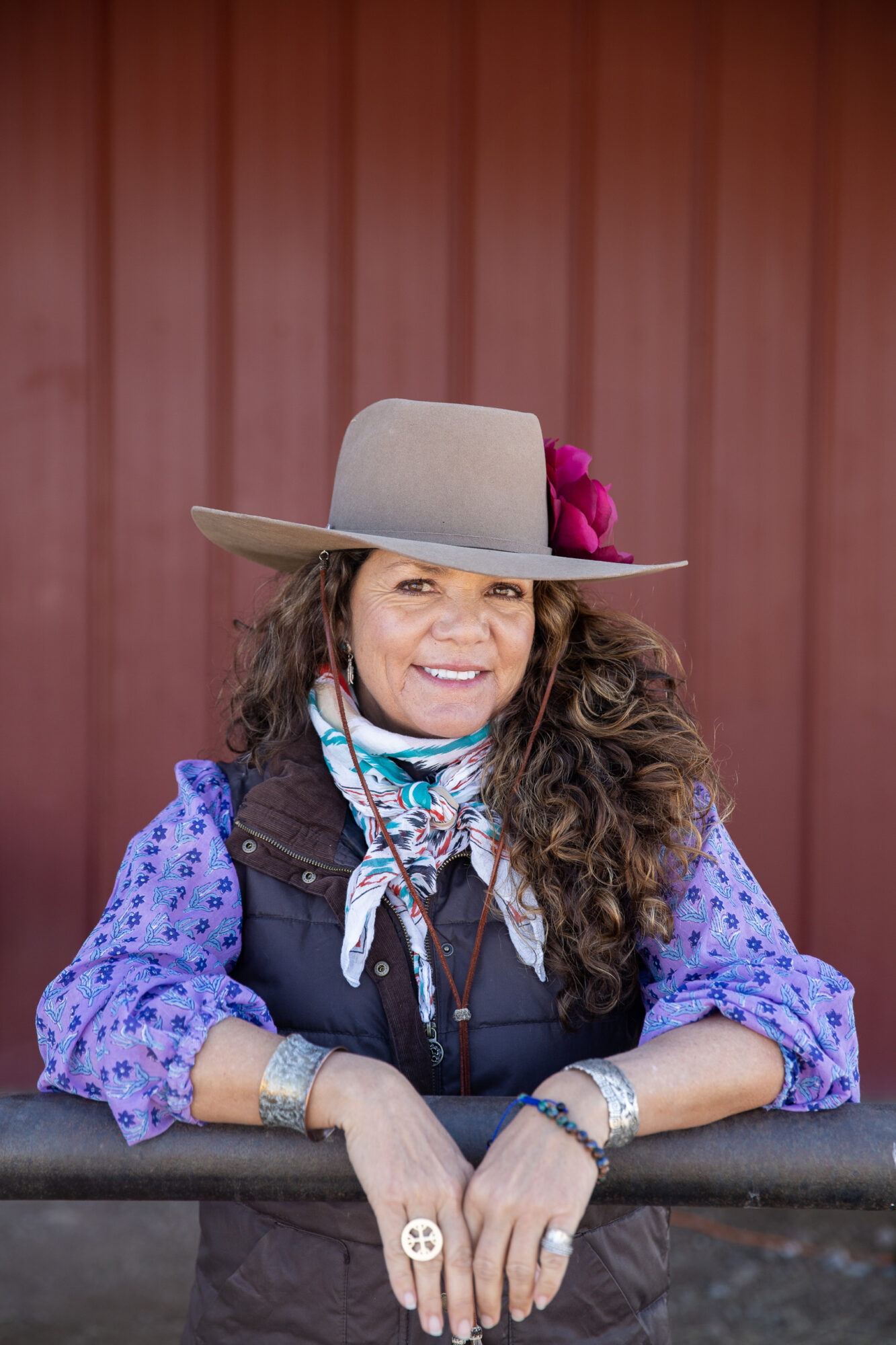
Today we’d like to introduce you to Alejandra Lara.
Hi Alejandra, we’d love for you to start by introducing yourself.
I grew up on a family ranch in southern Chile, surrounded by horses, animals, mountains, and a culture in which the natural world was simply part of everyday life. Long before I had language for concepts like attunement or relationality, I was fascinated by the relationships I saw around me. I remember noticing that the same horse could respond very differently to different people and wondering why. What was the horse perceiving? What was changing between them?
Looking back, I think that question has followed me throughout my life.
When I moved to Park City more than twenty years ago, I found myself in a completely unfamiliar world. I did not speak English, I had left behind my family and culture, and for a time I felt profoundly disconnected from the person I had been. Horses became my way back into relationship. I often say, “I couldn’t speak English, but I could speak horse.” At the time, I meant it quite literally. I could not easily communicate with the people around me, but with horses I still understood the language: body, movement, intention, attention, space, and trust.
I began volunteering at the National Ability Center, and what started as a way to be around horses became a place where I could contribute and belong. Over time, I founded and developed its Equine Assisted Learning program and had the privilege of working with people of many different ages, abilities, backgrounds, and life experiences.
That work began to deepen a question that had been with me since childhood: What becomes possible when we are truly paying attention to another being?
Over the years, that question has taken me through many forms of work. I created Park City Horse Experience, co-founded REINS at Saddleview, continued studying equine assisted learning, mindfulness, trauma-informed approaches, human development, and the horse-human relationship, and eventually became deeply involved in building what is now the Equellness Center.
I used to think of these as different chapters in my professional life. Today, I see them more as different places where I have been exploring and practicing something that began much earlier.
My upbringing in Chile, and my growing appreciation for the relational wisdom within Mapuche cosmology, have helped me find language for something I think I understood intuitively as a child: we are not separate beings moving through a passive world. We are participants in a living network of relationships, and how we attend to those relationships matters.
Horses have been a thread through all of these chapters, but far more than a constant. Through the work, through the people I have had the privilege of accompanying, and through what I have witnessed unfold between humans and horses, they continue to reveal deeper ways of seeing and relating to the world.
In many ways, the inquiry remains remarkably similar to the one I had as a little girl watching horses on a ranch in Chile: What can we discover when we become quiet enough to truly notice what is happening in relationship?
Each chapter has opened another part of that journey, and even after all these years, I have the sense that there is still so much Horses are inviting us to discover.
Would you say it’s been a smooth road, and if not what are some of the biggest challenges you’ve faced along the way?
It has definitely not been a smooth road, although looking back, many of the struggles have shaped the work as much as the successes have.
One of the earliest challenges was that I was trying to create a way of being and working with horses that did not really have a place in our community yet. At the time, horses were primarily understood within traditional riding or therapeutic riding models. I was beginning to see something else: the horse not simply as the animal carrying or helping the human, but as a sentient being with needs, preferences, fears, boundaries, and a remarkable capacity to respond to what was happening in relationship.
Some of my earliest work was with veterans, and I was witnessing interactions between humans and horses that were incredibly meaningful, but I did not always have the language to explain what I was seeing. How do you describe the importance of a horse choosing to approach someone? Or moving away? How do you help someone become curious about what the horse might be communicating rather than immediately trying to make the horse comply? And how do you explain that what is happening in that exchange may tell us something about ourselves?
Today, there is much greater understanding of equine assisted learning, trauma-informed approaches, nervous system regulation, and the importance of horse welfare and agency. But at the time, I often felt I was trying to find words for something before the words, or perhaps the space for those words, really existed around me. That required persistence and a willingness to trust what I was observing while continuing to learn.
There was also the very practical struggle of making a living. For many years, I simply could not support myself doing this work. Fortunately, living in a ski town gives you many ways to work, and I took advantage of them. I held multiple jobs, often at the same time, while continuing to build programs, study, work with horses, and pursue something I deeply believed in. It took years before my work with horses could become my primary livelihood.
So no, very little about the path has felt easy. There has been a tremendous amount of work behind what people see today. But I also feel enormously fortunate that the work has continued to give something back. The people, the horses, and the experiences I have witnessed have made the effort deeply rewarding.
Perhaps one of the things the journey has taught me is that meaningful work does not always arrive with a clear roadmap, or even with the language to describe it. Sometimes a calling begins simply as something you cannot stop noticing. You stay close to it. You keep learning, questioning, and following where it leads, even when the path is uncertain or uncomfortable.
Over time, I think a calling can become less about what you have chosen to do and more about recognizing what life is asking you to do with what you have been given. There were certainly easier paths I could have taken, and many moments when I did not know where this one was leading. But at some point, walking away from what I was witnessing and learning no longer felt like the easier choice. The work had become part of a responsibility, to the horses, to the people I was serving, and perhaps to something in myself that I was still learning to understand.
I have come to wonder if what we call our gifts are not always obvious talents or things that come easily to us. Sometimes they may be capacities we discover and develop by paying attention, by persevering, by staying with what matters even when we do not know where it is leading us. Perhaps the gift is partly in the willingness to listen, to keep showing up with curiosity, resilience, faith, and hope.
And maybe that is where calling and contribution meet. What we discover in ourselves is not only ours to possess; it can become something we are invited to offer back. Answering that invitation does not necessarily make the road easier, but it can make the road deeply meaningful.
As you know, we’re big fans of Equellness Center. For our readers who might not be as familiar what can you tell them about the brand?
Today, I serve as Executive Director of Equellness Center, a nonprofit organization in Park City whose mission is to foster mental fitness and personal growth through equine assisted services and wellness programs.
We create experiential programs for children and teens, adults, families, veterans and first responders, people in recovery, community organizations, and professional and corporate groups. Our offerings range from individual and small-group equine assisted learning experiences to youth programs, community partnerships, wellness experiences, and customized programs designed around the needs and goals of a particular group.
Equellness brings together many years of experience across equine assisted services, mindful horsemanship, mindfulness, experiential learning, recovery coaching, positive psychology, and human development. I have been fortunate to bring more than two decades of my own experience, study, and development of this work into the organization and to build a team around principles I care deeply about. Today, those principles are carried into our programs by a thoughtful and dedicated group of facilitators, equine professionals, volunteers, supporters, donors and, of course, by a remarkable herd of horses who are essential partners in the work.
Perhaps what most distinguishes our approach is exactly that: the horse is not simply part of an activity or a tool for creating an outcome for the person. The horse is a sentient participant, with needs, preferences, boundaries, and ways of communicating that deserve our attention. We are deeply interested in what happens in the relationship.
Through more than two decades of working with horses and people, I have gradually identified a pathway that helps articulate what I have repeatedly witnessed make deeper learning and meaningful connection possible: Safety → Regulation → Connection → Belonging and Resilience → Growth.
At Equellness, I have been able to integrate this pathway intentionally across our programs and into the way we prepare facilitators, care for our horses, and design experiences. We begin by attending to physical and emotional safety for both human and horse. From safety comes a greater capacity for regulation to become present enough to notice and respond rather than simply react. Regulation creates greater possibility for authentic connection. Through connection, we can experience belonging, strengthen resilience, and become more available for learning and growth.
But I do not see personal growth as the end of the pathway. What we develop within ourselves eventually travels back into our relationships and communities. When we become more aware, more regulated, more able to listen, communicate, set healthy boundaries, repair, and remain present through difficulty, we bring a different way of being into our families, workplaces, friendships, and communities. In that sense, growth becomes reciprocal: what we discover and strengthen within ourselves can become something we bring back and contribute to the world around us.
The horse-human relationship allows this to become experiential. A horse walking away, hesitating, approaching, setting a boundary, or choosing to connect gives us information about what is happening between two beings. Rather than interpreting that experience for someone, our facilitators invite curiosity: What are you noticing? What changed? What might the horse be communicating? Does anything about your own response feel familiar?
Through experiences like these, people have opportunities to practice capacities that extend far beyond their time with the horses: awareness and attunement, emotional regulation, communication, boundaries, empathy, trust, adaptability, problem solving, resilience, and collaboration. When someone makes an authentic shift and experiences the relationship changing in response, the learning is no longer only intellectual. It has been felt and experienced.
Another element that intentionally distinguishes Equellness is the environment itself. When we developed the Center, I wanted the landscape to be more than a beautiful setting. Different spaces were intentionally created to support different experiences: areas offering privacy and a sense of safety for deeper individual or group work, spaces for observing and interacting with the herd, and a labyrinth where someone can walk alongside a horse and allow movement, silence, nature, and presence to become part of the experience.
The landscape is not simply where the work happens. It is part of the experience.
What I am most proud of is that Equellness has become a place where these principles can be translated into meaningful experiences for very different people and communities. We repeatedly see people leave feeling more grounded and peaceful, reconnecting with joy and hope, or gaining insight into something they have been trying to understand. Sometimes they leave with an answer; sometimes with a better question.
For someone who has never experienced this kind of work, I would want them to know that they do not need horse experience, and the experience is not about being good with horses. It is about creating enough space to slow down, notice, experience, and discover what may become visible through relationship with the horse, with ourselves, with others, and with the environment around us.
What does success mean to you?
My definition of success has changed considerably over the years. Today, I think much less about success as arriving somewhere and much more about whether something is continuing to open.
Success might be a new insight, an experience that changes the way I see something, a question I had not thought to ask, or an encounter that opens a door I did not know was there. I value anything that expands my awareness and gives me a greater capacity to meet life with curiosity rather than certainty.
I also experience success in a very embodied way. I have learned to pay attention to what my body knows. Sometimes there is a sense of softness, spaciousness, openness, peace, joy, or simply the feeling that I can breathe more fully. I do not mean that a successful life should always feel comfortable. Some of the most important choices we make can be deeply uncomfortable. But there is a difference between discomfort that comes with growth and the contraction that can come when we are living too far away from what we know to be true.
More and more, though, I define success through the quality of my relationships.
Am I in right relationship with myself? Am I able to truly listen to another person and remain open to their experience, even when it is different from my own? Can I remain curious when something challenges what I believe? Am I attentive to the other living beings and the environment around me? Am I contributing something meaningful to the communities I am part of?
For me, right relationship does not mean getting everything right. It is something I practice and return to. We lose our way. We react instead of listen. We misunderstand each other. We become disconnected from ourselves. Success may sometimes be simply noticing that and having the awareness and humility to repair, adjust, and come back into relationship.
Perhaps that is why I no longer think of success as a destination. I think of it more as a way of participating in life: remaining open enough to be changed by what I encounter, grounded enough to listen to what I know, and connected enough to remember that whatever growth happens within me does not end with me. It changes how I return to my relationships and how I participate in the world.
Contact Info:
- Website: https://equellness.com/
- Instagram: https://www.instagram.com/Equellness/
- Facebook: https://www.facebook.com/equellness