


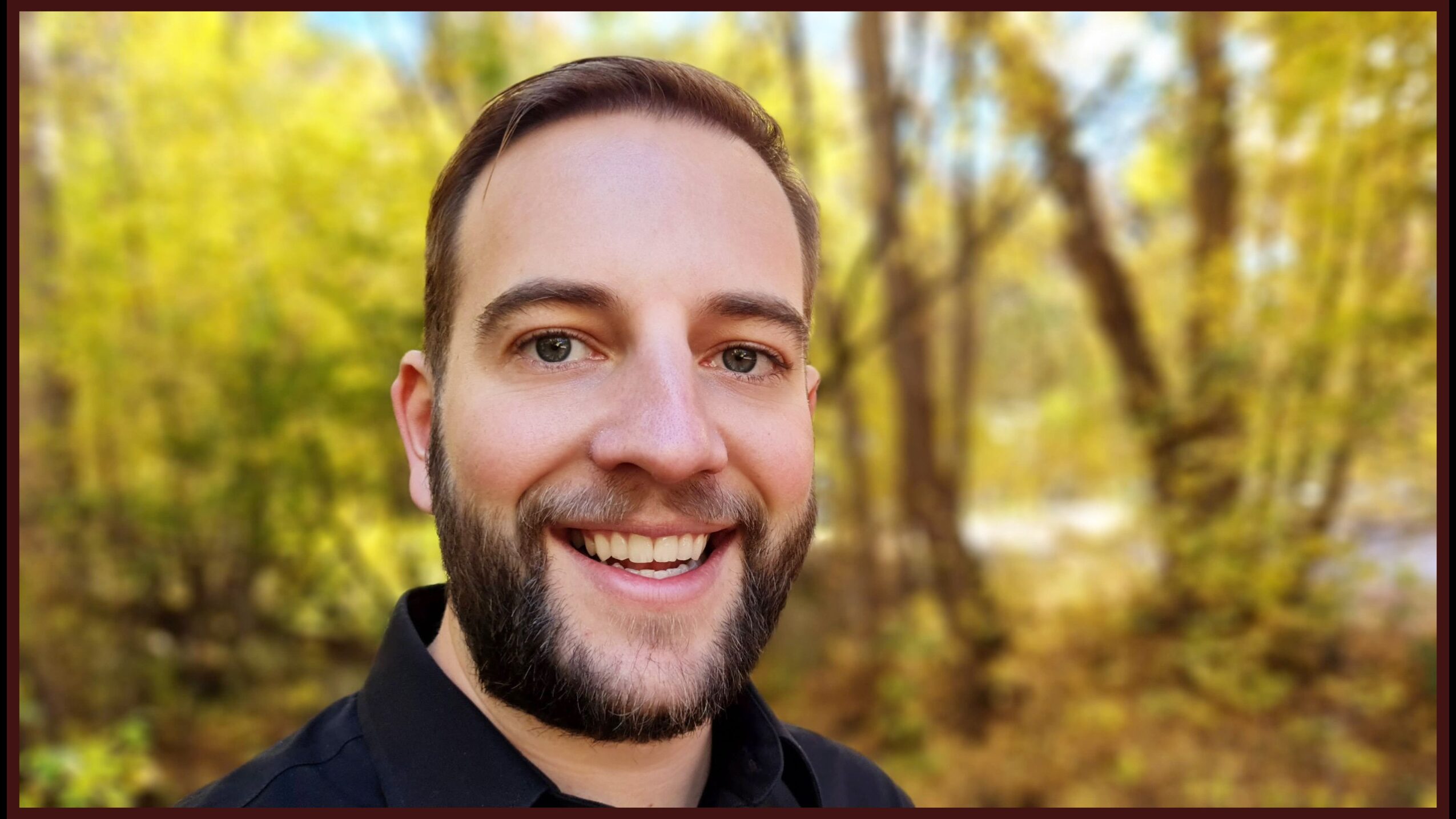
Today we’d like to introduce you to Dominic Schmuck.
Hi Dominic, can you start by introducing yourself? We’d love to learn more about how you got to where you are today?
For much of my adult life, I’ve been fascinated by the tension between the life we’re expected to live and the life we actually want for ourselves. How much of who we are is shaped by family, culture, religion, and expectations of success? And what becomes possible when we start questioning those expectations?
That curiosity is a big part of what drew me to psychology. I grew up in Vienna, Austria, in the LDS Church, and eventually attended Brigham Young University. Although I genuinely enjoyed my time there, I gradually began questioning some of the beliefs and assumptions I’d grown up with. After earning my doctorate, I returned to BYU as a professor and psychologist. Over time, I realized that my own understanding of compassion, love, and what it means to genuinely care for others was leading me to question whether the institution aligned with my values. Eventually, I stepped away from both the LDS Church and BYU and took the leap into building my own private practice.
That transition wasn’t without uncertainty. Leaving a stable academic position to start a business was a significant risk, but it ultimately led me to work I find far more fulfilling. I found myself particularly drawn to people navigating major life transitions, questioning long-held beliefs, struggling in relationships, or realizing that despite their outward success, something in their lives doesn’t feel quite right.
Today, as the founder of TruU Psychology, I focus primarily on two areas: helping people navigate the personal, relational, and mental health challenges of questioning or leaving the Mormon Church, and working with driven, successful individuals who have accomplished a great deal but may feel unfulfilled, disconnected, or unsure whether the life they’ve built is really the life they want.
We all face challenges, but looking back would you describe it as a relatively smooth road?
Some of the hardest parts have involved questioning things I had built much of my identity around, including my religious upbringing and professional career. There is a certain comfort in following a well-established path, especially when it comes with stability and the approval of people around you. Stepping away from the religion I had grown up with and the security of an academic career to build a private practice meant stepping into a lot of uncertainty and redefining what I wanted my life to look like. Building a business from the ground up also requires patience, persistence, and being willing to figure things out as you go.
One thing I’ve always been intentional about, though, is keeping work in perspective. My family, relationships, and experiences outside of work are what make life meaningful. I don’t want to build a successful business at the expense of actually enjoying the life it is supposed to support. I’ve learned that success isn’t just about what you manage to build, but also about making sure you don’t lose sight of why you’re building it in the first place.
Great, so let’s talk business. Can you tell our readers more about what you do and what you think sets you apart from others?
TruU Psychology is a private practice focused on two areas working with driven, high-achieving professionals who may look successful on the outside but feel unfulfilled, overwhelmed, or disconnected from what matters to them, and helping people navigate the personal and relational challenges of questioning or leaving Mormonism.
One thing that sets my practice apart is that I’m a secular psychologist, with both professional training and personal experience that give me a unique understanding of Mormon culture. I don’t push people toward or away from religion. Whether someone is an active member, questioning, or has left years ago, my role isn’t to tell them what to believe. It’s to help them think critically, examine their assumptions, and figure out what genuinely makes sense for them.
More broadly, my approach to therapy is practical, pragmatic, and direct. I’m warm and supportive, but I’m also willing to challenge people. And that goes beyond religion. I’ll challenge your assumptions, your interpretations of situations, and sometimes even beliefs I happen to agree with. Not to impose my own perspective, but to help you think more deeply and arrive at your own conclusions. I don’t believe therapy should simply be a place where someone agrees with you for an hour. Insight is important, but so is actually doing something with it.
I’m particularly proud of the identity I’ve built around TruU (pronounced “True You”). The intentional, somewhat idiosyncratic spelling reflects something central to my philosophy: helping people figure out who they actually are and who they want to be, rather than who they feel they’re supposed to be.
Ultimately, I want clients to leave therapy with greater confidence in their own judgment, practical tools, and the ability to navigate life’s challenges independently. I don’t subscribe to the idea that everyone needs therapy or that therapy should be a lifelong commitment. I see it primarily as a tool to help people work through challenges, develop new perspectives and skills, and get to a point where they can move forward on their own. My goal isn’t to keep people in therapy. It’s to help them reach a point where they no longer need me.
What sort of changes are you expecting over the next 5-10 years?
I think technology and AI will significantly change the mental health field over the next 5–10 years. They may make information and certain forms of support more accessible, but I don’t believe they can replace the human connection at the heart of good therapy. Research consistently points to the therapeutic relationship, or alliance, as one of the strongest predictors of positive outcomes. Feeling understood, safe, and genuinely connected to another person matters.
At the same time, I think therapy needs to be more than just having someone listen. The relationship creates the foundation for meaningful work, but insight, new perspectives, and putting things into practice are what help people move forward. I hope the field continues to recognize the importance of both.
Contact Info:
- Website: https://www.truupsychology.com
- LinkedIn: https://www.linkedin.com/in/dominicsc/