



Today we’d like to introduce you to Blanka Bednarz.
Hi Blanka, so excited to have you with us today. What can you tell us about your story?
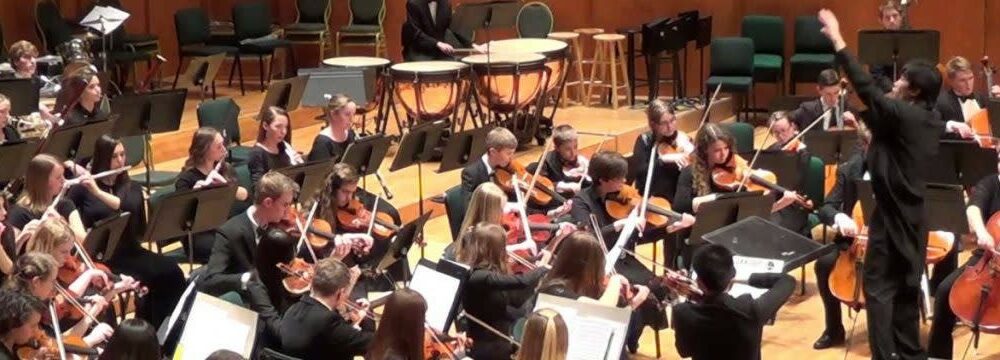
I am a violinist/violist and conductor, a native of Poland. Currently, I am Executive Director (and one of the conductors) of the Utah Valley Youth Symphony Orchestra (UVYSO), the oldest youth orchestra in Utah Valley. I am also a professor of violin and chamber music at the University of Utah and a nationally and internationally performing artist.
The mission of the UVYSO is “To support aesthetic, social, and intellectual development of our youth and community through music.” Our rehearsal sessions also include guided listening, analysis, music theory and ear training and more. In fall 2020 we launched also a chamber music program. We invite wonderful guest artists, professional musicians, as soloists and clinicians. Teachers play with the young musicians, therefore students learn by “playing with Serena Williams”. Members of UVYSO also enjoy an opportunity to perform as soloists upon winning the annual concerto competition.
Among our recent soloists were faculty members of BYU and the University of Utah. Some alumni of UVYSO have gone on to professional careers in music and today are members of orchestras such as Utah. Atlanta, Chicago Symphonies, Los Angeles Philharmonic and other world-class ensembles. Some have gone on to careers in academia, to institutions such as Indiana University, BYU, UVU, Southern Utah University., etc, or have continued their adventure in music in a variety of post-secondary school settings.
Alright, so let’s dig a little deeper into the story – has it been an easy path overall and if not, what were the challenges you’ve had to overcome?
Naturally, the Covid-19 pandemic presented its share of challenges for us–fewer members who opted to be careful and avoid engaging in additional programs beyond school, lack of access to certain facilities that normally would be granted, etc. We were deep in rehearsal mode when we had to cancel a fall concert in 2020 due to a two-week Covid-related mandate. Like many other educational and arts organizations, we turned to Zoom for some of our activities since 2020. We are a self-funded, non-profit organization. Fewer students during this time caused us to budget accordingly, but even a disaster like a pandemic-may and does bring something good: smart budgeting, closer attention to fewer students have actually been very good for us. Adaptability is key.
Thanks for sharing that. So, maybe next you can tell us a bit more about your work?
As a violinist, I have been fortunate to perform on three continents–in China, extensively in Europe and the USA and Canada. I have played with the Baltimore, Utah, Harrisburg Symphonies, Boston Modern Orchestra Project, the Vega Quartet, in numerous collaborations with renowned artists. I have recorded works of Polish composer Karol Szymanowski with pianist Dr. Matthew Bengtson. The CD was awarded a Silver Medal in Global Music Awards. I have had the good fortune to perform as soloist, chamber musician and orchestral musician but also to share music with countless young people at pre-college and college lever and through summer music festivals such as International Musicians Academy. In Utah, I have been on the roster of artists for the oldest chamber music festival in the state, the Park City Beethoven Festival directed by Russell and Leslie Harlow. Each year, for nearly 40 years, they have brought first-tier artists to our area. I have begun to conduct more actively recently. I have been delighted to work with young musicians of the Utah Valley as one of the conductors of the UVYSO, alongside its Artistic Director, Dr. Cheung Chau, Dr. Terry Hill (one of UVYSO”s long-time leaders), Dr. Marcel Bowman, Mr. Matthew Wendell, etc. Every August presents new challenges (this is when our season begins) and by the time we finish in April, we marvel at the progress the young musicians have made, at their growth as artists and human beings. This is, of course, not just our doing–their parents, their school and private music teachers deserve all the credit in the world. We are simply their partners, once a week.
Is there any advice you’d like to share with our readers who might just be starting out?
When I was growing up, Poland was still part of the Soviet block. For musicians, this meant actually a few excellent things–upon passing entrance exams that tested one’s hearing and rhythmic abilities (objectively) very good training ensued, training that allowed for an equivalent of majoring in music performance (or composition, etc.) starting not in college but starting in grade one. I knew what I wanted to do with my life at the age of six. I never changed my mind. That system trained relatively few musicians, allowing perhaps for a little more certainty in the job market, should one seek such “certainty” (I hope my intended sarcasm comes through here :). In the old Soviet block, a career in music was often thought of as very worthy of pursuit, as one that opened the world. This is probably not the case now. However, not for a minute do I regret choosing to be a professional musician. When I came to the USA, my eyes opened to the wonder (as in truly a wonderful quality) of anyone who loves music being able to pursue it, study it, perform, etc. I may make far less money than is possible in many other professions, but I get to spend time, every day, with the likes of Bach, Brahms, Beethoven and help young people discover and, hopefully at times reach their potential. I have taught students whose parents discouraged continuing the study of music post-high school. I taught students from certain countries and cultures who dared not disclose to their parents (for years!) taking music lessons (the parents considered such pursuits impractical, frivolous, a waste of time). The tenacity of such students to pursue music anyway is simply… breathtaking, awe-inspiring, remarkable and just, oh, let’s say it, so, so cool. BTW, medical schools love applicants who studied music (a.k.a persons used to working long hours for little pay, disciplined, able to take criticism well, creative, thinking on their feet, knowing things by heart–yes, you can’t google something up when you have a patient in an OR!). I recall an alumna of mine–she majored in music in college and intended to go to law school. She did not–she became a very successful private violin teacher. Ca. 10 years after college graduation she realized she had a life she really wanted, whereas many of her friends who did study the law were jobless. Ha! Studying music might just mean you can actually make a living and do so while you wake up every day wanting to do the work!
Contact Info:
- Email: blanka.bednarz@uvyso.org
- Website: https://uvyso.org/
- Instagram: https://www.instagram.com/uvyso/?hl=en
- Facebook: https://www.facebook.com/UVYSO

Image Credits
Lukasz Barc (photo 2)