


Today we’d like to introduce you to Hayley Smith.
Hi Hayley, thanks for joining us today. We’d love for you to start by introducing yourself.
I’m very aware that the founding of LHI is closely tied to my own journey, and I’m happy to share my story. But from the moment LHI began, it stopped being my story alone. Yes, I feel a deep sense of ownership, and my incredible team of experts makes the organization run so beautifully. But LHI has always been a community—its sole purpose is helping others and supporting each other along the way.
I completely understand why people are curious about how and why I started a nonprofit. It isn’t the most conventional path. Honestly, if I met someone else who started a nonprofit, I’d ask them the same thing, long before asking what the organization actually does.
I never set out to lead an international nonprofit, and even ten years in, I sometimes still wonder how it all happened. On the surface, my motivation to start LHI came from a mix of niche hobbies, skills, fearlessness, curiosity, and a deep fascination with people and their stories. The backstory is more vulnerable, and I share it because it might help someone else out there.
Halfway through my sophomore year at BYU, I developed severe bulimia and began self-harming. While others were planning their futures and studying for hours, I was nearly incapacitated by depression and personal struggles that I couldn’t talk to anyone about, especially at BYU. Any extra energy I had went into masking everything and writing brilliant last-minute papers. I got good grades, went to class, did all the “right” things—and still felt like the worst, most selfish person in the world.
I dropped out and was admitted to inpatient treatment at the Center for Change in Orem. My parents sacrificed a great deal so I could go; not everyone is that lucky. I stayed for four months. My cohort included women ages 13–60, each with her own reasons behind her eating disorder. It was brutal at first, but we were in it together, and eventually we dropped the masks and tore down our walls. We spent our days in therapy—individual, group, music, art, experiential, dance, and so on. It feels weird to say this, but it was fun. We could just be ourselves without the twisted expectations we struggled with in the outside world. It felt like being a child again. The treatment worked for most of us.
When I left, I did okay for a while, but without the structure and support of the center, I was unmoored and lost. Then one particularly bad day, I found myself choosing between giving up or keeping busy for a couple of hours before the darkness took over. This was the day to put my treatment into action, to dig deep into my soul and find something that could keep me going a few more hours, even if it was crazy or weird. Something palpable, something interesting. Learning a foreign alphabet popped into my mind. So I headed to the Provo library. Standing at the bookshelf, I felt regret and self-loathing wash over me. What a weird and stupid idea. Who did I think I was? But I pushed through, something I learned how to do at the Center. So, I randomly grabbed a beginner Arabic book. Everything changed. I immediately fell in love with the language. The squiggles are actually just letters that I could learn to read and write. Learning the alphabet over the next few weeks pulled me out of a spiral and set me on a trajectory that led to healing myself and wanting to help heal others.
I began studying Arabic in my last year of college and later spent a semester in Morocco. After that came an MA in Middle Eastern Studies at the University of London, followed by travel through several Arab countries. I was still struggling with depression, but I was living my life and connecting with people. That pattern still holds today.
After my MA, I moved to Boston and taught Arabic language and culture in Boston Public Schools for a few years. It was beautiful and intense. I loved Boston, but I knew it wasn’t permanent. Eventually, I moved to the Southwest to be closer to family. I took an office job while figuring out my next step, and I had much more spare time than I did as a teacher. I was able to invest so much more time into keeping up with current issues in the Arab World.
This is right when Syrian refugee crisis reached its peak. I knew I couldn’t just sit from my comfortable office chair and watch it unfold without taking action. I booked a ticket to Greece and volunteered for two weeks at the Moria Refugee Camp on the island of Lesvos.
What I expected to see and what I actually saw were almost opposite. I thought there would be order, shelter, food. But at Moria refugee camp on the Greek island of Lesvos, there was chaos, trauma, disorder.
On one particular day, we rushed to help people whose dinghies had capsized change out of their soaking wet clothes. I ripped through boxes of clothing donations, desperate to find winter clothing. The boxes weren’t labeled. And they were full of random clothes, even high-heels, and nothing for the freezing winter weather. It was a mess.
There had to be a better way to respond to peoples’ needs. So when I got back to the USA, I started LHI. My goal was simple: Talk to refugee camps to see what they needed, and fill 1 shipment with those items—in organized, well-labeled boxes. I put out a call for aid and started collecting the donations in a friend’s garage. The response was incredible! In just 2 months, an industrial-sized shipping container was full and on its way to Lebanon. Thanks to our detailed labeling, the receiving team knew exactly what each box contained, and could effectively distribute aid to the right people. And there, Lifting Hands International was born!
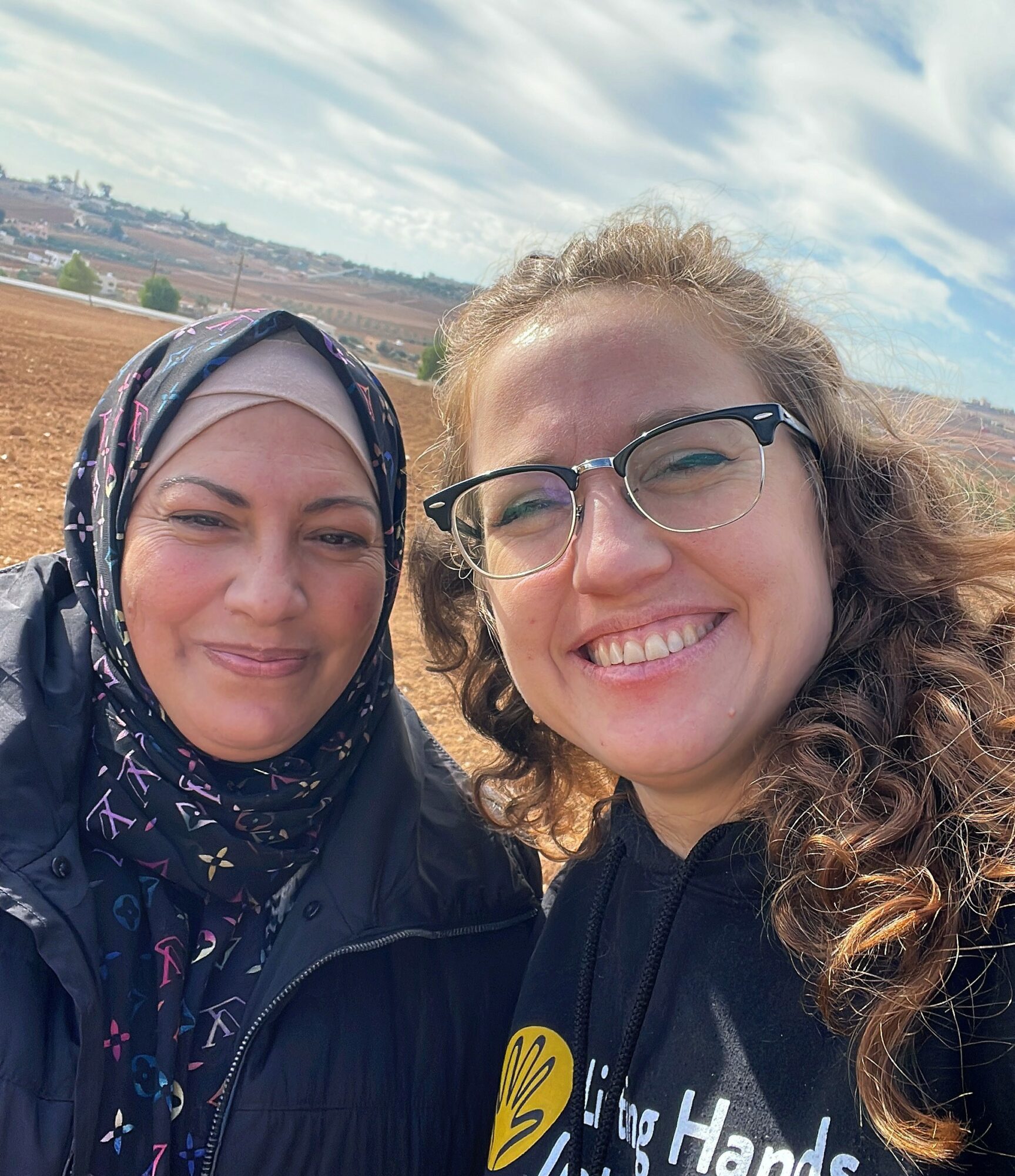
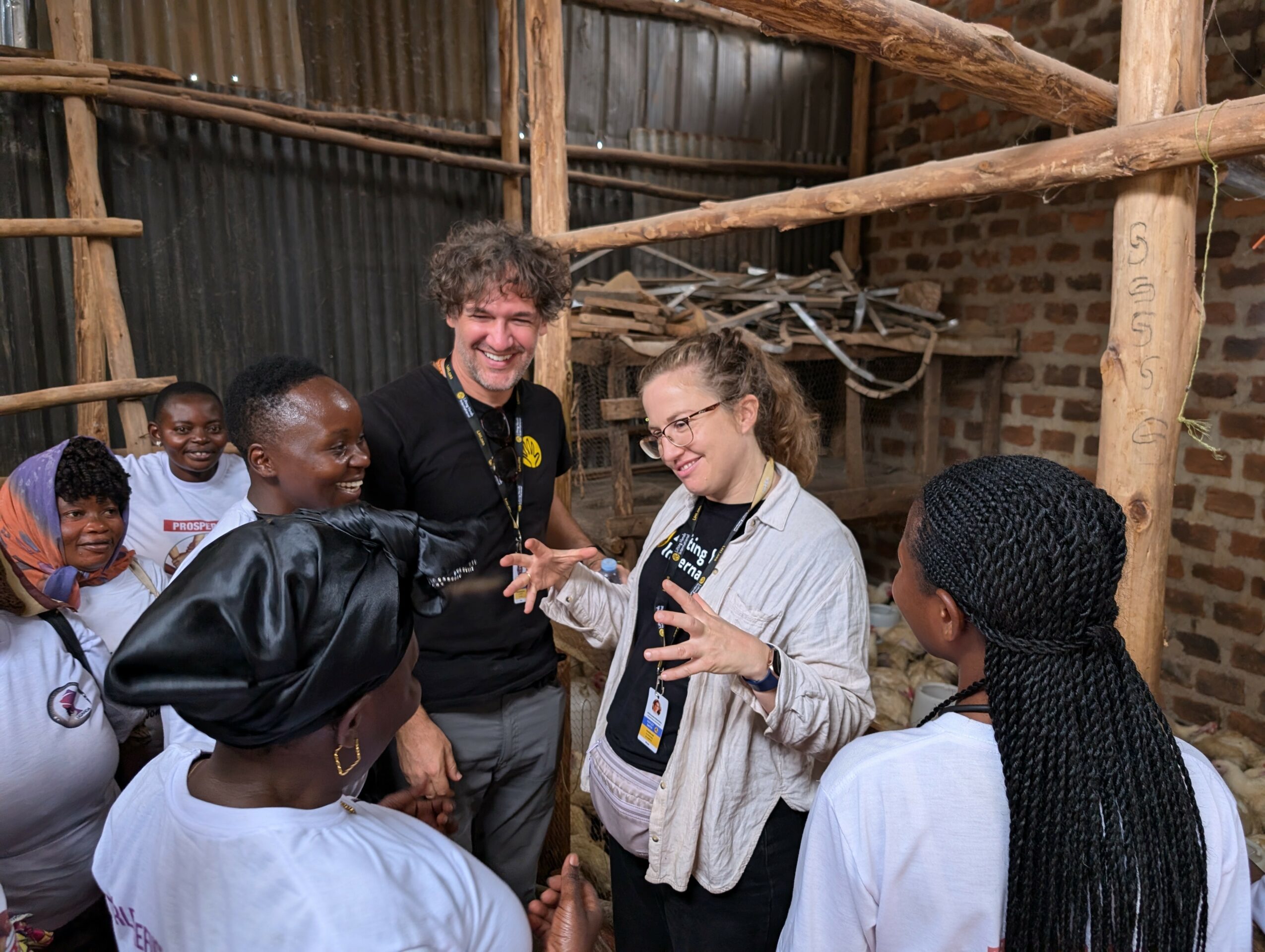
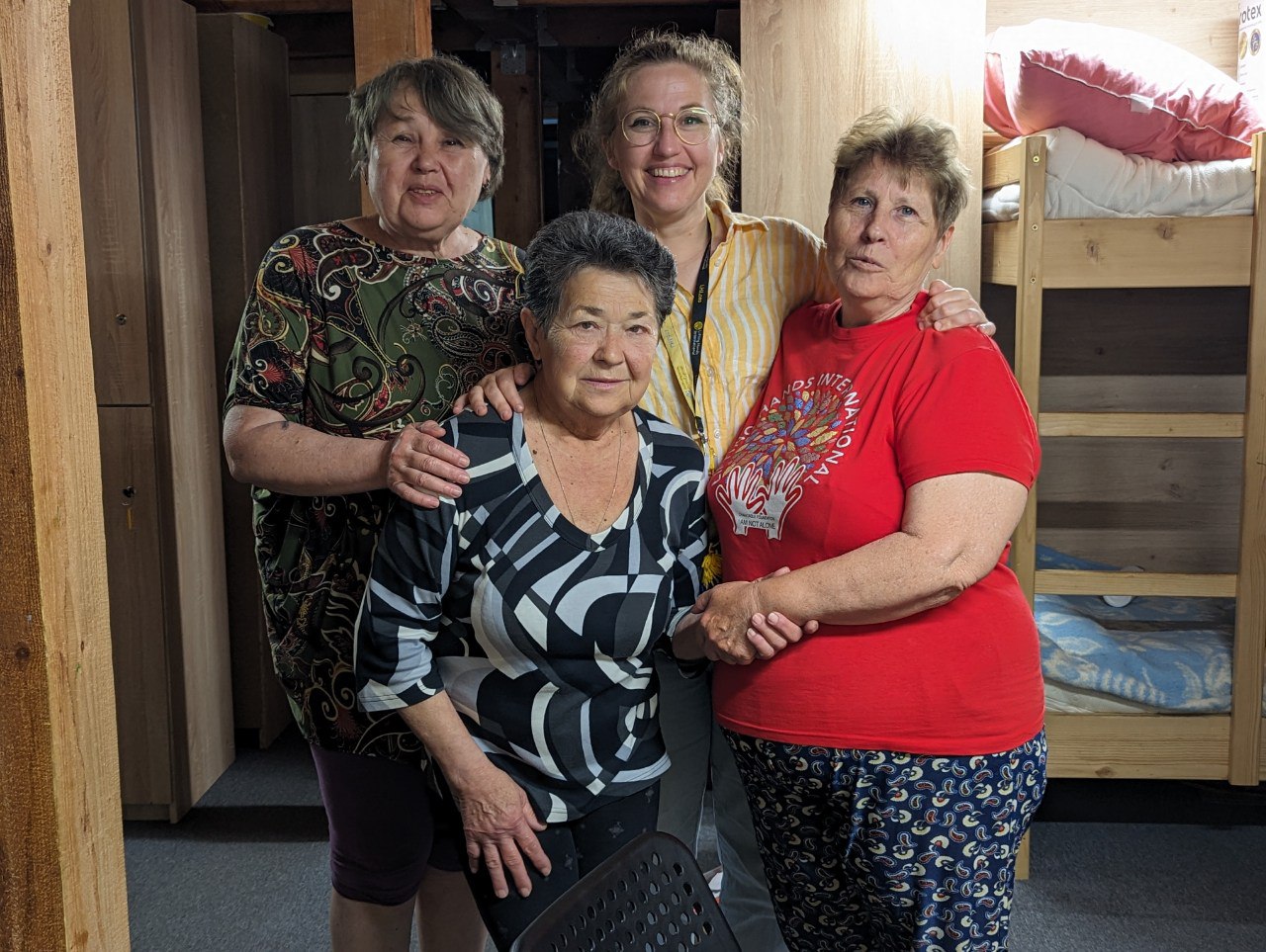
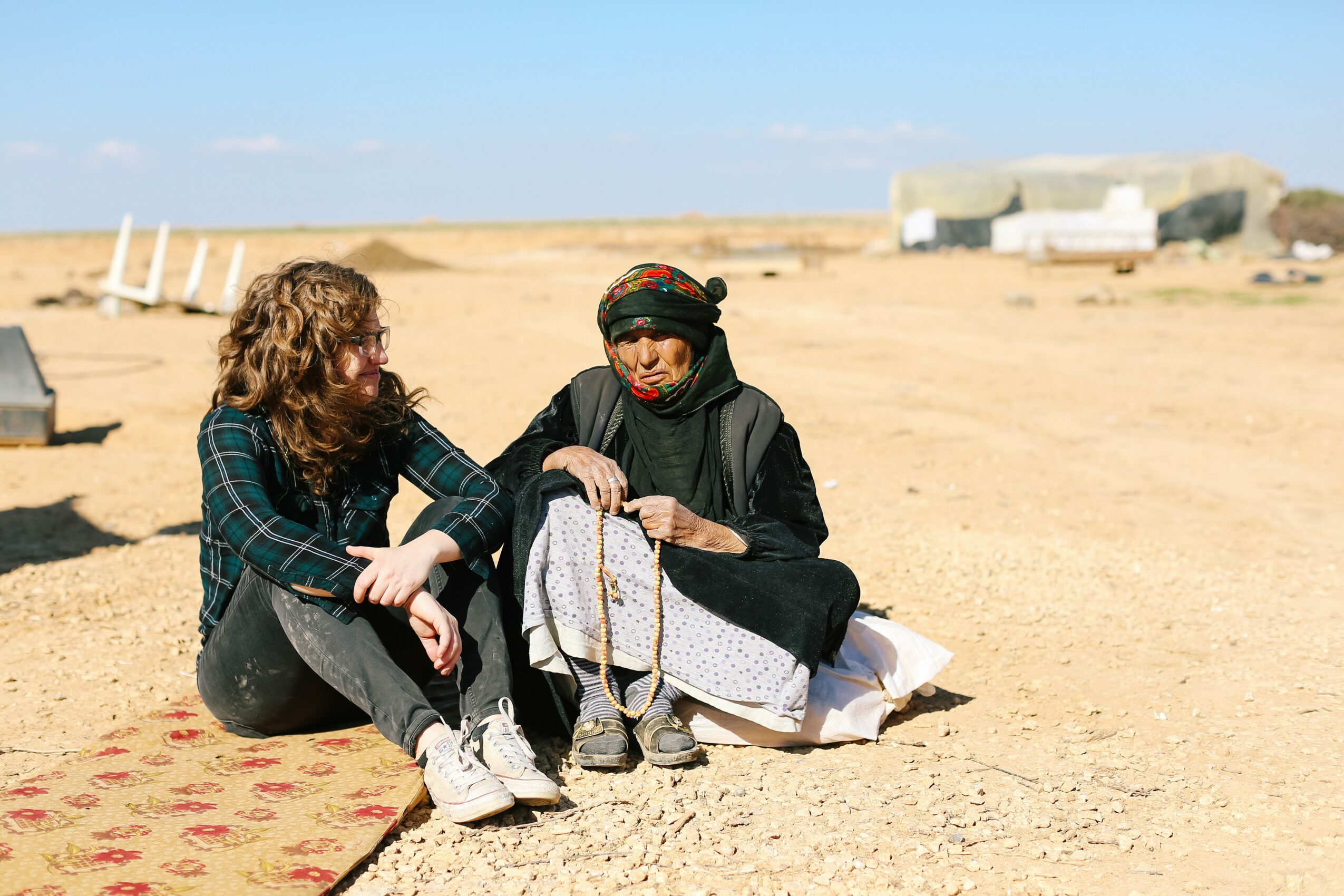
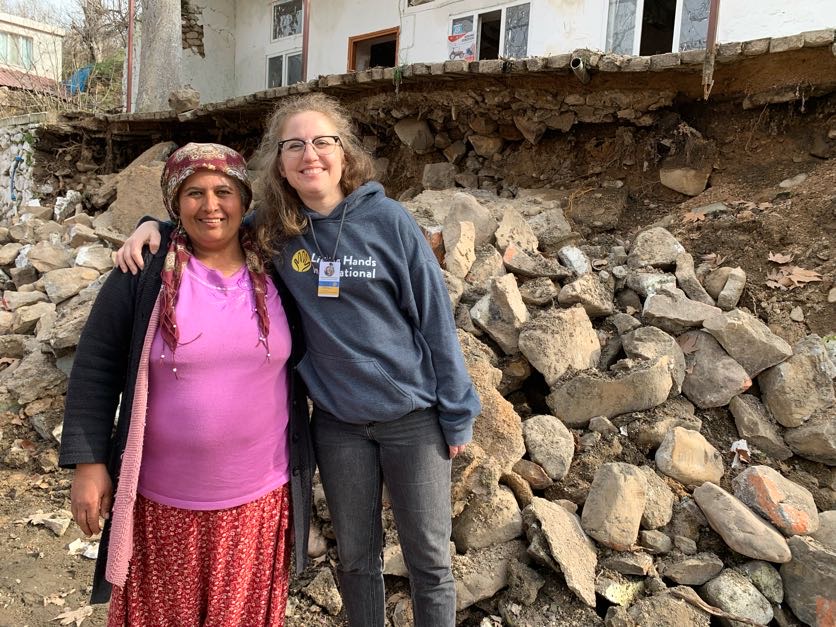
Almost ten years later, LHI has projects all over the world. I have met hundreds of beautiful people and have heard their stories, sat with them in their tents or shelters, looked into their eyes, told them they’re not alone. In short, everything my parents taught me to do. It is a privilege to regularly visit our many programs.
Shipping aid from Utah is just one of the many things we do. We deliver food, clothing, hygiene items, medical supplies, and other material aid to people and communities in urgent need.
We provide trauma-informed care, mental health and community support, counseling, and medical assistance, while also supporting local healthcare providers on the frontlines.
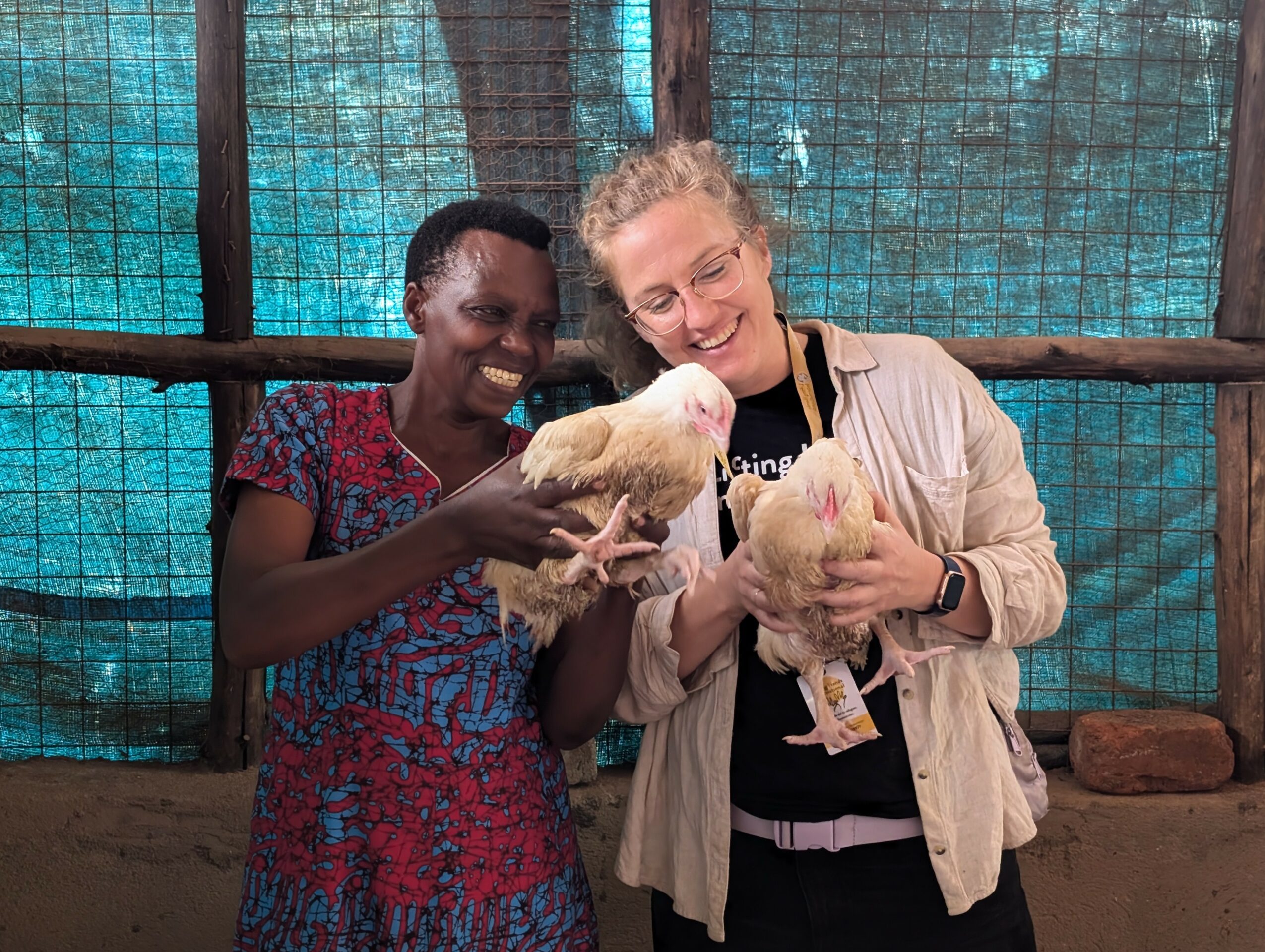
We help people gain more self-reliance with farm animals, business training, language classes, professional development, and community spaces to learn and grow.
We work side-by-side with local communities to rebuild critical infrastructure such as schools and healthcare facilities. We also build local community centers, which serve as hubs of stability, education, and hope.
We assist newly resettled refugees by providing essential support, including housing setups, wellness visits, maternal healthcare, and community-building activities that foster connection and belonging.
I’m sure it wasn’t obstacle-free, but would you say the journey has been fairly smooth so far?
I think this is an incredibly important question, and I appreciate that you don’t shy away from asking. I will start out by saying that being in the humanitarian field can never really be a smooth road. This field is inherently challenging because there is constant flux. We are constantly adapting our work based on how much funding comes in, emerging crisis, unexpected situations, political changes and upheaval, etc.
Personally, my biggest challenge is fundraising. The more surface reason is that it is difficult to raise money in today’s political and economic environment. That’s a textbook challenge for any nonprofit. But for me, it goes much deeper. We live in a transactional economy where attention is now a commodity, and we have to utilize marketing tactics in order to raise funds just like any other business. But we’re not selling homemade soap or e-bikes or pest control. Our field deals with deep and real human suffering.
But I absolutely refuse to view our fundraising efforts as packaging and selling others’ suffering. To a point where we’ve replaced the term marketing with the term advancement, meaning ways to advance our work and keep it sustainable. I am obsessed with making sure our communications are humanizing and honor peoples’ stories. We spend hours designing campaigns, emails, messaging, posts, proposals and reports that honor peoples story, not exploiting their trauma.
Alright, so let’s switch gears a bit and talk business. What should we know about your work?
Too often, humanitarian efforts follow a top-down model, where outside organizations arrive with predetermined solutions, disconnected from the lived realities of the people they’re trying to help. Without honest cultural and contextual understanding, even well-intentioned aid can be ineffective or cause dependency. LHI takes a different approach, one that starts with listening.
We believe that everyone deserves dignity, respect, and an opportunity to thrive. That’s why we connect directly with the people we help to better understand their most pressing needs and challenges. Whether in Uganda, Greece, or Utah—rather than assuming how to help, we ask, listen, and then take action, ensuring every effort is guided by the voices, strengths, and stories of the communities we serve. When we truly listen, we don’t just offer assistance—we build trust, restore dignity, and create lasting change.
Can you tell us more about what you were like growing up?
I was born and raised in El Paso, Texas. I am the youngest of five. I was a spunky, friendly, smart kid with a strong creative streak. I mean, I’m a child of the 80s, so I was always outside riding my bike and hanging out with neighbor kids. I read voraciously. Back then, I read fiction and comics. Now, I mainly read non-fiction about the two world wars to try to make sense of the world.
My parents actually met at the U of U. Both are fiercely intelligent and instilled a deep passion for learning, culture, and helping others. My family paid close attention to world events. If I close my eyes, I can still see images from the First Gulf War, the Yugoslav Wars, and the Rwandan Genocide: families fleeing, battles taking place around the abandoned Sarajevo Olympic sites, burning oil fields, bloodied machetes. I remember devouring Zlata’s Diary, a war memoir by a girl my age. I wanted to be her best friend. I was like, ten years old at the time.
Growing up on the border had a massive impact on me. The disparity between El Paso and Ciudad Juarez never made sense to me. People across the river were exactly the same as me and my family. When I was little, I could see kids playing together just 100 yards away, and I yearned to walk over and join them. I’m so grateful that my parents regularly took us to Juarez to see under-visited cultural sites and visit the mercado, where they made friends with vendors over the years, to a point where they felt like family. Having these experiences as a child, alongside my parents and siblings, instilled in my a deep love for people and a keen awareness of disparity in the world.
Contact Info:
- Website: https://lhi.org
- Instagram: liftinghandsinternational
- Facebook: https://www.facebook.com/liftinghandsinternational
- Youtube: https://www.youtube.com/@liftinghandsinternational