


Today we’d like to introduce you to Anika Tindall
Hi Anika, so excited to have you with us today. What can you tell us about your story?
Growing up, I was as curious as curious could get; I constantly annoyed the adults around me by asking questions that none of them could answer. While some admitted so, others would make up an answer in an attempt to satisfy me. I always welcomed the former; I saw it as an opportunity for both the adult and me to learn, so I’d turn to other sources for explanations, and “reported back” to the adult. The latter, however, bothered me to no end; I saw it as a refusal to educate oneself, and I wouldn’t accept any information as true without knowing the reason behind it.
During this time, my dad often took me to visit his lab. While his field and profession are slightly different from what I plan to go into, both have two things in common: the discovery of new ideas, and the act of sharing them with the world. I realized that, if I went up a similar path, I’d be able to answer my own questions when the adults around me couldn’t. And, I’d share whatever I discovered with everyone else, too.
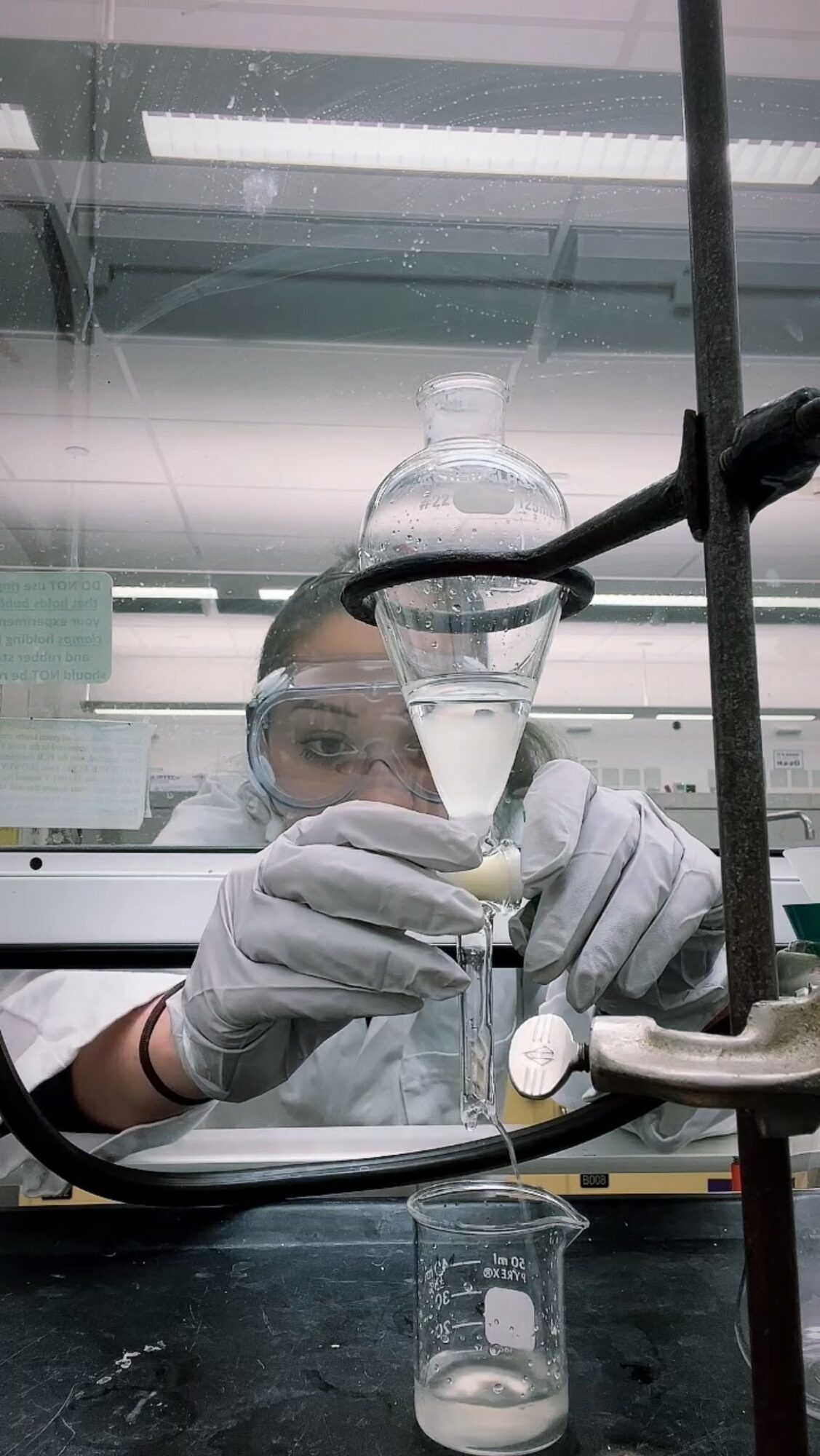
My decision was solidified at 9 years old when I handled liquid nitrogen for the first time. As nitrogen is in its gas phase at standard temperature and pressure, I hadn’t seen it behave as a liquid before. To exist at that phase, it was stored under “abnormal” conditions, i.e. an extremely low temperature of less than 77 Kelvin. This made me realize that the behavior of every atom surrounding us is largely due to its interactions with its surroundings. Chemistry demonstrates this to be true down to an infinitesimal scale. While (almost) any 9 year old would see that the world is big, chemistry made me feel like the world was limitless. Despite the debate on whether or not the universe is infinite, we humans are nowhere near as small as we feel. There is always another thing to explore. We just need to acknowledge that it is right in front of us.
It wasn’t until my junior year of high school that I began to discover my passion for teaching. I was nominated by one of my teachers for the Academic Leadership program, where we volunteered twice a week to do essentially the same thing as what learning assistants at the U do. I facilitated group work during my students’ classes, and did one-on-one tutoring similarly as I sometimes do during my office hours. It turned out to be a tough job, as many students were uninterested in the material and not receptive to the help I provided. However, seeing them eventually work together and feel a sense of accomplishment made the job worth it.
COVID hit during my junior year of high school, and moved my entire senior year, including the Academic Leadership program, online. As we were all burned out and unmotivated, I struggled to tutor online, and students were not inclined to engage. Inevitably, I lost my passion for teaching, and felt no desire to do it again.
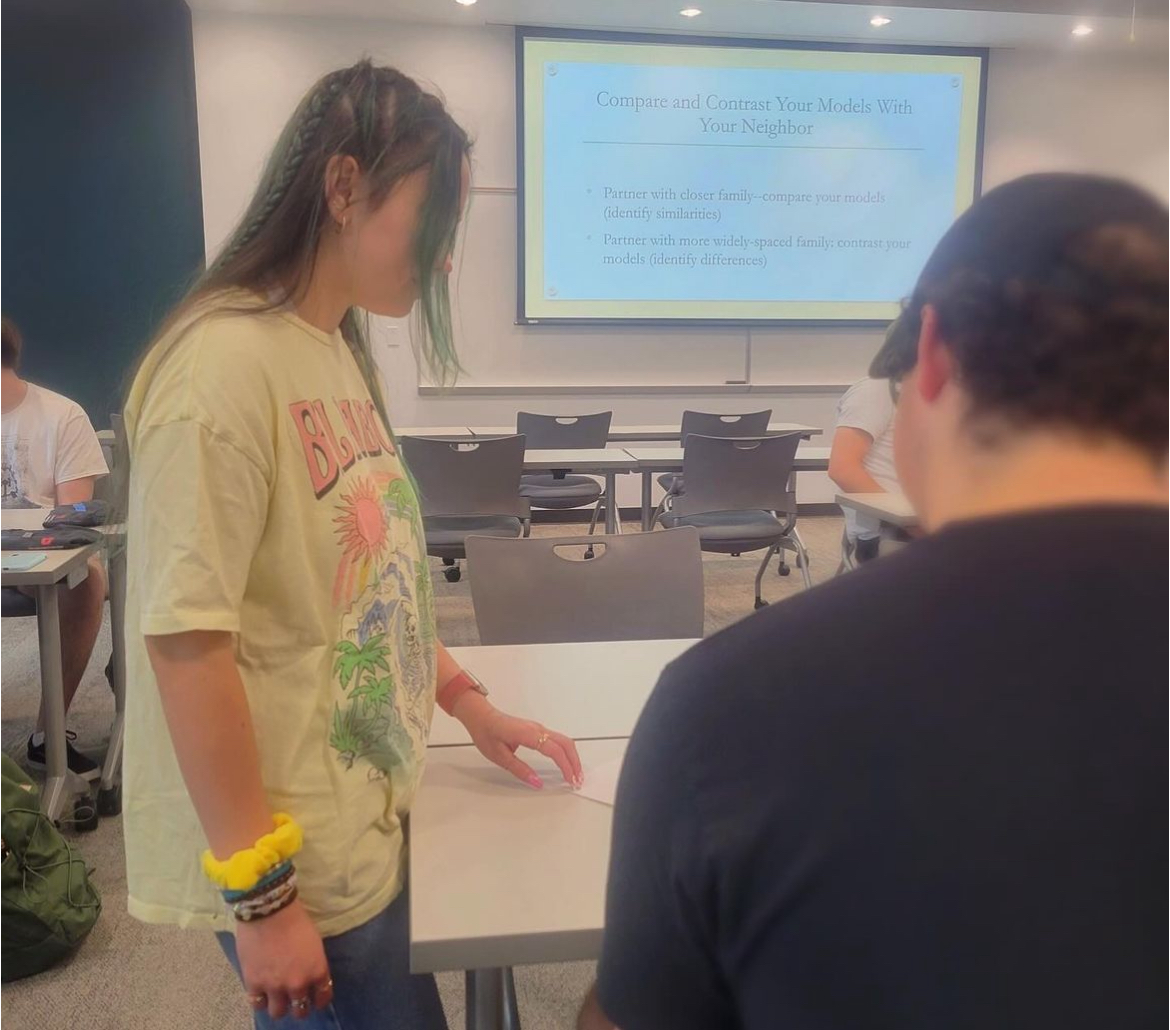
Halfway through my freshman year of college, I decided I’d apply to become a learning assistant for chemistry. I was unsure if I’d enjoy it, but college had moved back to in-person classes, so I thought, “maybe I’ll love teaching as much as I did in 2019.” Little did I know it would become my favorite part of my day. It was a chance for me to share my passion for chemistry with 320+ students, and show them that the subject is cool and not as scary as it may seem. I realized that my most of my students’ distaste for chemistry was not about the subject itself, but about the way they had been taught in the past. I concluded that an educator’s teaching practices will greatly impact reception and engagement from students. I vowed to never be the reason why my students would hate chemistry. Many of my students were older than I was, as I was barely 19 years old. Yet, they were open to asking me questions and they accepted my teaching. I believe the promise I made was a huge part of the reason why.
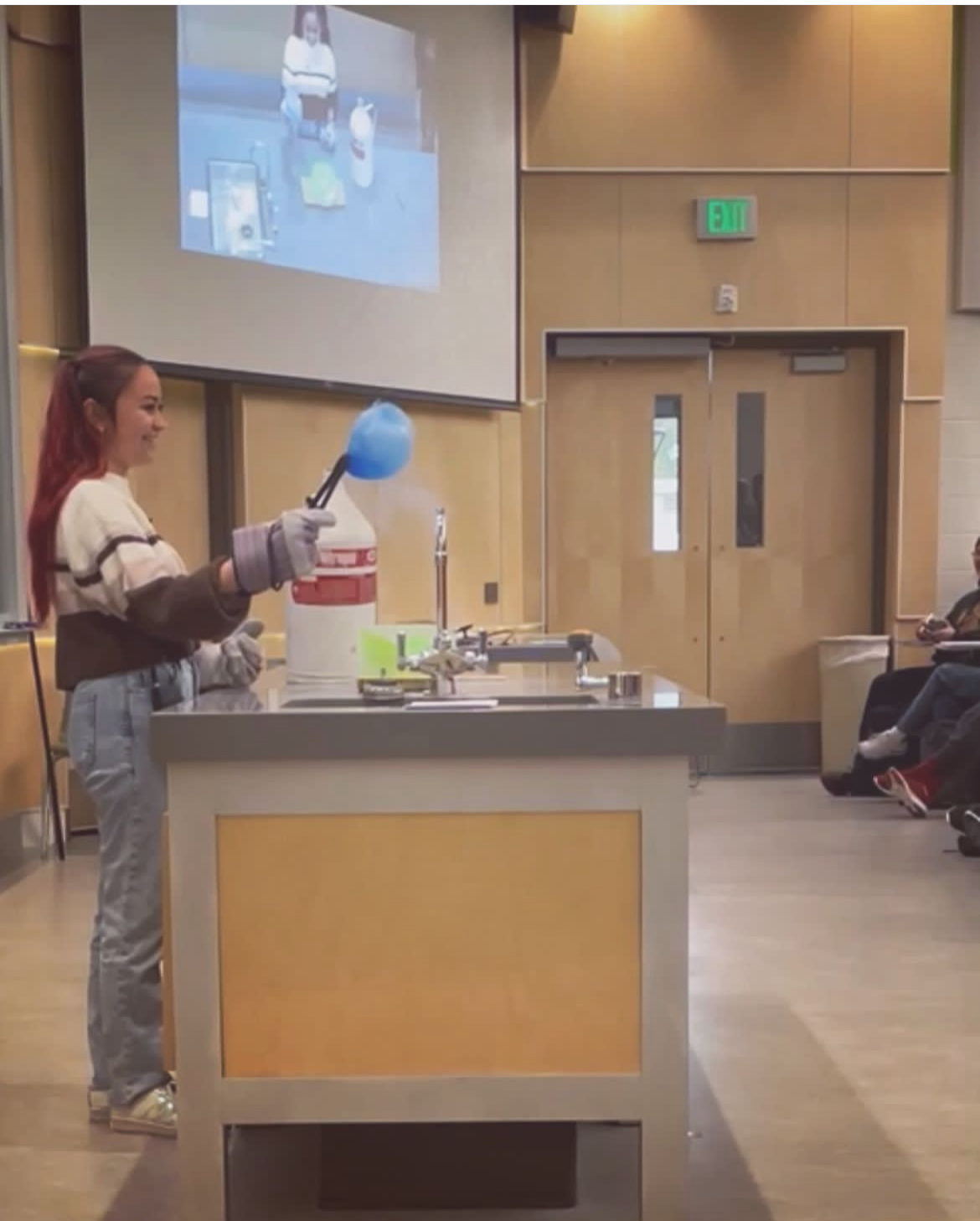
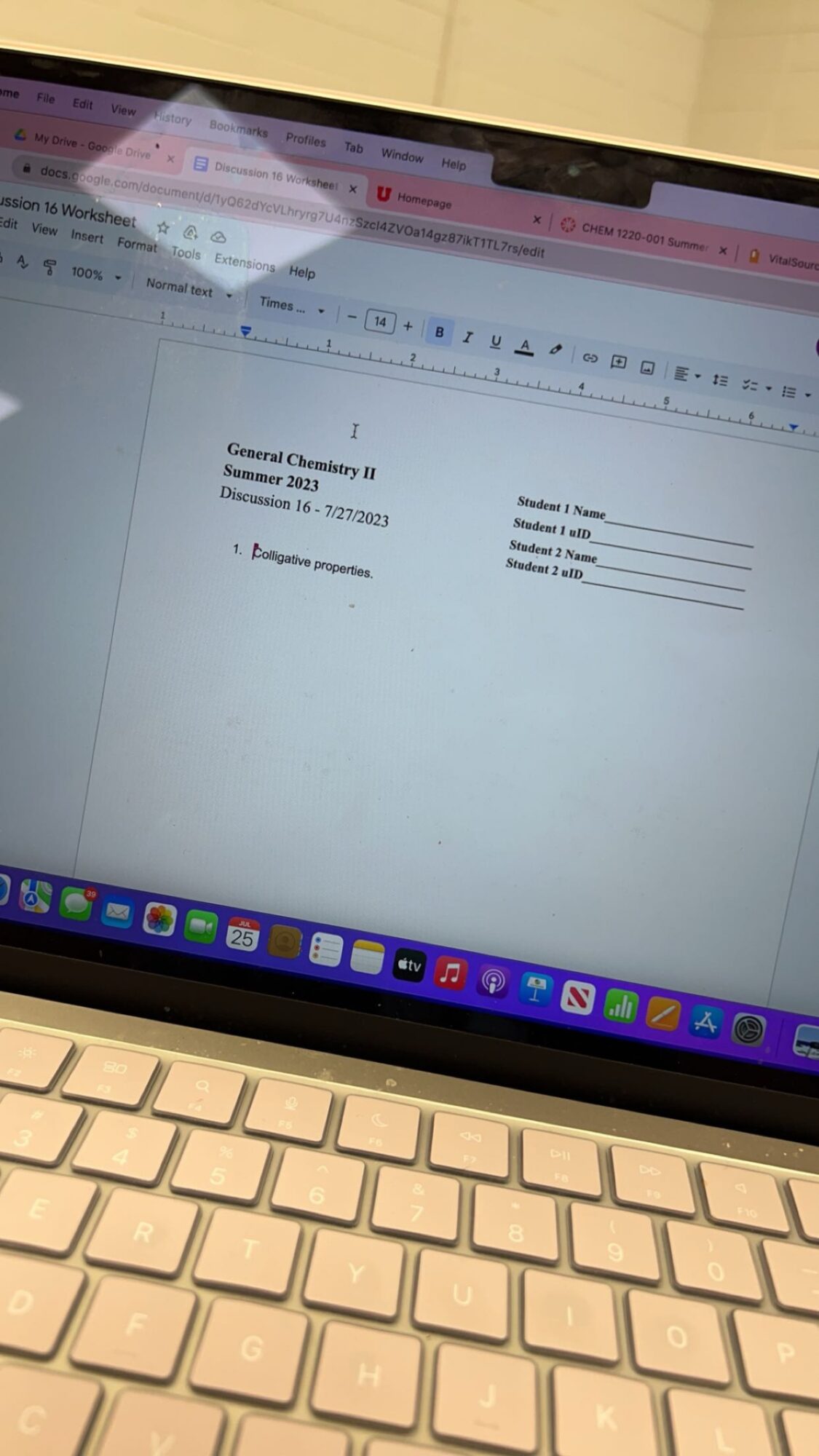
Just four months later, I got an email saying that I was one out of the two people who were offered the mentor learning assistant position; I was asked to guide all the new learning assistants through the pedagogy class that they take. I immediately accepted; I wanted to equip the new educators to boost confidence in their students while preserving their own beliefs in themselves. Yet, I knew I’d greatly miss teaching the subject that I loved. The solution was easy; I decided I’d become a teaching assistant for chemistry so I’d get the best of both worlds! The professor put me in the position of discussion leader, and allowed me to guest lecture every semester by doing a liquid nitrogen demo for our students. My 9 year old self would be proud.
On April 3rd, 2023, I was supposed to do my semesterly liquid nitrogen demo at 4:30PM. But, the weather decided it wanted to take that away from me by bringing in a snowstorm, which gave students a choice between in-person or virtual classes. I refused to miss my favorite day, so I braved the snowstorm and drove up to campus. Only 19 out of ~320 students showed up in person; the rest tuned in through zoom. But, the important thing was that I did my demo. I shared my childhood favorite with another group of ~320 students.
I had another TA film my demo that day, mainly to get an idea of my teaching performance through a third-person point of view. I wanted to show my mom what liquid nitrogen was and how it behaved, but, as she never had the opportunity to study chemistry, I knew she didn’t have the background knowledge to understand what my demo was about. So instead, I sent her a clip of myself dumping the liquid nitrogen on the floor after my demo was finished.
I got home two hours later, bored and exhausted after driving in that snowstorm The video of myself dumping liquid nitrogen was originally taken only to send to my mom, but out of boredom, I mindlessly posted it, completely unedited, before taking a nap. I thought that I’d get several likes from friends and that everyone else would scroll past; it was really just a shitpost. But I woke up about three hours later to my phone blowing up like CRAZY. That video was going viral! It was a crazy experience; I’d refresh my phone every minute or two to see the video’s views go up by a thousand each time. My phone even crashed multiple times, so I had to turn off my notifications. The video eventually garnered 21.1 million views.
I’d been creating content on and off since I was 9 years old, although my types of content constantly changed over the years. I always found it to be a fun lil hobby. While going viral was never my goal, I’d always wanted to see it happen; I just never thought that it actually would. The even crazier part to me is that the video that went viral is one that I did not put any effort into nor even plan to post. Even now, I think to myself, “All I did was dump liquid nitrogen onto the floor.”
Going viral typically seems to be a “one-hit-wonder” type of experience, but I decided I’d capitalize on it. I quickly began to create content based around the thing I’ve loved since I was 9: chemistry. It’s turned out to be a fun and rewarding experience, seeing how many people in the field can relate to the things I talk about in my silly little Instagram reels. It makes me feel like we’re all in this together. After all, none of us are ever alone in our struggles through the journey. Even though we don’t all know each other, we have similar struggles, yet we know the journey will be worth it. Content creation has given me a sense of community, and I hope that others find their community, too.
Would you say it’s been a smooth road, and if not what are some of the biggest challenges you’ve faced along the way?
The road to where I am today has been FAR from smooth. As a little kid, I was expected to be perfect, and the best at everything I did. I never really did the things that other kids my age did, because I was always busy trying to be as competitive as I could be. I then got placed into the “gifted and talented education program” in second grade, and I felt that if I was considered “smart,” I didn’t/shouldn’t have to try in order to succeed. I never really learned how to study effectively. It got to a point where I felt ashamed if I ever made a mistake. I never asked for help with anything, because I thought I needed to do everything myself. I essentially lost the mindset that I once had, about seeing mistakes as an opportunity to learn.
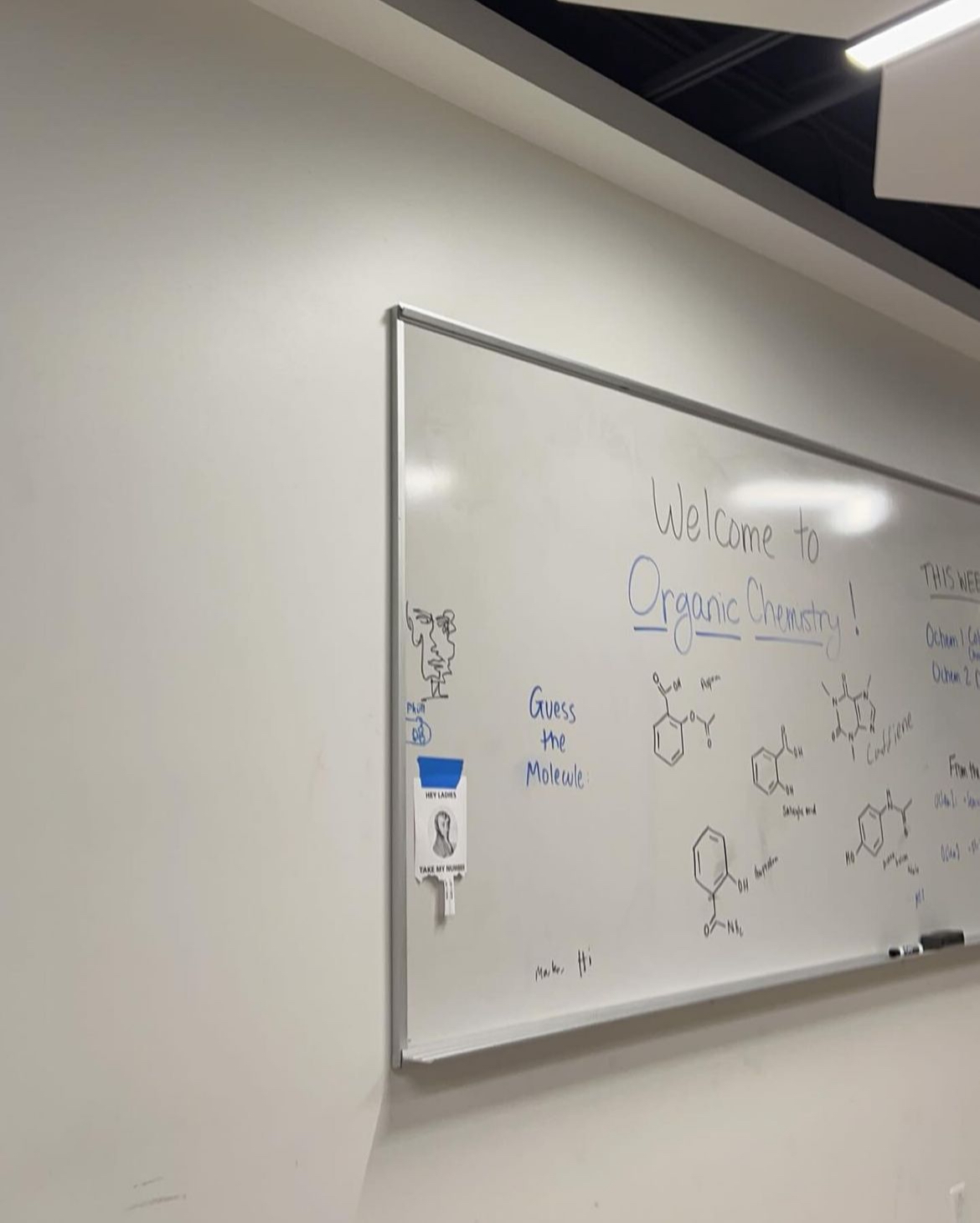
Trying to do everything myself worked for a long time; I’m surprised that it did. But it eventually all blew up in my face. I failed a class for the first time when I was 19, after struggling in silence the entire semester. It was organic chemistry, which is considered a “weed-out class” with the 40% failure/retake rate nationwide. I was terrified that I wasn’t cut out for my major; that I’d never be able to pursue the thing that I love. As time went on, it outwardly seemed like I was losing my drive to wake up every morning and take another step towards fulfilling my dreams. But in reality, that had never truly gone away; I just couldn’t seem to apply it. I knew deep down that there was more to my struggles than just school itself; I just refused to admit it. I constantly asked myself, “How do the people around me force themselves to do things that they hate, when I can’t even bring myself to do the things that I love?”
During that time, a few of my closest friends had been begging me to seek help. But I refused, thinking that my continuing lack of success was nothing but a character flaw of mine. It wasn’t until six months later that I realized things were going downhill fast. My fear of being unable to fulfill my childhood dreams of pursuing chemistry, and the constant support from the people around me, were what led me to finally seeking help.
I ended up getting diagnosed with bipolar 1 disorder at the age of 20, and then ADHD six months later. Bipolar is genetic, not environmental. It’s lifelong, and every episode causes irreversible brain damage. I have to stay on medication for life to help mitigate the damage that it causes. Plus, it is extremely difficult to treat bipolar 1 by itself; let alone that and ADHD at the same time. In hindsight, the odds, genetically, were never in my favor.
I’ve since learned that, to reach my full potential, the best course of action isn’t to fight against my brain. Rather, I need to work with it, to keep it as stable as it can be. It’s a reminder to take care of myself, because while medication helps tremendously, it is not a cure-all.
Every chemical reaction requires activation energy to get started. Without it, the reactants will just sit there, unable to transform into the stable products that they so badly want to be. After getting on medication, working for what I wanted no longer felt impossible, and my passions no longer felt boring to me. Failing grades turned into A’s and B’s, and going into chemistry became more than just a dream.
Being on medication felt uncomfortable at first; I initially tipped too far to the right side of the chemical equation. But my psychiatrist reminded me to give it some time, and if it didn’t work, we could try a different one. It eventually worked well; by using the activation energy I now had, the system in me eventually reached an equilibrium state. I suppose my activation energy was pretty high, but in hindsight, I don’t mind. After all, with more energy, I became a thermo product, and those are more stable than kinetic products.
Eventually, I learned that I was never incapable; I was just a chemical reaction waiting to happen; searching for the activation energy that I needed to get started. Ever since I found it in medication, I’ve continued to discover all of the cool products that I can become. So I wake up every morning, take my activation energy, and see what I become next.
To be a scientist isn’t to expect perfection; it’s to come up with our hypothesis, test it out, and if it seems to be wrong, we learn from the experience and try something else. We collaborate with others in the same/similar fields, because we move much farther forward than if we try to do everything alone; just like the way I flourished after I sought help with bipolar and ADHD. I’d never wish these struggles on anybody, but they’ve given me unique perspectives on the world. I experience the highest of highs and the lowest of lows, so I appreciate stability greatly; yet it’s something that most people take for granted. Due to the brain damage, I may not be as sharp as I used to be, but I’ve learned that I don’t need to be. Plus, these struggles make me a much more empathetic educator than I’d otherwise be. I recognize that working hard is important, but there’s a lot more to success than that. My journey has been nothing like my 9 year old self imagined it’d be, but I think that if she understood why, she’d be proud of me. Growth never comes without adversity. My journey is nothing like I had pictured, but I’m thankful that it happened this way.
Thanks for sharing that. So, maybe next you can tell us a bit more about your work?
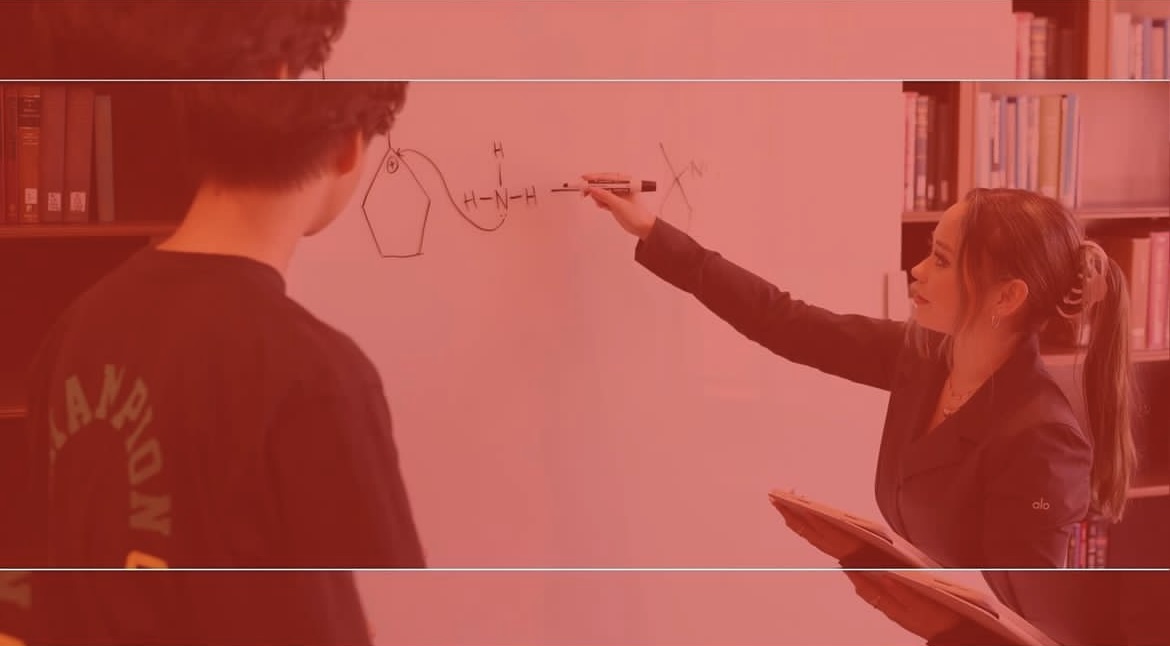
Honestly, I don’t think I can categorize all of the things I do as either professional or creative; rather, it’s kind of both. A typical day in my life is packed, as I go to my own classes/labs, and teach chemistry and pedagogy in between. While my classes are geared towards my degree, not everything is so rigid and straightforward. Problem solving takes a great deal of creativity. It’s the same way with teaching; to be an effective educator isn’t just about understanding the subject that I’m teaching, and delivering a scripted presentation. It’s about recognizing that every student steps foot into the classroom/lab/lecture hall with their own unique set of knowledge, and learning how to work with each and every one of them. It’s creating a safe learning environment, encouraging students to work with their peers (again, we learn better together than on our own!) and it’s figuring out the best way to deliver information that is new to them, by keeping them engaged. It’s helping them realize that chemistry isn’t as scary as it’s made out to be. And, to teach pedagogy to new educators is to guide them through the process of applying these teaching strategies to their students in the classes that they teach. I really do believe that a kind and effective educator can make all the difference in a student’s educational career, even if they don’t say it. I do my best with teaching everyday, because I want my students to realize that when they work hard, I see it and am cheering them on. Realistically, I am just one person in my students’ educational career; they probably won’t remember who I am. But as long as they end the semester believing that they are capable and that it is a sign of courage to seek help, I am okay with that.
Let’s talk about our city – what do you love? What do you not love?
Ever since moving to Salt Lake City, I’ve found it to be a friendly environment. People will introduce themselves and hold a conversation; they are open to getting to know me, which is not something I was used to growing up. I just sometimes wish that our society wasn’t so individualistic, to the point of many people being unwilling to help others. But I think that’s true of most places I’ve been to. Like I talked about earlier, we all need a little help to reach our full potential. But not everyone receives that, so many of those who are inclined to seek help in the first place are only given reasons to stay silent.
Contact Info:
- Website: https://www.csme.utah.edu/meet-our-learning-assistants/meet-our-learning-assistants-anika-tindall/
- Instagram: https://www.instagram.com/anikaaacorinne/ and https://www.instagram.com/liquidnitrogengirl/
- Other: https://www.etsy.com/shop/theartoffugacity/