



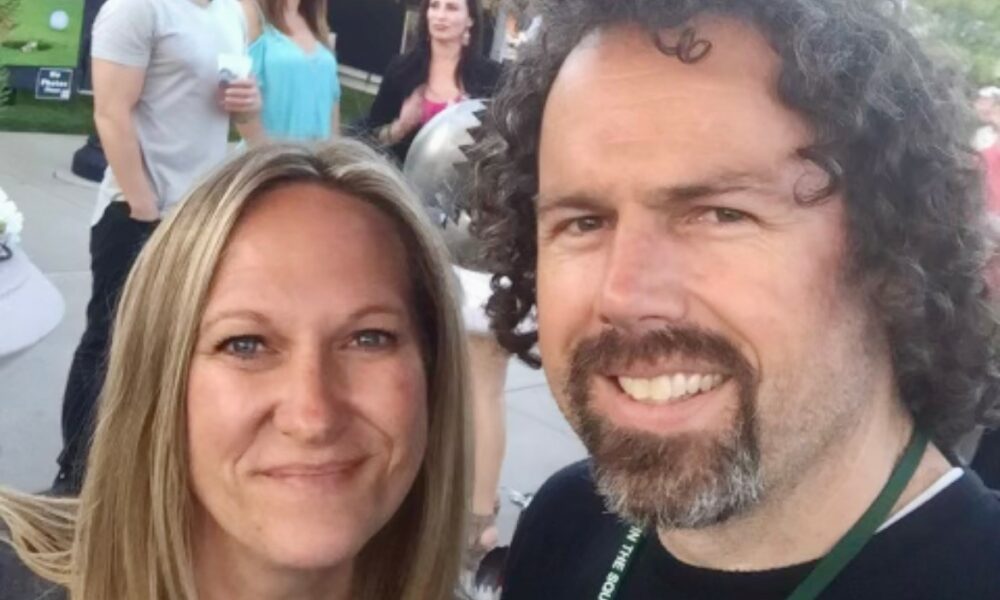
Today we’d like to introduce you to Fred Conlon.
Hi Fred, so excited to have you with us today. What can you tell us about your story?
I was going to school at the University of Utah. At the time, it seemed like I was taking every pottery class available, simply because I wasn’t quite sure what I wanted to study, but I knew I liked pottery. I took a different pottery class each quarter and my knowledge of the art started to grow.
During the course of my time in college, I eventually got my degree in public communications and even ended up getting married. At that point, after I had graduated, my wife looked at me and said, “Now what?” I realized that, once again, I wasn’t exactly sure what direction I was headed in, or what I wanted to do.
However, my dream had been to open up a pottery shop. I shared this with her, to which she responded, “Well, why don’t we do that?” The only thing holding me back at that point was fear of failure. My wife explained to me that we had nothing to lose: No house payment, no car payment, no kids, nothing… so what was the point of being afraid to fail, so long as we tried it out?
This helped me understand that I didn’t want to live with those “what-ifs,” only being able to wonder how things would have turned out had I done this or that. With my wife’s optimism and encouragement, we decided that opening a pottery shop was our next move. My grandma had left about four thousand dollars to each of her grandkids, and with my four thousand, I was able to buy the supplies that would help jumpstart our business: Eight pottery wheels, gas burners, enough firebrick to build a kiln, glaze ingredients, and two-thousand pounds of clay.
With the remaining eight hundred dollars, we were able to sign our first month’s lease and thus began the journey of owning a pottery shop. Being that our shop was located in Sugar House, across the street from the post office, the name Sugarpost came together and kind of just stuck. We began teaching pottery classes six nights a week, occasionally Saturday mornings as well and continued doing this for about six years.
However, after a while, it became apparent that it was really difficult to make a living as a potter. Luckily though, at the time, I had some other ideas floating around in my head, several being different things I wanted to try and create out of metal. With this aspiration, I took it upon myself to do some research and studying, and actually taught myself how to weld.
Though this proved to be a great skill to have obtained, I soon came to an interesting realization: Unlike my pottery, which could be considered very functional and utilitarian, the things I started to make out of metal really had no function, but were more whimsical and sort of off-the-wall. This aspect of creative freedom is sort of what got the ball rolling, you could say.
Eventually, Sugarpost Pottery became Sugarpost Metal. I found very quickly that I enjoyed making metal creations out of things people might otherwise consider trash… so much so that I’ve been at it for twenty-one years now.
We all face challenges, but looking back would you describe it as a relatively smooth road?
As an artist, you might struggle with the idea that what you consider to be art may not be something that others also consider to be art. One of the biggest struggles of being an artist has been trying to figure out how to create a product that will sell without selling out. I think you kind of has to find that “happy medium.”
I had a former business partner who said something that has stuck with me over the years, which is that “Good art won’t match your sofa.” Art has to be unique and has that intrigue factor of course, but still, has a wide range of appeal. Figuring out how to make a living as an artist is a learning process, and ultimately comes down to two things: being able to make enough, and being able to sell enough.
If you can’t do one or the other, it becomes difficult to be a successful artist. What I mean by that is that there are so many people out there who are amazing artists, but either don’t have the ability to produce their work fast enough and find an outlet for selling their work and are unable to find the balance between creating and selling.
I feel like that was the biggest challenge for me – having to figure out how to both produce and sell art, as well as being able to figure out things I could create that would appeal to a large demographic of people.
Can you tell our readers more about what you do and what you think sets you apart from others?
I specialize in taking old, military surplus – something that was once used in combat – and making it into something for your garden. The first piece I ever made was a turtle, which was created using a World War II army helmet. The inspiration for that specific design came from my grandpa, who was at Pearl Harbor when the Japanese attacked. He always said that “War happens quickly.”
I agreed with this statement but thought, on the other hand, peace happens slowly or comes along slowly (much like a turtle). When I noticed a green army helmet looked similar to a turtle shell, these concepts came together and helped me create the piece that got my ideas flowing and got me to where I am today. Since then, Sugarpost has come up with thousands of different creations and unique designs. One of those creations includes the little metal monsters we are best known for, called Gnome-Be-Gones.
Those are designed to be placed in your garden to help control the gnome population. There’s this sort of imaginary war on crappy garden art that is the inspiration behind many of our pieces; a lot of people like to put things like pink flamingos and gnomes in their yards as garden decorations, but our work has always been centered around the concept of making garden art that is not those things.
In that regard, we stand by the fact that our motto is “We make garden art that doesn’t suck!” As far as what I’m most proud of, I’d have to say that that’s building a somewhat-sustainable business that not only supports my family but supports other families as well. In addition, the thing that sets Sugarpost apart from others is that we are able to make art out of discarded junk metal, which I think is really cool because there are not a lot of people that do that.
We’re essentially taking something that is considered to be useless and worthless and putting it together in a form that is beautiful and unique and becomes something that people are willing to pay money for. That’s pretty rewarding to me.
What do you like best about our city? What do you like least?
The thing I like best about our city is the mountains, as well as the accessibility of living in Salt Lake.
What I mean by that is that there are so many different things to do: I love that you can drive fifteen minutes one way and be skiing, or drive a half-hour the other way and be in the desert. I guess I also just love the vibe of Salt Lake, it’s pretty cool.
The thing I like least about our city is all of the building and expansion that is going on right now.
Contact Info:
- Email: shop@sugarpost.com
- Website: https://sugarpost.com
- Instagram: https://www.instagram.com/sugarpostmetalinc/
- Facebook: https://www.facebook.com/Sugarpost-Metal-116907095016144/
- Twitter: https://twitter.com/sugarpostmetal


 Suggest a Story: VoyageUtah is built on recommendations from the community; it’s how we uncover hidden gems, so if you or someone you know deserves recognition please let us know here.