



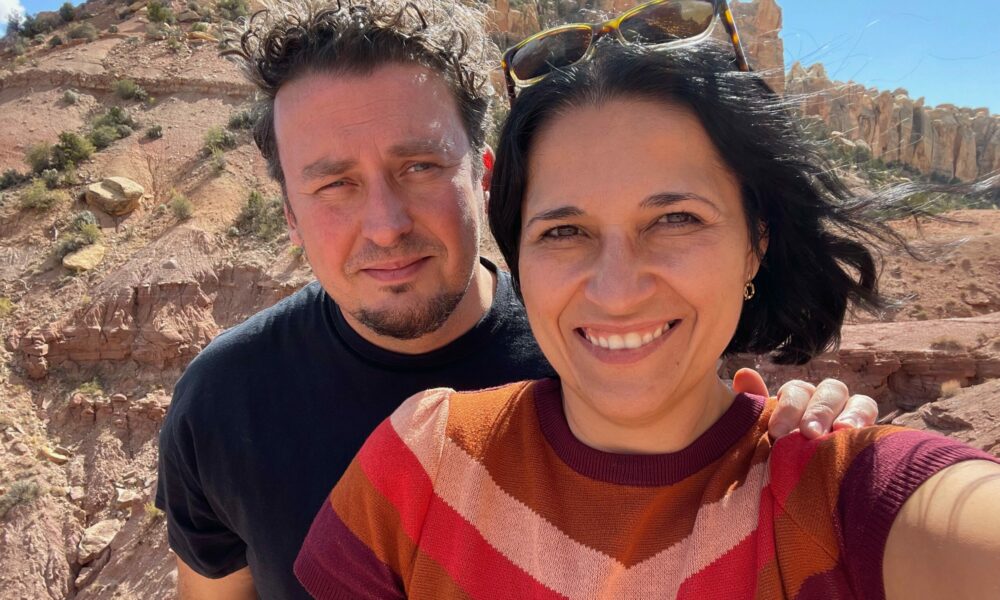
Today we’d like to introduce you to Natalie Young. Them and their team share their story with us below:
The four original founders of Sugar House Review (John Kippen, Jerry VanIeperen, Nano Taggart, and Natalie Young) had been in a writing group together for a number of years, so we talked about poetry a lot—our own, other people’s, the craft, etc. One day the idea of creating a journal came up and we were excited about the idea of being the ones to do it. Partially because we thought it would be an exciting project and partially because, at the time, Utah didn’t have an independent poetry journal. There had been a couple of short-lived projects in Utah, but nothing that went beyond a couple of issues.
We went into it with a lot of enthusiasm and a passion for poetry, but honestly, we had no idea what we were getting ourselves into. Which is probably good—we wouldn’t have done it otherwise. Soon after our initial conversation, John Kippen asked the late Utah poet laureate Ken Brewer’s wife, Roberta Stearman, if we could publish some of his unpublished work. She said yes. Ken Brewer, was one of our poetry heroes. He was a mentor to our mentors. When his work showed up, we could no longer back out. We had to make a poetry magazine. And we had to do a good job.
Kippen also solicited work from Paul Muldoon, a pretty massive figure in arts and letters. Paul also sent a poem, “Capriccio in E Minor for Blowfly and Strings.” It appeared on the first page of our first issue and ended up being selected for a Pushcart Prize. This was incredibly lucky. It’s probably more likely that one of us would be struck by lightning.
It gave us a lot of momentum. Whenever we’ve been fatigued from the project, something like that, something amazing, has happened. It’s been incredibly rewarding, and the project connected us with hundreds of wonderful people from all over, including people who are now among our best friends. Sugar House Review, Inc. became a nonprofit in 2019, and the ability to center the project around a mission and values, and to raise funds to cover its costs and expand some of our efforts have given more urgency to the project.
Would you say it’s been a smooth road, and if not what are some of the biggest challenges you’ve faced along the way?
It’s been worthwhile, but is anything totally smooth? Once you’ve been a part of running a literary magazine, it’s easy to see how most independent journals don’t last very long. It’s a labor of love and comes with frustrations we didn’t imagine. We didn’t anticipate the amount of time and energy it takes, nor that we were actually starting a business. None of us had experience in that realm. If we had known better, we could have saved ourselves a lot of time and fees by getting everything right the first time around.
As often happens with volunteer gigs in which several people feel ownership of a project, it strained the relationships of everyone involved, especially after Nano and I moved to Cedar City in 2012. One of the rewards of the project, physically getting together to talk about the magazine and the work that had been submitted to us, was no longer practical. We didn’t realize it at the time, but those meetings were essential to having a successful working relationship–in addition to being a source of joy and connection.
Jerry and John are no longer with the project, but thankfully, our friendships have recovered. We’ve picked up many more helpers along the way. Michael McLane, our book review editor, is a driving force behind Sugar. Additionally, we have a team of amazing volunteer readers and several board members that help so much and keep us motivated.
It’s interesting, Sugar takes time away from our ability to work on our own creative writing, but it’s also made us much better writers, more aware of the incredible diaspora of voices that are working in poetry right now. It’s got to be the best time to be a part of this field, because for the first time ever, everyone is beginning to “get a seat at the table.”
As you know, we’re big fans of you and your work. For our readers who might not be as familiar what can you tell them about what you do?
I am the managing editor for Sugar House Review; in addition to handling the day-to-day tasks of the magazine, I’m also the graphic designer, which means I do the design and layout for the magazine and website. For my day job, I work as an art director for an ad agency based out of Salt Lake City. I also write poetry.
I’m proud we’ve published Sugar House Review for 12 years, and I’m proud of the wide range of authors we’ve been able to publish, giving their work home. I think what sets Sugar House Review apart is our aesthetic, both visually and eclectic content. What sets me apart is that there are not a lot of poets or editors who are also graphic designers.
Can you talk to us about how you think about risk?
Good art often confronts something. The primary confrontation in poetry is often between the writer and their own assumptions, memory, or way of seeing. This is inherently a vulnerable act. Every attempt runs the risk of failing. Failure is likely, even.
Being available to that level of vulnerability is, I think, part of what makes us care about the creative arts, to begin with. To lean on a metaphor, vulnerability is kind of like the foundation of risk-taking. If you really want to make something that might connect with other people, the blank piece of paper or blinking cursor is quite a precipice.
Speaking of Sugar House Review, Inc., the business entity, there’s risk-taking inherent in its existence as well. We became a non-profit in 2019, and that process required surrendering governing authority to a board of directors. That’s certainly a risk. Likewise, choosing the work that appears in our publications requires turning down the vast majority of work that’s sent to us. There’s something risky about that, as well.
We believe that that interaction, between writer and editor, should be treated as if it’s sacred. Submitting work you have invested hours of time into people that you don’t know is kind of terrifying when you think about it. We’re certainly grateful to the many thousands of people that have decided to honor us with that act, otherwise, there’d be no Sugar House Review.
Pricing:
- 1-year Subscription: $20
- 2-year Subscription: $30
- Individual Issue: $10
- Electronic Issue: $2
Contact Info:
- Email: editors@sugarhousereview.com
- Website: SugarHouseReview.com
- Instagram: https://www.instagram.com/sugarhousereview/
- Facebook: https://www.facebook.com/sugarhousereview
- Twitter: https://twitter.com/SugarHouseRev
- Youtube: https://www.youtube.com/channel/UC1qVMFwLLU7echNbZNCUoSg
- SoundCloud: https://soundcloud.com/sugar-house-review
- Other: https://sugar-house-review.creator-spring.com