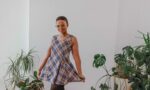


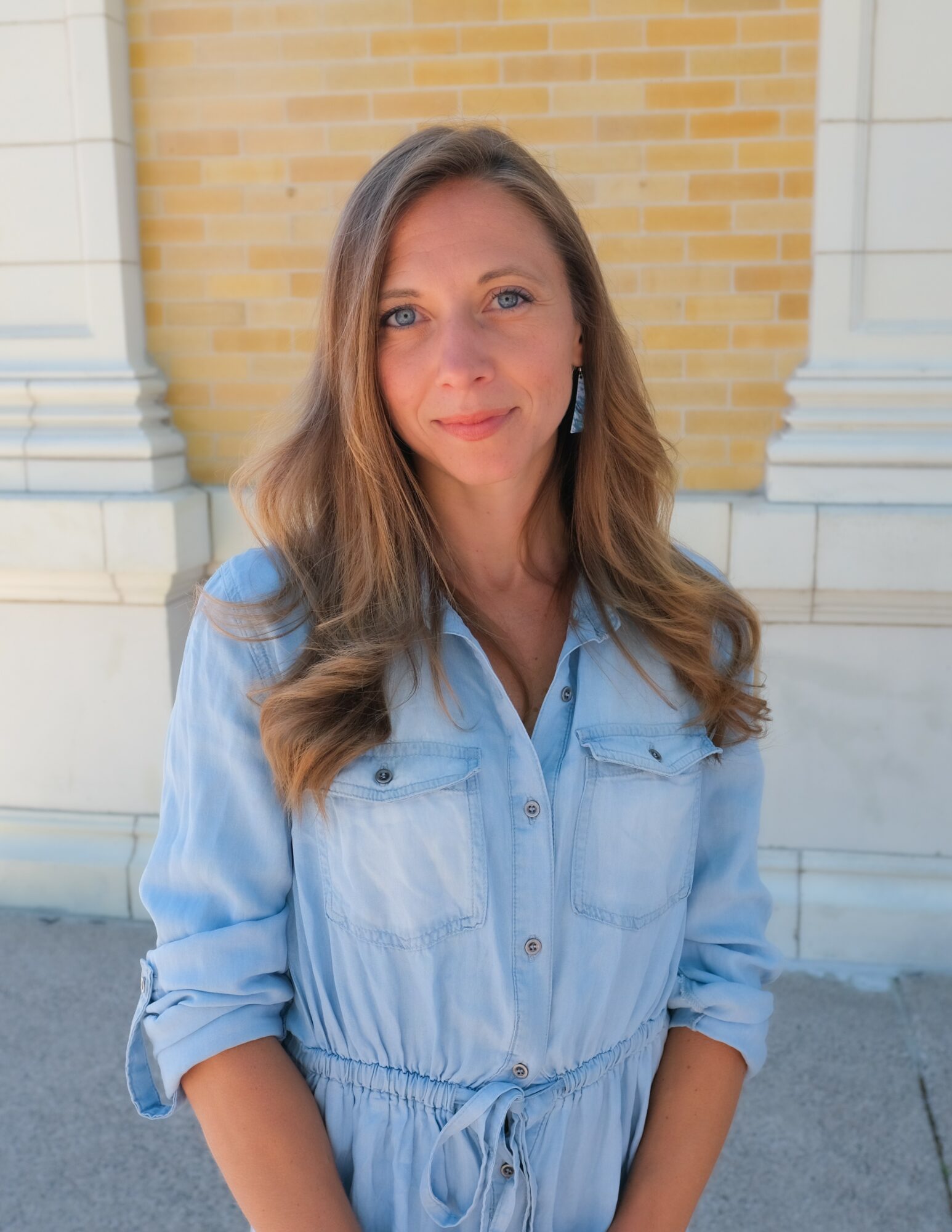
Today we’d like to introduce you to Ash Hanson.
Hi Ash, we’re thrilled to have a chance to learn your story today. So, before we get into specifics, maybe you can briefly walk us through how you got to where you are today?
I grew up in the rural Northwoods of Minnesota in a big, loud, creative family where making your own fun was pretty much a necessity. I didn’t grow up imagining that I would run a nonprofit or speak at conferences about rural arts, civic life, and philanthropy. I was a theater kid. I fell in love with the strange magic of gathering people together, making something out of nothing, and creating an experience that could only happen with those particular people, in that particular place, at that particular moment.
That eventually became the foundation of my artistic practice. For more than 15 years, I’ve been creating original, site-specific theater with, by, and for rural communities through PlaceBase Productions. Instead of arriving in a community with a script, we arrive with questions. We collect stories, histories, local lore, music, movement, landscapes, inside jokes, tensions, hopes, and memories, and work alongside residents to turn them into large-scale performances in the places where those stories actually live. I’ve made theater on prairies, beside rivers, down Main Streets, in abandoned buildings, and now, here in Moab, Utah, in the middle of the desert.
Somewhere along the way, I realized I was becoming just as interested in what happened around the performance as the performance itself. People who might never otherwise spend time together were making something together. They were taking risks, exchanging stories, laughing, negotiating differences, and imagining the future of their community. Theater was giving people a chance to rehearse being in relationship with each other and the land on which they live.
That realization eventually helped lead to the founding of Department of Public Transformation, or DoPT, in 2017. Today, I serve as its Creative Executive Officer, and we work nationally from our home base in the tiny town of Granite Falls, Minnesota, to support rural artists and cultural workers, activate rural gathering spaces, connect artists with civic and community leaders, amplify rural stories, and advocate for greater investment in rural people and places. What began as a scrappy group of artists traveling around the country has grown into an organization with an incredible team and a network of rural artists, neighbors, collaborators, and partners across the country.
And then, several years ago, my own relationship to place expanded westward when I found my way to Moab.
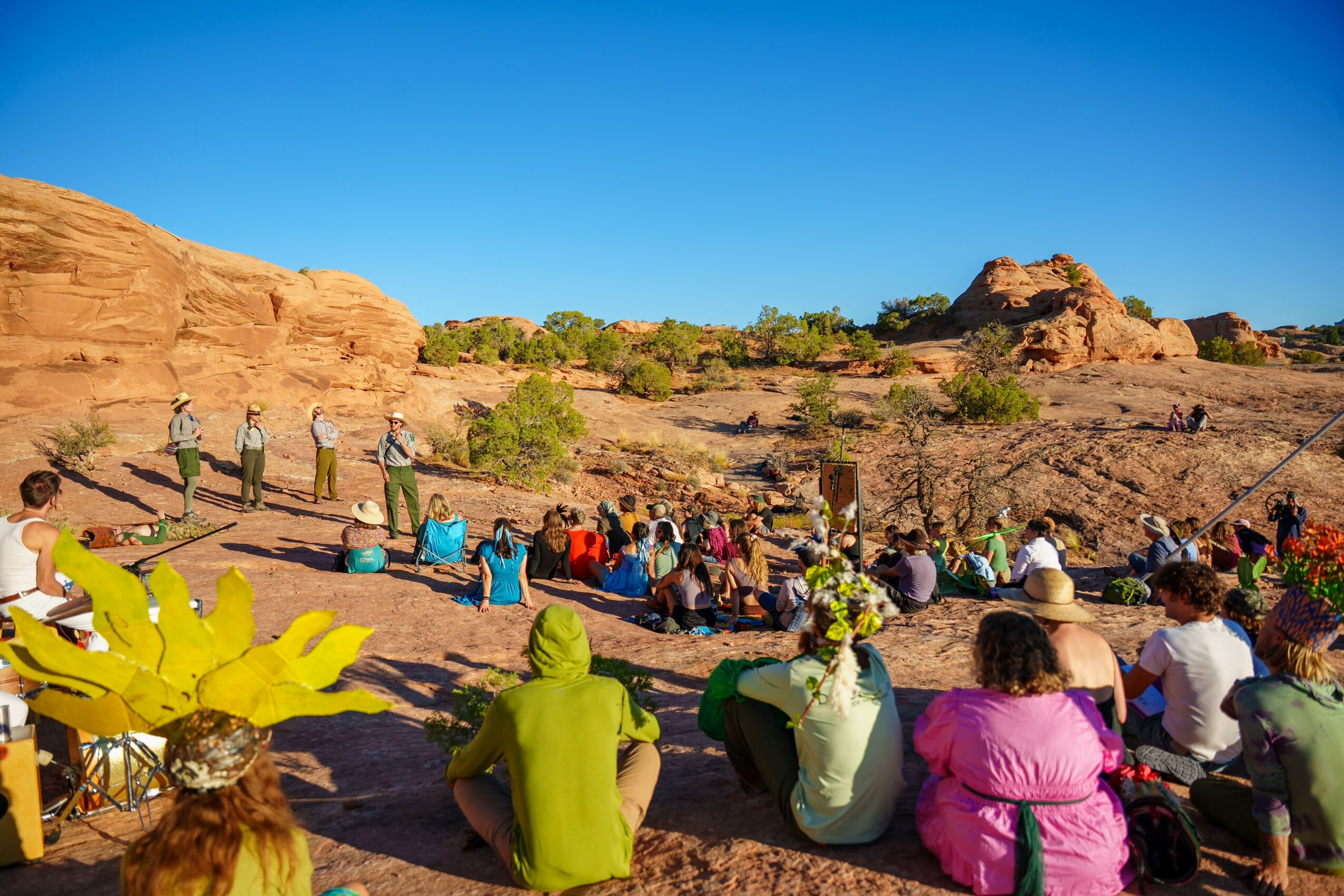
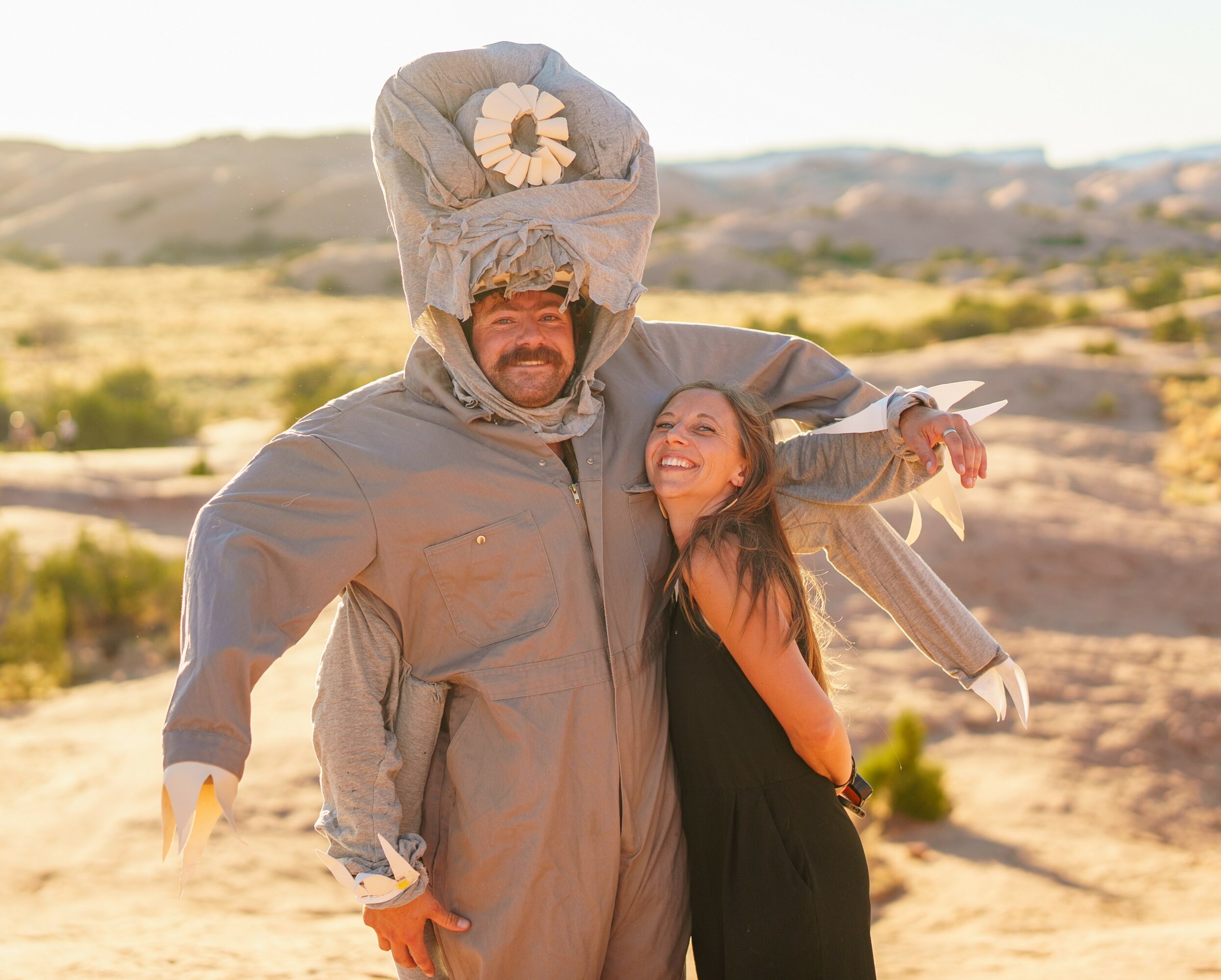
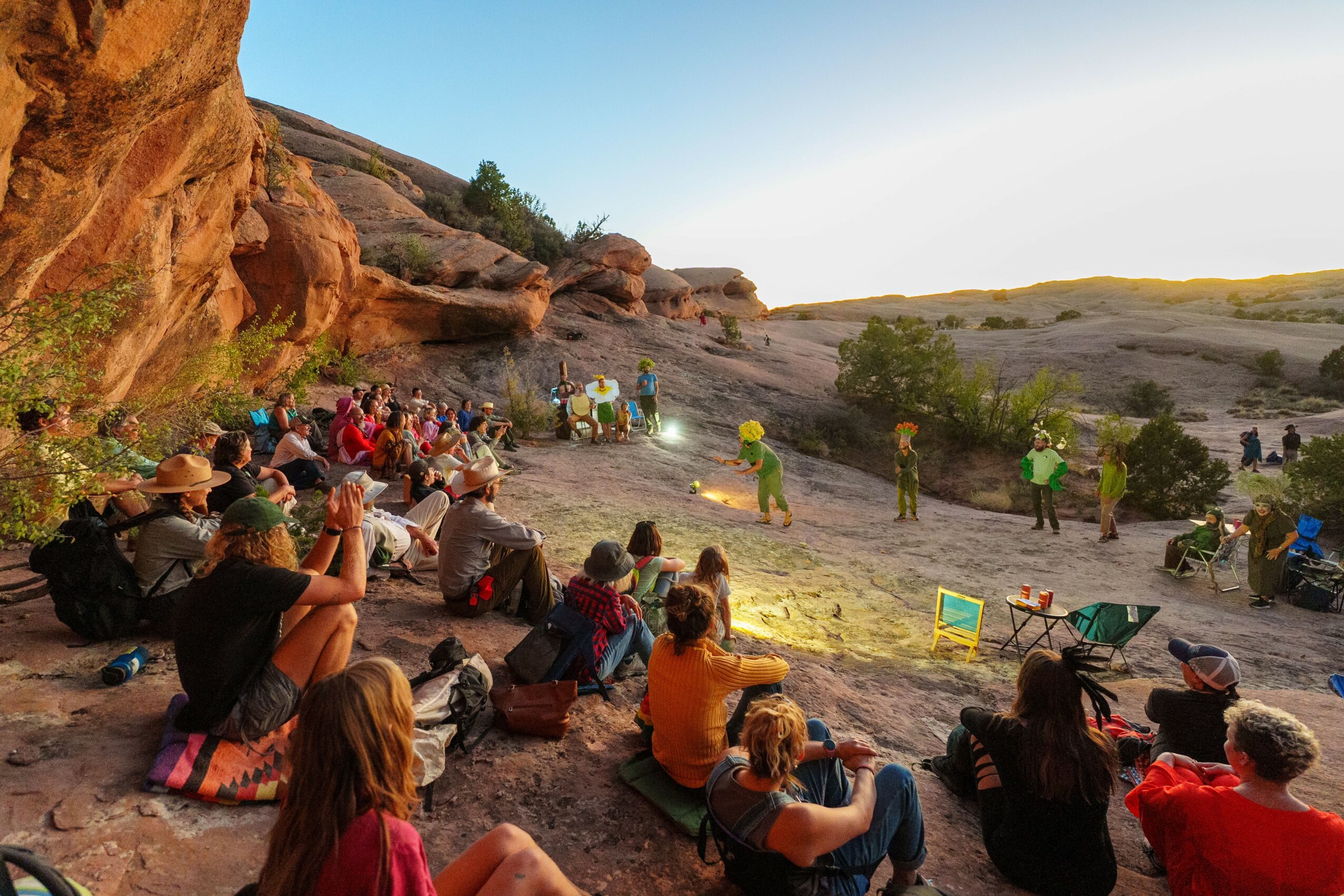
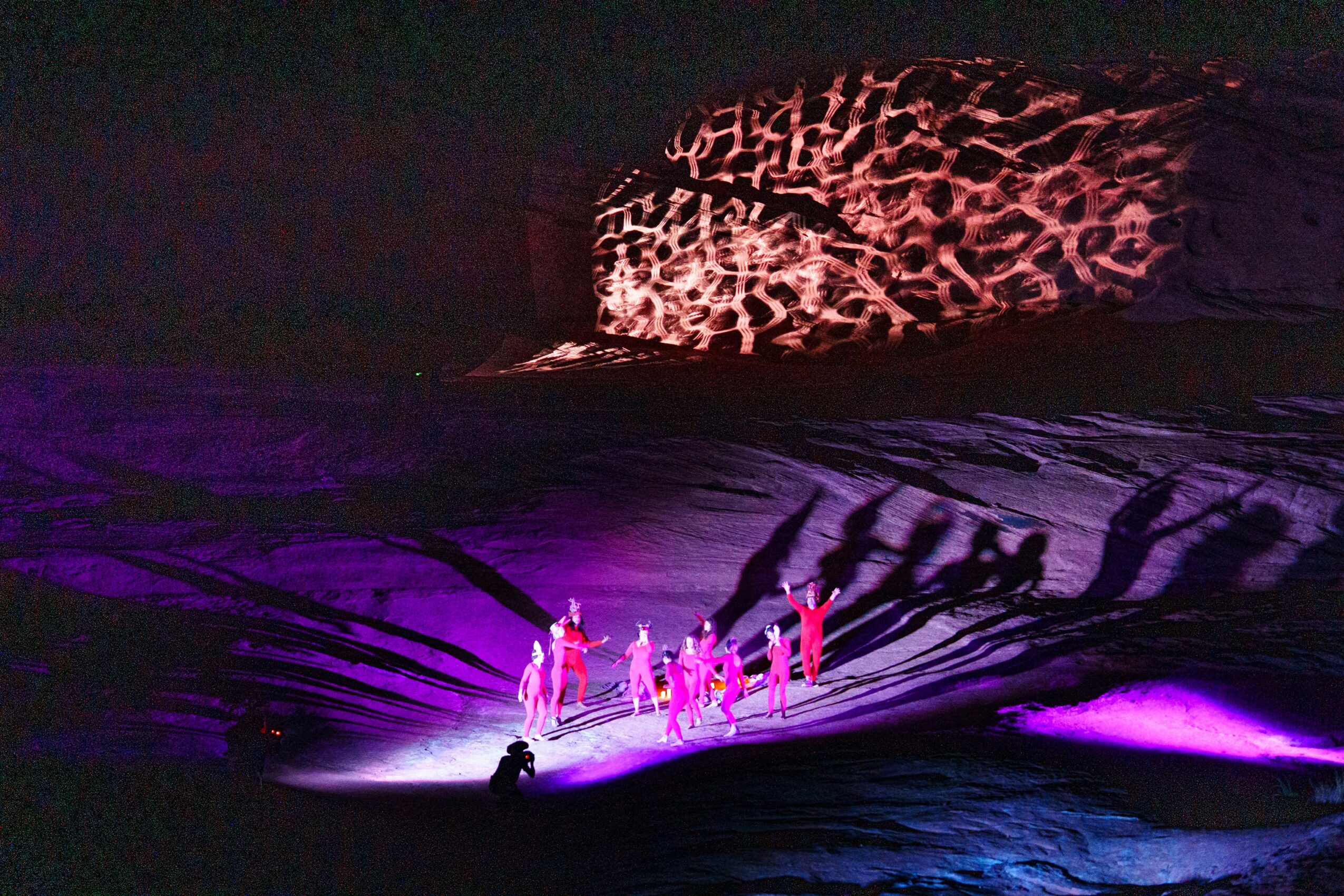
Utah has become another important chapter in my understanding of what it means to belong to a place. The red rock desert is wildly different from the woods and water that raised me, but I’ve found some familiar things here: complicated relationships to land, fiercely independent people, deep local knowledge, communities navigating enormous change, and plenty of characters. I recently had the joy of directing Leaving a Trace, a massive site-specific production in the Moab desert with around 80 community cast members and a 1.5-mile-long “stage.” It included everything from Park Ranger clowns and rock witches to a fairy shrimp, a heritage cow, and an ATV transformed into a giant Stegosaurus. It was weird and wonderful and very Moab.
Alright, so let’s dig a little deeper into the story – has it been an easy path overall and if not, what were the challenges you’ve had to overcome?
Oh, definitely not. And I’m not sure I would trust anyone doing community-based work who told you it had been!
One of the biggest struggles for me has been learning to trust my own way of knowing. I grew up in a rural place, didn’t come from wealth or powerful networks, and entered a professional world where expertise often seemed to sound like someone else. It had better credentials, better vocabulary, more letters after its name, and knew which fork to use at fancy dinners. For a long time, I thought I needed to learn how to sound like those people in order to be taken seriously.
It has taken years to recognize that lived experience is expertise, too. Fifteen-plus years of sitting at kitchen tables, making plays with rural communities, listening to farmers and artists and teenagers and elders, failing at things, trying again, and paying very close attention to people and place has taught me things no graduate program could have. I still love a good study and will happily wave around a delicious piece of data, but I’ve gotten much better at trusting what I know in my bones.
There have also been the very practical challenges of building organizations and an artistic life from rural places. Resources are harder to come by. Distances are enormous. Burnout is real. I’ve spent a lot of years trying to convince people with money and power that rural communities deserve the same kind of audacious investment afforded to places with more people, more institutions, or more visibility. Some days I do that work with enormous joy. Other days, as I like to say, I run on a healthy amount of spite!
And community-based work itself is messy. You’re working with real people, real histories, real conflict, and places that have often experienced generations of extraction and broken promises. Trust can’t be rushed. You have to be willing to enter gently, listen, change your plans, admit when you’re wrong, and sometimes let go of the beautiful idea you arrived with because the community has a better one.
I’ve also had to learn that caring deeply about a place or a project doesn’t mean sacrificing yourself to it. I’m still learning that one. When your work is tied to relationships, community, creativity, and things you genuinely love, the boundaries between vocation and life can get pretty blurry and messy. Especially in rural places where annonoymity can be hard to come by!
But I think the struggles have clarified the work for me. I’m much less interested now in proving that I have the right answer. I’m interested in creating the conditions where more people can recognize their own capacity, contribute what they know, and imagine something together.
And I’ve learned to measure success differently. Sometimes it’s a big grant or a packed performance or a beautiful building coming back to life. And sometimes it’s much smaller: someone who was terrified to perform stepping forward; a neighbor saying “we” instead of “you”; people who didn’t know each other laughing together or collaborating on something; someone realizing that their story, their creativity, their little patch of earth actually matters.
Those moments keep me going.
As you know, we’re big fans of you and your work. For our readers who might not be as familiar what can you tell them about what you do?
My work is a little hard to fit on a business card, which is exactly how I like it.
I’m an artist, director, facilitator, and the Creative Executive Officer of an artist-led nonprofit working at the intersection of rural arts, community development, civic life, and philanthropy. At the center of all of it is a belief that rural artists have an important role to play in shaping the futures of the places they call home.
At DoPT, that takes a lot of different forms. We support rural artists and cultural workers with direct funding, mentorship, and peer networks. We help artists and civic leaders work together. We support people transforming underused buildings into creative community gathering spaces. We host residencies, performances, conversations, and experiments at The YES! House, our headquarters and community space. We tell rural stories. We facilitate rooms full of people trying to figure out hard things together. And, increasingly, we are working upstream, asking how philanthropy itself might change so that significantly more resources actually reach rural people and places.
I’m especially proud that over the past eight years, DoPT has moved more than $1 million directly into the hands of rural artists and communities. I love that number because it represents something very tangible: artists getting paid for their labor, ideas getting a chance to become real, and rural people having resources to act on their own imaginations.
As for what sets my work apart, I think it might be that I have never been very interested in staying in my lane. I will direct a giant community play in the desert one week and sit in a room talking about rural philanthropic capital the next. I’m interested in what happens when artistic practice makes its way into places where it supposedly “doesn’t belong”: city government, community development, economic development, philanthropy, and civic life.
That means I tend to ask different questions. Who isn’t here? What are we taking for granted? What if we made this more beautiful? More joyful? More human? What if we tried the weird idea? What would happen if we stopped talking for ten minutes and actually made something together? What if the person we think needs our help is actually the person with the expertise we need?
I think artists are particularly good at making something from what is available, seeing possibility where other people see limitation, and helping people imagine something before there is proof that it can exist. Those capacities feel incredibly important, especially right now.
So maybe what I specialize in is creating conditions for possibility. Sometimes that looks like a play. Sometimes a gathering space. Sometimes a grant. Sometimes a facilitated conversation. Sometimes it looks like helping an artist realize they are already a civic leader. Sometimes it is convincing a funder to put considerably more money into rural communities.
And sometimes, apparently, it looks like turning an ATV into a Stegosaurus.
I like work with range!
So, before we go, how can our readers or others connect or collaborate with you? How can they support you?
So many ways! I love a good collaboration, especially the kind where we don’t entirely know what we’re making yet.
Through Department of Public Transformation, we partner with rural artists, cultural workers, municipal government, community leaders, funders, and organizations interested in building more creative, connected, and equitable rural futures. That might mean supporting an artist or creative community project, designing a gathering or residency, facilitating a complicated conversation, helping activate a community space, or dreaming up new ways to move resources into rural places.
Through PlaceBase Productions, I collaborate with communities interested in creating original, site-specific performances rooted in their own stories, landscapes, histories, and imaginations. I’m also available independently as a facilitator, speaker, director, and creative strategist, particularly when someone wants to make a gathering more participatory, playful, embodied, or just a little bit weirder.
And there are plenty of ways to support the work without formally working together. See a show in a small town. Hire a rural artist. Fund the weird idea. Invite artists into rooms where decisions about the future of a community are being made. If you are someone who controls resources, especially philanthropic resources, invest boldly in rural people and places. And please, pay artists for their work.
Mostly, I love meeting people who are curious about place, willing to experiment, and interested in making something together. Some of my favorite projects have started with a conversation or email that begins, “Okay, this might sound a little crazy, but…” Those are usually my favorite emails to receive.
You can also donate directly to: https://www.publictransformation.org/donate
Contact Info:
- Website: https://www.publictransformation.org/
- Instagram: @publictransformation
- Facebook: https://www.facebook.com/PublicTransformation
- LinkedIn: @ashhansony