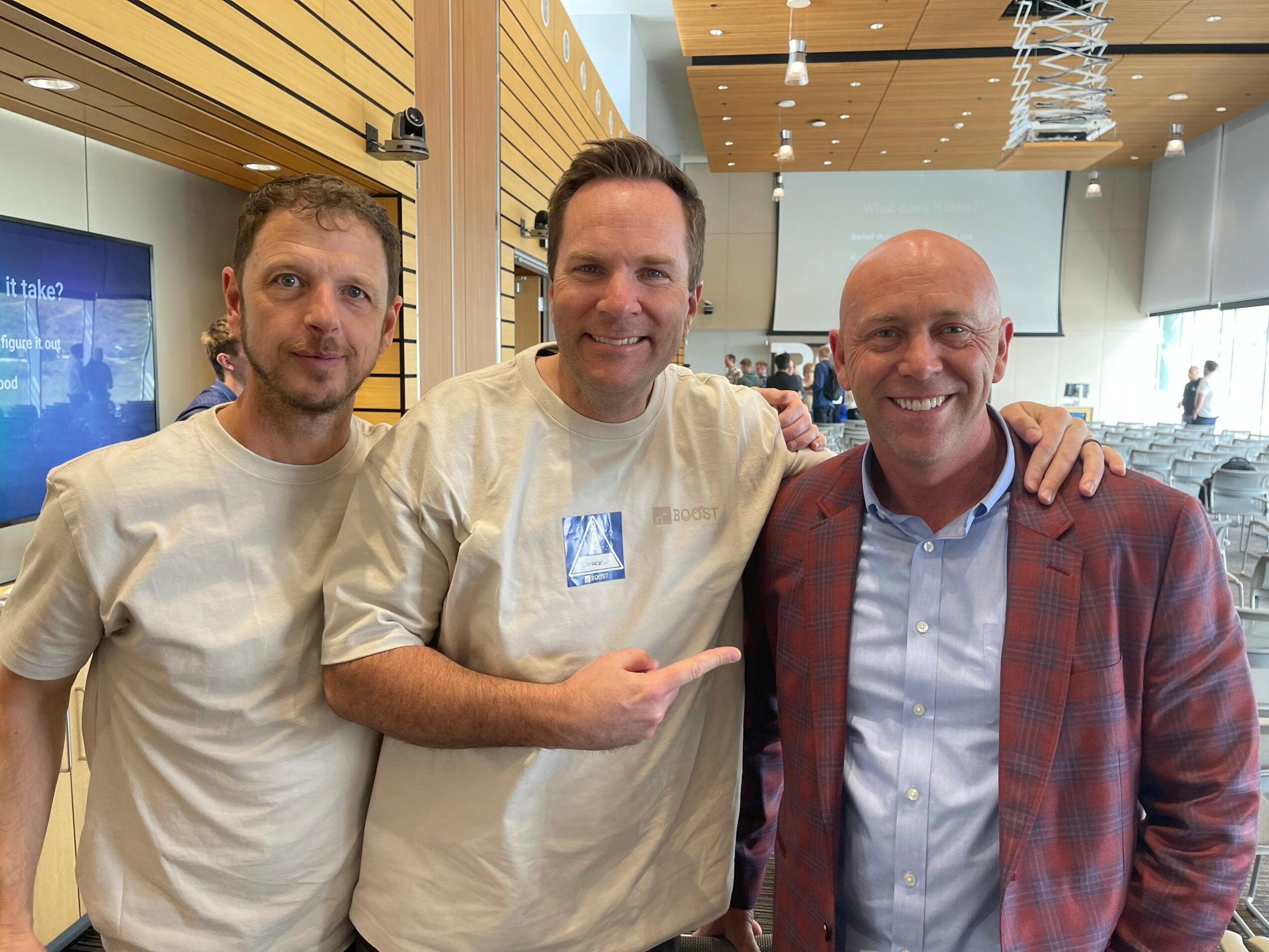




Today we’d like to introduce you to Wes Clark.
Hi Wes, please kick things off for us with an introduction to yourself and your story.
Somewhere between row three and row three hundred of an Idaho potato field, moving irrigation pipe in the summer heat, a thought crept into my head: you know what would be fun? Building a business, selling it, and then doing it all over again. I’m pretty sure part of that thought was just my subconscious looking for any exit from moving pipe in that muddy field. But it stuck.
The funny thing is, I didn’t have any framework for what that even meant. No entrepreneurship class, no startup podcasts, no venture capital vocabulary. I just knew I liked building things and I wanted to do it at a bigger scale. I followed the only model I had – working construction for my dad during the summers – so I went to BYU and got a Construction Management degree from BYU… because building things was building things, right? Close enough.
I worked in construction for a few years, which I loved. There’s something deeply satisfying about watching something go from a set of plans to a real structure. But the itch to build businesses kept nagging. Somewhere along the way, I decided to go back to BYU for an MBA, convinced that the path to building businesses was: get an MBA, go work for a large Fortune 500 company then go launch a business. After graduating I join Intel as part of a rotational leadership program and I cycled through construction, finance, supply chain, R&D, manufacturing, and a business unit. Remarkable people, genuine education. and a growing realization that I was a very small, very well-compensated cog in an enormous machine.
So during my Intel sabbatical, my family and I packed up the house and drove to Utah. We were following a prompting that we needed to be closer to family. Our plan was to spend the summer with family and traveling before getting serious about finding a job. As we were packing up, a friend from school connected me with a pre-revenue startup that needed help with manufacturing, operations, sales, and basically everything else. I jumped in 2 weeks after getting to Utah and never made it to the “summer of traveling and fun.” What followed was one of the greatest adventures of my career – missing two planes in thirty minutes then doing planes, trains and automobiles to reach a military demo that landed our first purchase order, prototyping products on the kitchen table, and somehow getting our company on one of the most interesting Shark Tank episodes.
From there, I joined a scrappy little mattress company called Purple and helped scale it from startup to publicly traded company and one of the most successful DTC brands in Utah. At Purple, I led international expansion, built a team in the UK and Europe, and was part of the core team that took Purple public. Then came Kizik Shoes, where I was head of Marketing and Marketplace operations and helped scaled the brand to nine-figure revenue. I also co-founded an ecommerce agency along the way. These days I do fractional CMO work for both e-commerce product companies and blue collar service businesses.
My greatest passion currently, outside of my faith and family, is launching Cache Launchpad (www.cachelaunchpad.org), a startup incubator in Cache Valley designed to stop exporting some of the best ideas, startups and talent out of Cache Valley to places south along I-15.
The kid moving pipe would be genuinely in awe, but I think he’d also feel like the thought between row three and row three hundred was worth having.
I’m sure it wasn’t obstacle-free, but would you say the journey has been fairly smooth so far?
Haha, No.
After the Shark Tank startup, I tried to launch a fractional CFO business for early-stage companies. Terrific idea with one fatal flaw: startups don’t care about finance. They care about customers and revenue. I learned that lesson the hard way and the fast way, which is honestly the best way to learn it, you just don’t enjoy it at the time.
There’s also the chapter where I left a very stable, very well-paying job at Intel with no job lined up, a family to support, and a vague plan to “network and figure it out.” The most important part of that was the support of my wife and family.
And going public with Purple, which sounds glamorous from the outside, is something I now describe as an experience I’m glad I had and would not wish on anyone I like.
Every experience taught me something useful. The failed CFO business taught me that the market tells you the truth whether you want to hear it or not. Intel taught me the value of process, scale and also exactly why I needed to leave. The startup years taught me that most problems are solvable if you’re willing to drive through the night, get two hours of sleep but still show up ready to demo in the morning. That’s a muscle that doesn’t go away.
Can you tell our readers more about what you do and what you think sets you apart from others?
The short version: I help growth-stage companies build and scale good products into great businesses. Marketing strategy, demand generation, sales automation, international expansion, revenue operations, I enjoy learning and taking on new challenges.
The longer version involves a lot of zip codes and job titles. On the marketing and growth side, I was part of the core team at Purple Mattress that scaled the brand from a startup to a publicly traded company and one of the most recognized DTC launches of its era. At Kizik Shoes, I helped build the national demand generation infrastructure that took them to nine-figure revenue. Before that I co-founded an ecommerce agency and worked with some exceptional brands. These days I work as a fractional CMO, which means I bring that same level of strategic firepower to businesses that aren’t ready for or don’t need, a full-time CMO at $150–200K+ a year.
What sets me apart is a genuinely diverse background across industries, functions, and business stages. I understand how construction businesses think because I’ve worked in them. I understand how consumer brands scale because I’ve built them. I understand how international markets behave differently because I’ve lived in them operationally. Most marketing consultants have to learn your industry. I’ve usually already been in it.
What am I most proud of work-wise? Honestly, it’s Scrappy Valley, a monthly lunch I started almost four years ago for entrepreneurs, founders, and anyone looking to connect in Cache Valley. No agenda, no keynote, just people helping each other.
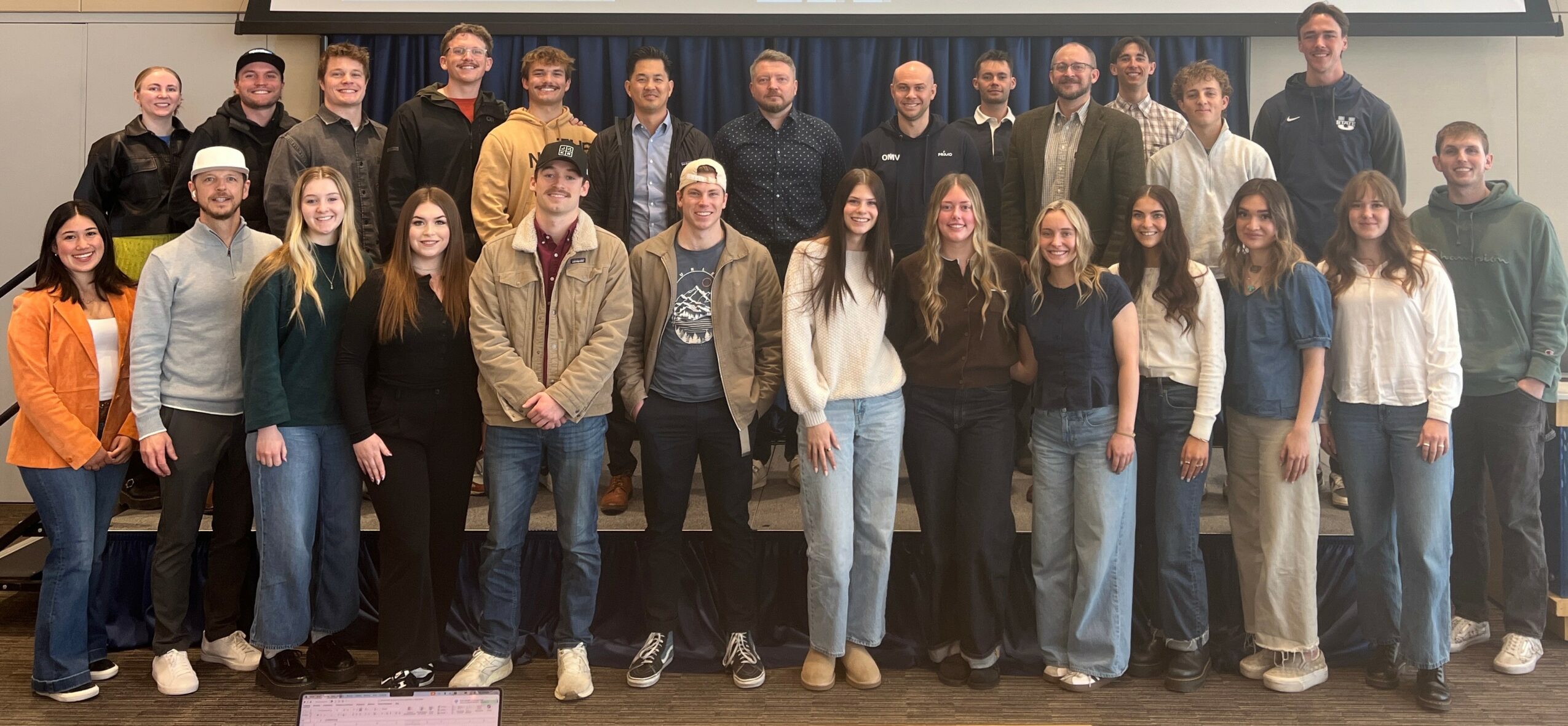
Then came Cache Launchpad, a startup incubator we just launched to support USU-based and community startups. The purpose is to grow the startup ecosystem in the valley and stop exporting some of its best ideas, talent and startups to Salt Lake and Provo. Building a business is one thing. Building an ecosystem is something else entirely.
If you had to, what characteristic of yours would you give the most credit to?
Two things, and they work together like a good business partnership: curiosity and networking.
Curiosity is what gets me into rooms I have no business being in. I genuinely want to know how things work, how a consumer in the UK makes a buying decision differently than one in Utah, how a construction company thinks about pipeline versus a software company, how you take a product that sells itself in one channel and translate it for an entirely different audience. That curiosity has let me move across industries, functions, and business stages in a way that may appear scattered; construction, mattresses, rings, shoes, etc; but actually compounds over time. Every chapter adds to the toolkit.
Networking is what happens when you mix curiosity with people. I don’t mean networking in the stiff, business-card-swap sense. It’s genuinely being interested in people, staying in touch for years, and trusting that relationships compound the same way good investments do. Some of the best professional moments of my career came directly from someone I met years earlier and have stayed in contact with. The Kizik team included people I’d worked with at Purple. Cache Launchpad exists because of introductions to passionate motivated people from people in my network. The Scrappy Valley, the monthly lunch group, started because a few of us wanted connection in a post pandemic world and has grown entirely because people kept coming back and bringing someone new.
Curiosity opens the door. Networking keeps it open. And somewhere in between, interesting things tend to happen.
Pricing:
- Cache Launchpad – no monthly/annual fees
- Fractional CMO – request a quote
Contact Info:
- Website: https://WWW.Cachelaunchpad.org
- LinkedIn: https://Www.LinkedIn.com/in/Wesclark2