


Today we’d like to introduce you to Stanley Wanlass.
Hi Stanley , can you start by introducing yourself? We’d love to learn more about how you got to where you are today?
*I have integrated (My Story) in the next two categories under (Obstacles/Challenges) and (Your Work).
Would you say it’s been a smooth road, and if not what are some of the biggest challenges you’ve faced along the way?
Art was always my first love throughout my childhood, high school, and university studies. In addition to painting and sculpture, I was also deeply involved in the study of advanced design and aesthetics.
I never felt an allegiance to one discipline over another; no matter what material or whether two or three dimensions, although I had to be aware of which would best make my visual statement. Creating was the same to me whether painting, sculpting, designing, writing, or the appreciation of beauty in any form. I loved them all, and whenever I was trying to make a specific statement, one direction would speak to me as a better form to express myself. Some of my statements are best expressed in sculpture, others in painting, while sometimes only words (writing) would communicate my message. I always relied on this as natural inspiration, active only when I kept myself in tune with the integrity of my spirit.
The biggest problem I was having during my time at the university was my insatiable interest in too many areas. I knew that I had to distill my interests; to learn more and more about less and less. The trouble was my interest (in addition to painting, sculpture & design) ranged from literature (my minor at the time), medicine, archaeology, music, philosophy, history, astronomy &, etc., etc., it went on and on. But, it appeared to me that one reflected on the other and seemed flat or incomplete without the intermingling of each with the other. I couldn’t separate them without losing the rich interrelationships that caused everything to make sense as a whole. The correlation between subjects seemed to depend on each other. Knowledge of one subject enhanced the study of the other to make it complete.
All of these interwoven interests seemed to bolster my awareness of the relationship between design, painting & sculpture with my other subjects of passion. My preconceived notion that art & science were diametrically opposed was ill-conceived. I thought that ‘organic’ meant amorphous nature, and ‘math’ was ordered, methodical, and structured. But, to my amazement, I found that mathematics and art went hand in hand when I compared my visual with my analytical studies with the Fibonacci sequence of numbers, logarithmic spirals, and the golden mean. Nature and Math were indispensably linked together. They not only reflect but also depend on each other.
I was also intrigued by how people (including artists and philosophers) were all completely different; no two had the same recipes… unique, yet all similar in different ways. No one should compare themselves to others. And, to compete is foolishness. We are all different and must all find our own unique destiny. Consequently, the daunting statement by Newton kept ringing in my ears, challenging me:
“I do not know what I may appear to the world, but to myself, I seem to have been only like a boy playing on the sea-shore, and diverting myself in now and then finding a smoother pebble or a prettier shell than ordinary, whilst the great ocean of truth lay all undiscovered before me.”
Newton also said, “Plato is my friend – Aristotle is my friend – but my greatest friend is truth.”
Michel de Montaigne said that in searching for truth, you should always look at both sides of every question, however shocking or uncomfortable; no matter where it might lead.
I have always searched for truth… and beauty. Truth is much harder to find than simply gaining an education at a university. It’s a good start, but there is no substitute for time and experience while reading and studying history, and the words and philosophies of those who came before us. Wisdom typically accumulates with age and varies with each individual according to their diverse experiences. Knowledge and wisdom won’t just appear all at once, or in the way or at the time you would prefer. And, it must be found “your way” as no two people have the same blueprint. It may be better not to be too sure of things or to touch your dreams too fully or too soon. I found that I learned more through experience than whether I was successful or if I failed. But back in the 50s, very few artists were making a living as a fine artist, but I believed that would change, so I studied medicine (my second interest) to give me knowledge in Morphological Anatomy, Cadaver Dissection, physiology, and Kinesiology, which gave me knowledge of the changing configuration of the muscles when the bones are in different positions. I also studied Literature, History, and Music etc, to broaden my knowledge. So, although I was always taught that the shortest distance between two points was a straight line, I discovered that a zig-zag line was better for me as I learned many important things by being exposed to multiple subjects than if I had taken just one quick way.
The more interim resources garnered from the philosophies of individuals greater or seemingly lesser than yourself (in varied subjects), the wider and deeper a person can develop their own philosophy by making it a part of their own, which will evolve and become unique from any other. You can, according to Shakespeare, “Assume a virtue if you have it not”.
Our dignity lies not in who we are or what we do, but in what we understand. Understanding usually only comes in retrospect. An artist asks the world questions, and the world replies, “I hear you, and I answer that I cannot answer; you must find out for yourself.” Then, as the artist creatively expresses understanding, the resulting message becomes art.
I also felt that it was possible to learn something from everyone I met or studied, whether contemporary or ancient. Even a minuscule thought, idea, or concept can grow and flourish into a major jewel within a person’s philosophy. These can be gleaned from the greatest minds and talents extant or from even the most humble yet dignified person living in wretched squalor.
Thanks for sharing that. So, maybe next you can tell us a bit more about your work?
STANLEY WANLASS
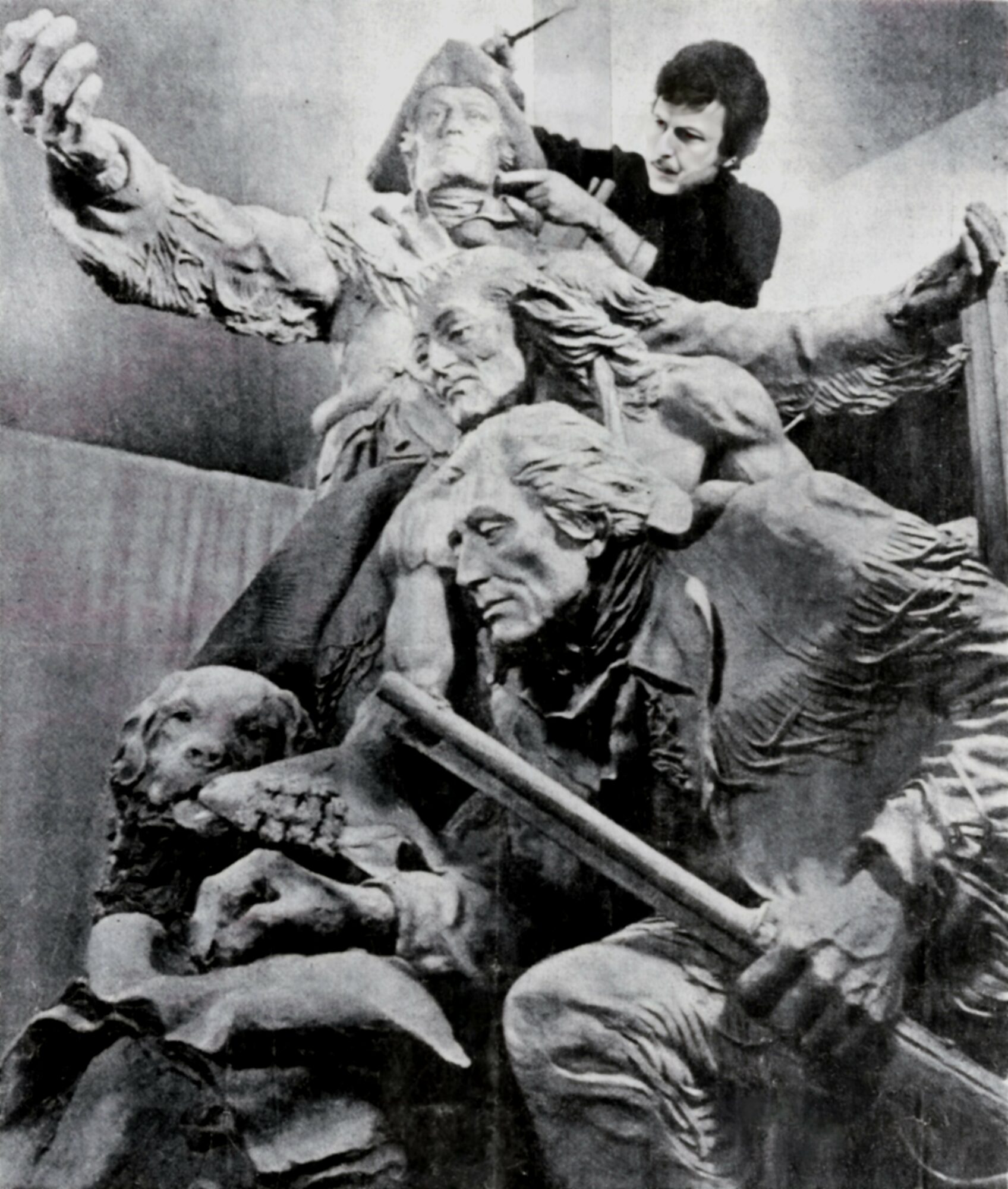
Stanley Wanlass, Professor Emeritus, B.F.A./ M.A./ A.F.A.S., taught at numerous universities in the United States, Canada, and abroad, including the European Art Academy in Paris and the Université de Grenoble, in the French Alps. He is president of Renaissance International, Inc., a design studio based in Oregon. Wanlass, who resides in Oregon and Utah, is an internationally known sculptor, designer, painter, and writer. He also creates heroic bronze historical monuments.
“SURF II,” 22-foot, 54,000 lb. Monument for the United States of America Bicentennial located in Everett, Washington. 1976
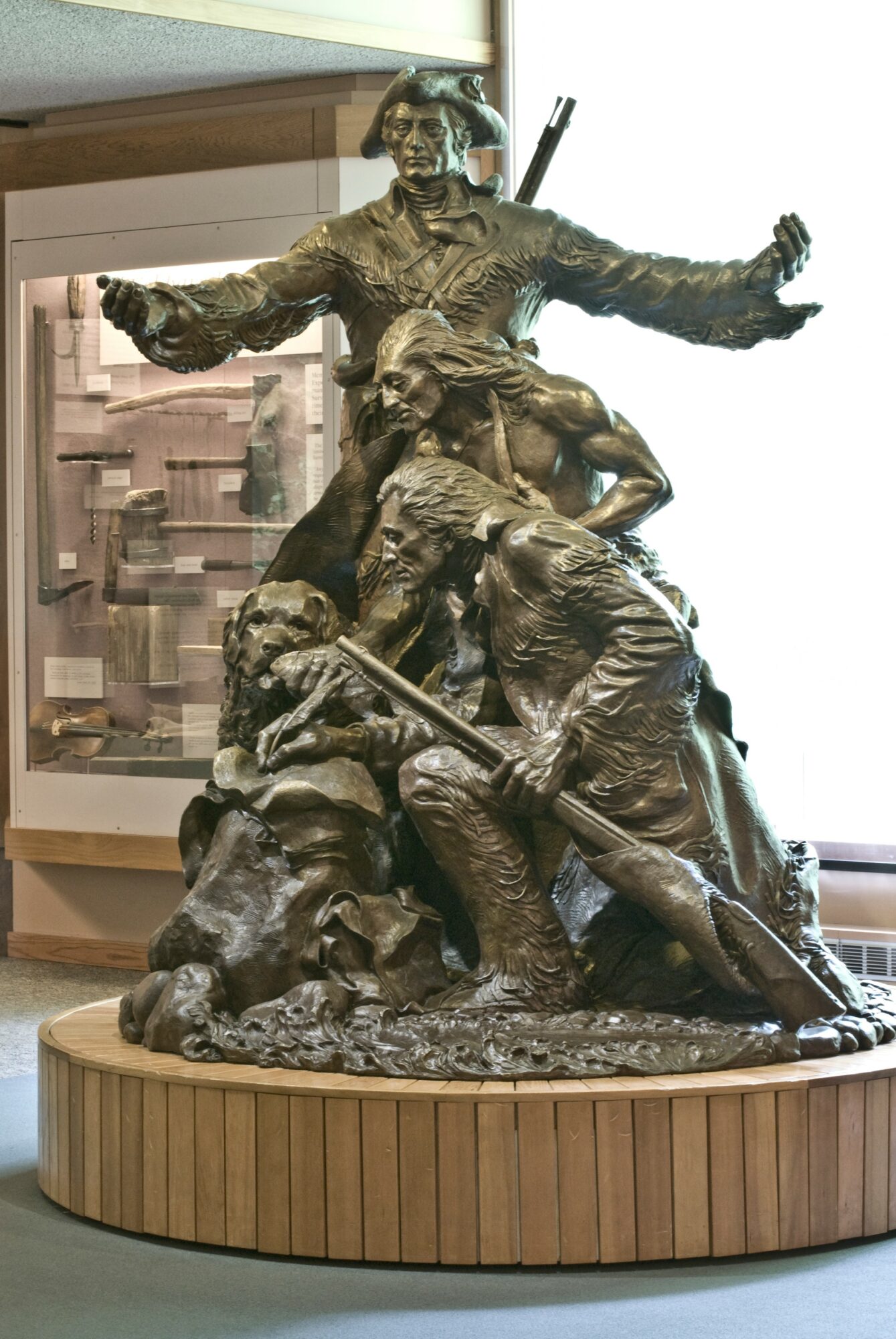
“ARRIVAL,” Heroic Monument celebrating Lewis & Clark’s sojourn to the Pacific Ocean at the National Memorial for Lewis & Clark at Fort Clatsop on the North Oregon Coast, 1982, in cooperation with the Lewis & Clark Trail Heritage Foundation
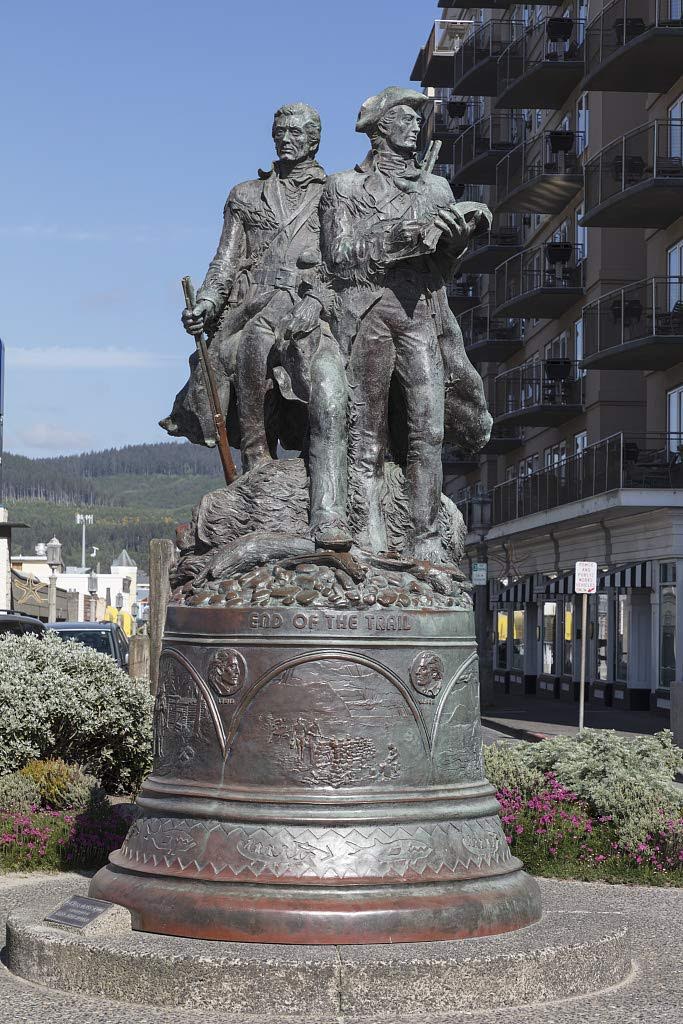
“END OF THE TRAIL,” Heroic Monument at the turnaround on the beach at Seaside, Oregon. 1990. Marking the furthest South point traveled by Lewis & Clark’s Corps of Discovery.
“MARK OF TRIUMPH,” Lewis & Clark Monument in downtown Long Beach, Washington, in cooperation with the Lewis & Clark Bicentennial Commission. 1990
“CLARKS TREE,” erected on the sands of the Pacific Ocean, North of Cape Disappointment on the Long Beach Peninsula, Washington. This monument is a twenty-five-foot bronze tree that marks the furthest Northwest point traveled by Lewis & Clark’s Corps of Discovery. Delivered by barge following the Lewis & Clark Trail down the Snake River to the Columbia River, to the Pacific Ocean. 2003 – with multiple overnight celebration stops along the way.
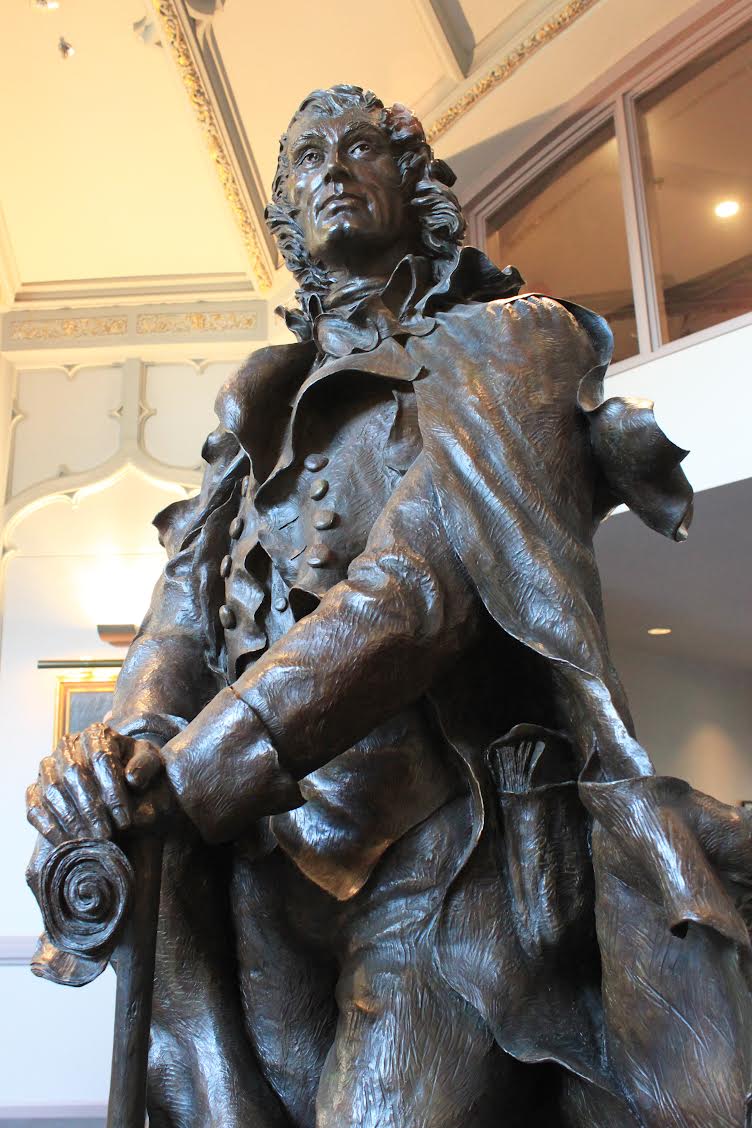
“MAN OF VISION,” Heroic Muhlenberg Monument is presented under a massive Christopher Wren Dome (a bell tower) at Muhlenberg College in Allentown, Pennsylvania. 1991
“THE PROTECTOR,” The Rockwell Monument, a Heroic and Iconic pioneer monument, Legacy Sculpture Park at the celebrated Hutchings Museum, Lehi, UT. 1999
“RISING FROM ITS ASHES,” a Heroic Ferrari Monument, at Cirque Lodge Foundation in Orem, Utah. 2022
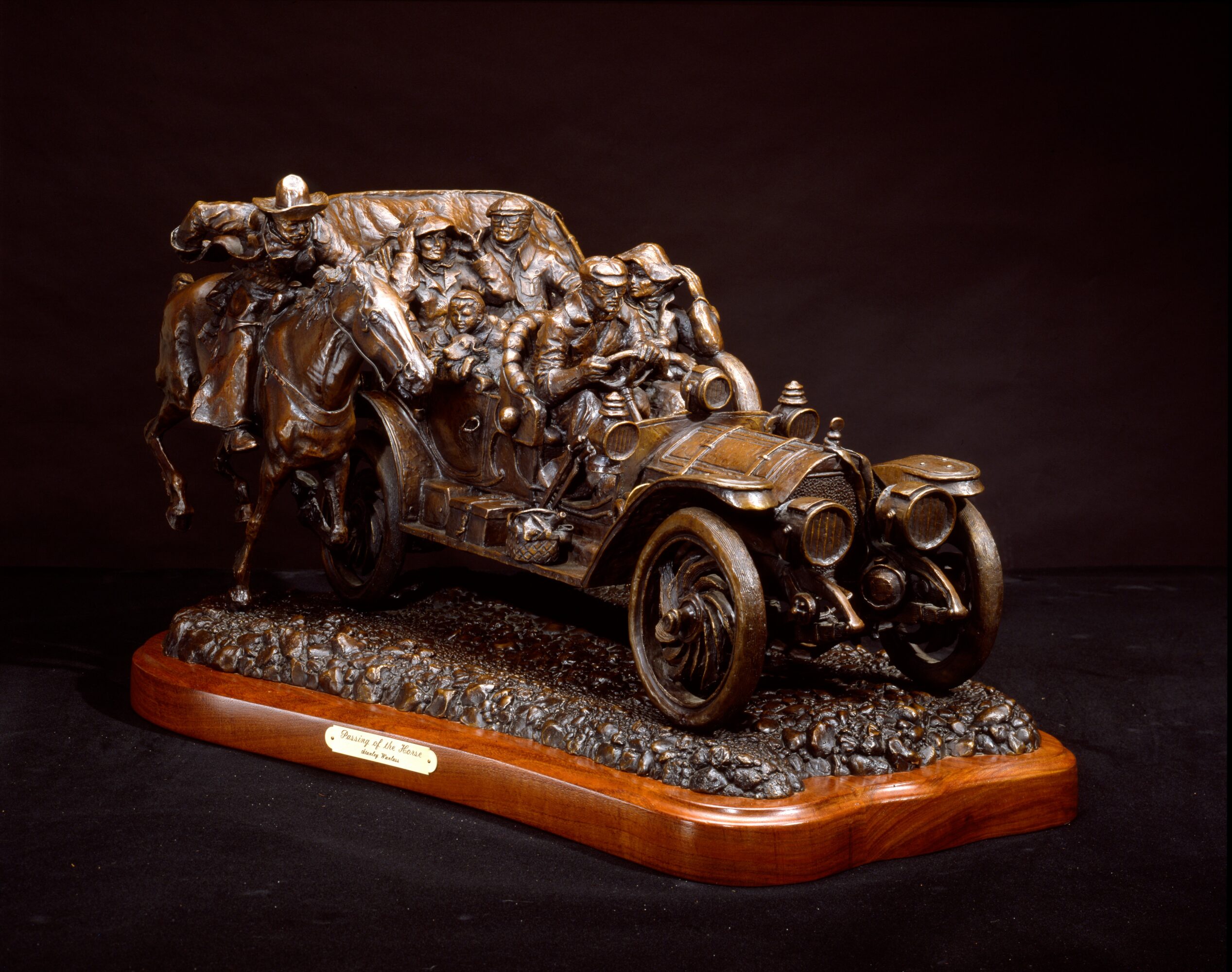
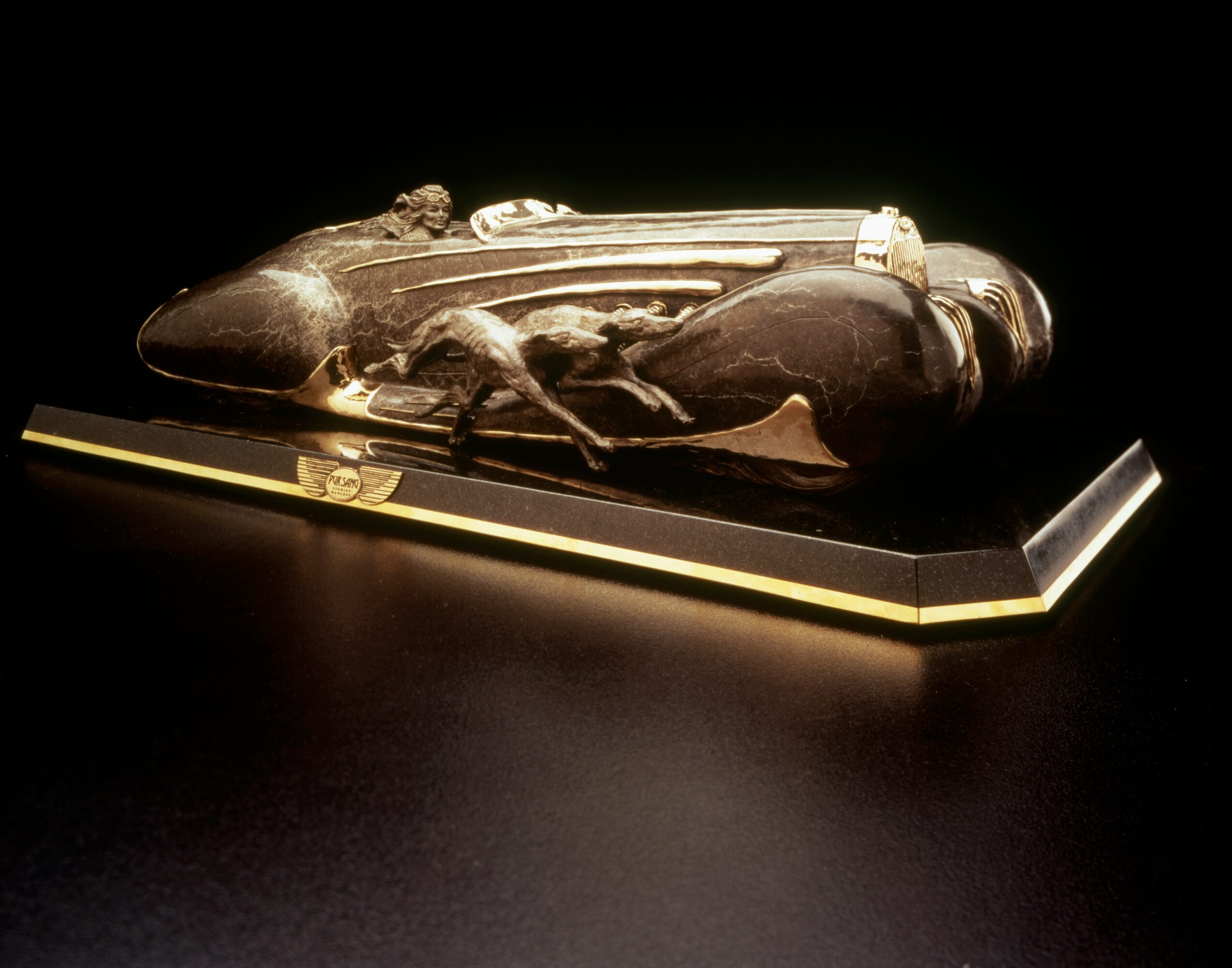
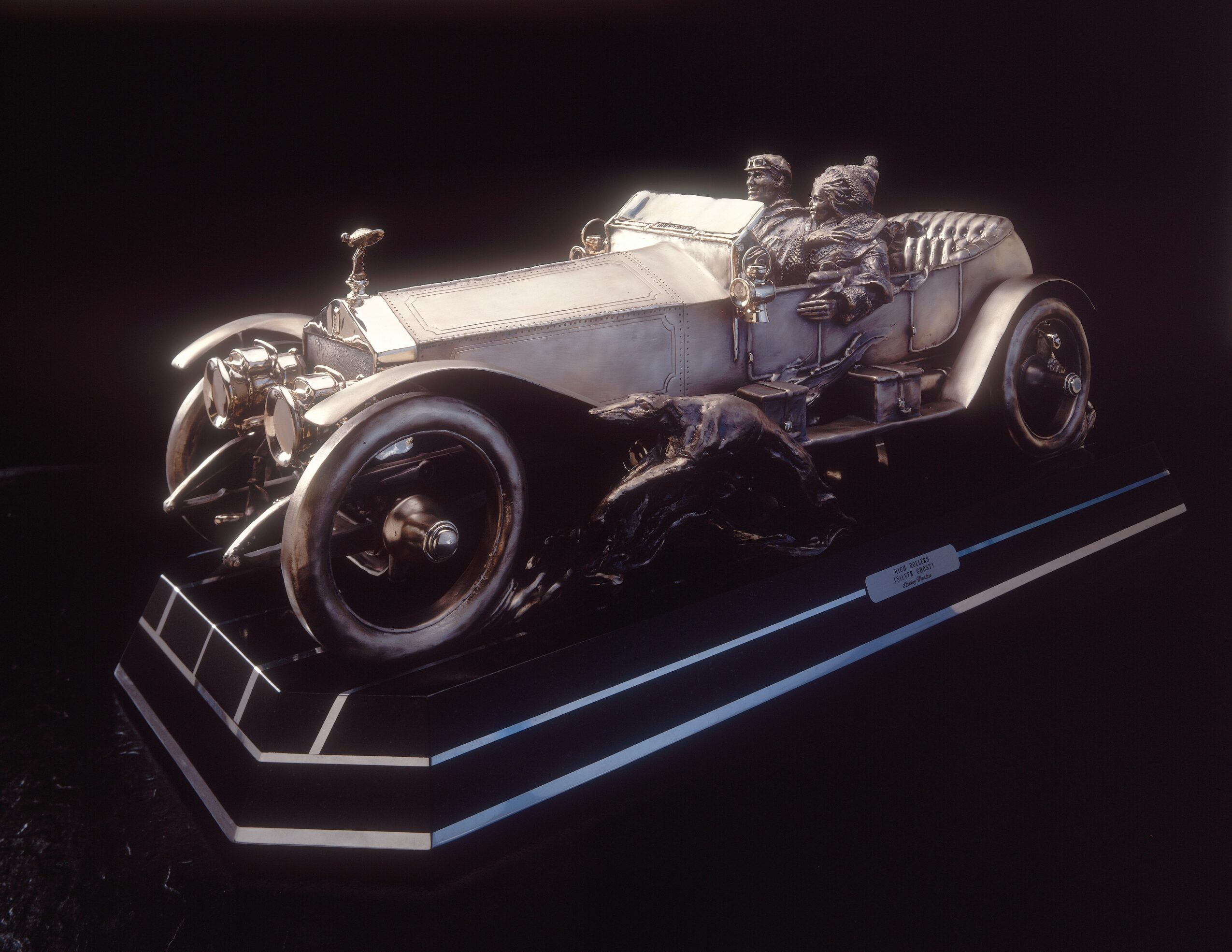
Wanlass is also renowned for his limited-edition automotive bronze sculptures, echoing his love for the automobile, which he has collected, restored, and raced since the mid-1950s. His automotive sculptures and paintings are represented in the most prestigious museums and private collections worldwide. His historical monuments are located at national memorials, universities, and public places throughout the nation.
Wanlass bronzes are referred to as “rolling sculpture” by some and “just plain sensuous” by others. The Detroit News says, “Wanlass bronzes seem to be moving despite being trapped in bronze.” The great Peter Helck calls Wanlass “the finest sculptor of the automobile”, while Automobile Quarterly considers Wanlass “the ranking sculptor of the automobile.”
His 900-page Master’s Thesis was a study of (among other things) the history of automotive design and the enormous historical record of thousands of automobile companies from 1900 to 1930. He is currently writing a new book of short stories, memoirs, and essays, titled “REARVIEW MIRROR – REFLECTIONS ON A JOURNEY”.
Wanlass does extensive research on each of his artworks. However, he takes license with the facts if it will help his composition. “I change whatever I need to in order to establish a symbol. Facts bore me. I’m more interested in truth.” He feels comfortable stretching history and condensing time and space to bring together a dramatic depiction of the spirit of the subject…a symbol – a gestalt, a truth. “Cold exactitude isn’t art; spirit and form are more important. Content and meaning are also important; however, form (structure) is the first consideration. Good design is the structure that supports the statement. If the form and statement successfully interact, a symbol is born. It becomes more than the sum of its parts.”
“It is through these symbols, truths of the past, that we are better able to understand our time and ourselves. We are comfortable with the known; drawing on our knowledge of the past is how we decipher the present. I feel that NOW is a more important statement to make than THEN. I make statements about NOW using THEN.”
Wanlass is a hopeless idealist and romantic.
“I believe in the God-given genius of certain individuals, and I value a society that makes their existence possible. I feel a responsibility to history, a great debt to those who came before me who improved the world to a point that I might have the opportunity to create. Jefferson stated that, ‘he was a warrior so that his son could be a farmer so that his son could be a poet’. Life is short, and art is long. I would like to leave something edifying, of significant beauty, a tribute to the spirit, dignity, and excellence of man.”
Stanley Wanlass
pursangt38@gmail.com
www.stanleywanlass.com
How do you think about happiness?
FOLLOW YOUR BLISS
********************************
“If thou of fortune be bereft, and in thy store there be but left two loaves, sell one, and with the dole, buy hyacinths to feed thy soul.” ― John Greenleaf Whittier.
Stanley Wanlass
Contact Info:
- Website: https://www.stanleywanlass.com